
Sánchez Rejects European Criticism of Spain’s Migration Strategy: ‘Words Do Not Match Reality’
Could a member state’s domestic migration strategy alter the political dynamic across the European Union? That underlying question dominated discussions at the European Council summit in Brussels following Spain’s initiative to regularize undocumented migrants residing within its borders.

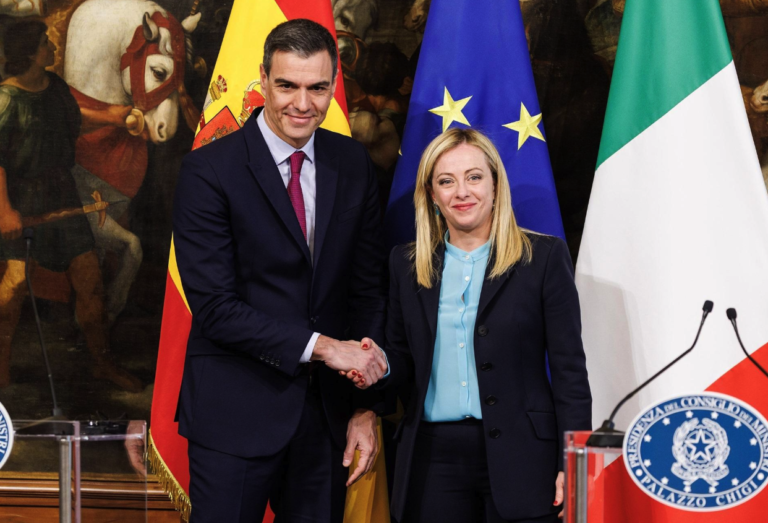
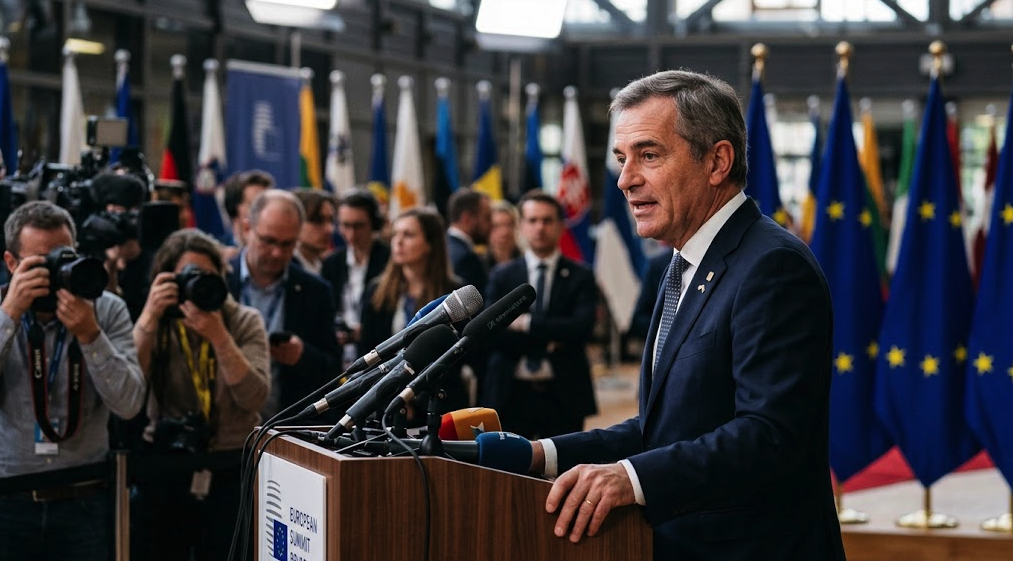
Spanish Prime Minister Pedro Sánchez firmly pushed back against criticism from several European leaders regarding his government’s extraordinary regularisation plan. Speaking at a press conference following the conclusion of the EU summit, Sánchez maintained that hard data disproves the alarming narratives presented by critics.
“When you analyze the official statistics, the gap compared to far-right rhetoric is undeniable. There is a vast distance between empty political soundbites and what is actually taking place along our borders,” the Prime Minister stated during his address to the press.


Heated Debates in Brussels: What Are European Partners Challenging?
Disagreements among several EU member states stem from Spain’s regularisation initiative, which addresses the administrative status of undocumented residents.
Objections emerged primarily from three European capitals holding distinct political positions:
| European Leader | Position / Country | Main Arguments Raised |
| Andrej Babiš | Prime Minister (Czech Republic) | Accused certain leaders of seeking to “replace the population” and warned of potential internal border controls. |
| Christian Stocker | Chancellor (Austria) | Characterized the measure as a “bad signal” that could create pull factors across the bloc. |
| Mette Frederiksen | Prime Minister (Denmark) | Called on the European Commission to analyze the broader implications of Spain’s domestic policy. |
Sánchez drew a distinction between his policy disagreements with Danish Prime Minister Mette Frederiksen and the commentary from Czech leader Andrej Babiš, which he likened to argumentations used by the far-right Vox party in Spain.
Spain’s Counterargument: Data, Interceptions, and EU Agreements
Rejecting claims that regularisation encourages unlawful arrivals or leads to secondary movements into Central Europe, the Spanish delegation emphasized its adherence to EU border standards.
To support its position, Spain highlighted several operational aspects:
Border Supervision and Repatriations: Reliance on official records regarding interceptions along the Atlantic route, entry refusals at airports, and coordinated return procedures.
Cooperation at Origin: Operational and diplomatic partnerships established with transit and origin nations in West and North Africa.
EU Framework Compliance: Active implementation of the Migration and Asylum Pact agreed upon during the Spanish Presidency of the Council of the EU.
Secondary Movement Disclaimers: Rejection of assertions that Spanish territory serves as an unmonitored pathway toward neighboring European nations.
Summit Negotiations: The European Commission’s Stance and French Support
Tensions surrounding migration management influenced discussions over the summit’s draft conclusions. A coalition comprising Denmark, Poland, and Italy sought to introduce language urging member states to avoid policies that might incentivize irregular migration—an indirect reference to Spain’s regularisation plan. Opposition from Spain and France prevented that specific phrasing from being adopted in the final text.
European Commission President Ursula von der Leyen maintained a measured approach, noting that irregular border crossings into the EU have dropped by over 56% over the past two years. She outlined three primary objectives for the bloc:
Ensuring the full operational deployment of the EU Migration and Asylum Pact.
Expanding the operational capacity and resources of Frontex to secure external borders.
Balancing state responsibility with mutual solidarity during border emergencies.
French President Emmanuel Macron voiced support for Spain’s position, cautioning against the politicization of migration policy. Macron described the situation in Ceuta as a humanitarian concern and a hybrid challenge, warning that internal division leaves the European Union less effective in addressing shared issues.
Editorial Analysis
From the editorial perspective of HIGH NEWS, the debate in Brussels highlights persistent structural differences within European migration policy. While several northern and eastern member states prioritize strict containment and perimeter deterrence, Spain has opted for an approach combining border management with the formal economic integration of individuals already residing within the country.
These discussions demonstrate that achieving a unified migration framework remains a complex endeavor for the Twenty-Seven. While administrative regularisation falls under national sovereignty, its broader political impact continues to trigger debate across a border-free Schengen area.
Frequently Asked Questions (FAQ)
What specific policy triggered debate at the EU summit?
The discussions focused on Spain’s extraordinary regularisation plan aimed at integrating undocumented residents already living and working in the country into the formal economy.
How did Pedro Sánchez address the criticisms from partner nations?
The Spanish Prime Minister argued that critical statements did not reflect official statistics, distinguishing between policy debate with Denmark and rhetoric from the Czech Republic that he associated with far-right political positions.
What measures did the European Commission emphasize?
European Commission President Ursula von der Leyen highlighted a significant decline in irregular arrivals over the past two years and advocated for the full implementation of the EU Migration Pact alongside expanded capabilities for Frontex.
Official Sources
European Council — Press conference and statements following the European Council meeting — https://www.consilium.europa.eu
La Moncloa (Presidency of the Government of Spain) — Press conference by Pedro Sánchez in Brussels — https://www.lamoncloa.gob.es
European Commission — Statement by President Ursula von der Leyen on border management and migration — https://ec.europa.eu