
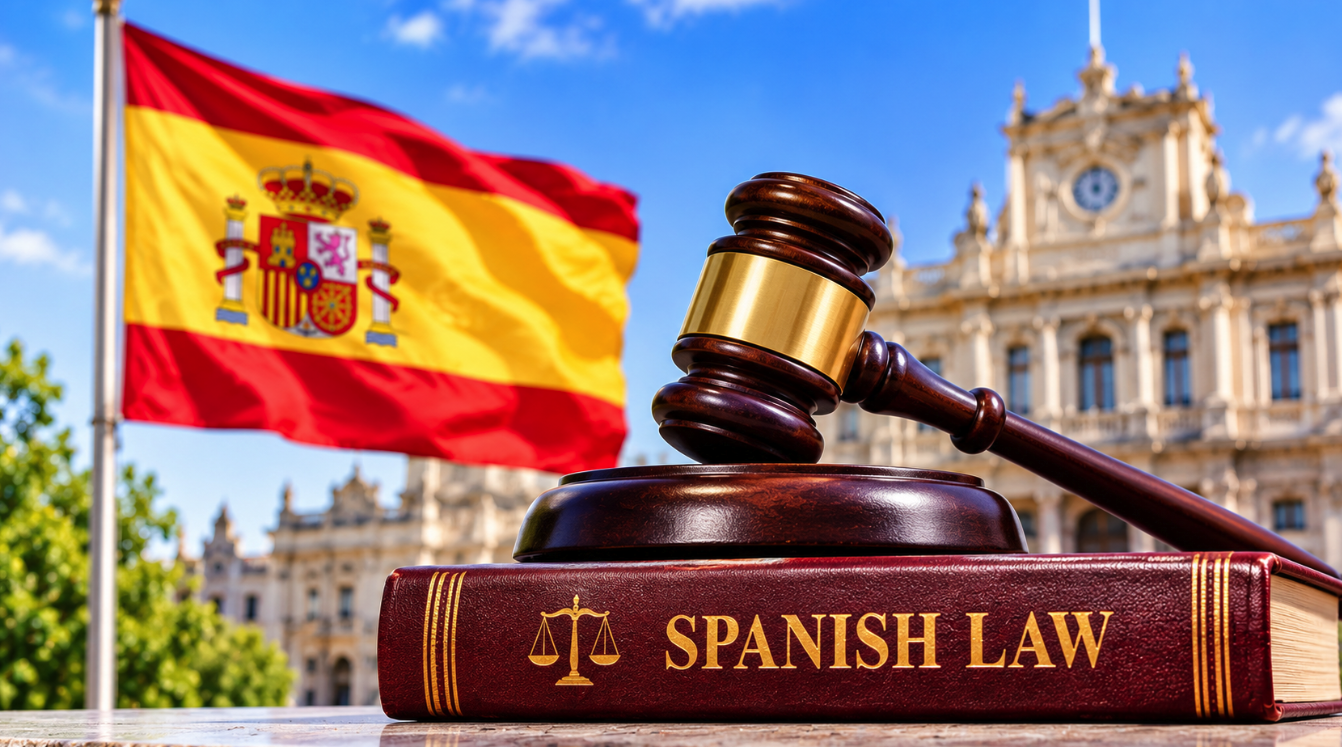

12 Strangest Laws in Spain: Fact or Fiction?
Spain is famous for its sunshine, beaches and lively culture, but some of the country’s supposedly strangest laws are just as likely to attract attention as its tourist attractions. From an alleged ban on dying in a Granada village to restrictions on feeding pigeons and hanging mops from balconies, stories about unusual Spanish regulations continue to fascinate residents and visitors.

But how many of these rules are actually real?
Some have their roots in genuine municipal regulations, others are exaggerated versions of local restrictions, and a few are simply misleading. Here is a closer look at 12 of the strangest laws associated with Spain, what the available evidence tells us and what residents and tourists should know.

1. Is it illegal to die in Lanjarón, Granada?
One of Spain’s most famous legal curiosities comes from Lanjarón, in Granada.
In 1999, the town’s mayor reportedly issued a tongue-in-cheek decree urging residents not to die because the local cemetery had run out of space.
The unusual announcement attracted international attention. It was intended as a protest against the lack of available burial space and an attempt to pressure the authorities into finding a solution.
However, it was never a legally enforceable ban on death. A resident who died in Lanjarón could not be punished for doing so.
The story is a historical anecdote, but describing it as an active law is misleading.
2. Are sandcastles banned on Spanish beaches?
Stories about sandcastle bans in Tenerife and restrictions on beach sculptures along the Costa Blanca have circulated for years.
Spanish coastal municipalities can regulate activities on their beaches to protect public spaces, maintain cleanliness and prevent damage to the coastline.
However, there is no general Spanish law prohibiting people from building ordinary sandcastles.
Any restriction must be checked against the specific beach regulations and municipal ordinances. Visitors should not assume that a rule reported in one resort applies throughout the Canary Islands or the Spanish mainland.
3. Can dogs be banned from barking during the siesta?
Villanueva de la Torre, in Guadalajara, has been associated with a particularly unusual rule concerning dogs barking between 2pm and 4pm and during nighttime hours.
Noise regulations are a legitimate part of municipal law in Spain. Local authorities can take action when excessive animal noise disturbs neighbours.
However, a specific prohibition on dogs barking during particular hours should not be treated as a nationwide law.
Owners remain responsible for controlling excessive noise, particularly when it repeatedly affects people living nearby.
4. Is throwing radioactive waste into household bins illegal?
This claim sounds almost too obvious to be true, but it has also been attributed to Villanueva de la Torre.
Radioactive waste is subject to specialised legislation and cannot simply be disposed of alongside ordinary household rubbish.
Spain has a national regulatory framework for radioactive materials and waste, including responsibilities involving the Nuclear Safety Council (CSN) and authorised waste-management arrangements.
The existence of a specific municipal rule with the wording reported in these stories has not been independently established.
The underlying principle, however, is straightforward: radioactive waste requires specialised handling and is not ordinary domestic rubbish.
5. Can you be fined for leaving a mop on your balcony?
Another unusual story concerns residents who leave mops, cleaning equipment or washing visible on their balconies.
Villanueva de la Torre has been mentioned in reports about restrictions on hanging clothes and displaying cleaning equipment.
The claim is sometimes accompanied by a possible fine of €750.
There is an important detail behind that figure. Article 141 of Spain’s Local Government Act (Law 7/1985) establishes a general maximum fine of €750 for minor breaches of local ordinances, unless another law provides otherwise.
That does not mean leaving a mop on a balcony automatically carries a €750 penalty.
Whether a restriction exists, and whether it can be enforced, depends on the applicable local rules.
6. Can you be fined for playing dominoes on a terrace in Seville?
Playing dominoes at an outdoor café is a familiar sight in Spain, particularly among older residents.
However, Seville has appeared in reports claiming that playing dominoes on restaurant terraces is prohibited because of the noise made by the tiles.
Municipal authorities can regulate noise levels and activities in public spaces, particularly where they affect nearby residents.
But the claim that dominoes are universally prohibited on Seville’s terraces needs a specific, current municipal provision to support it.
Other activities mentioned alongside this story, such as rolling barrels down streets, should also be checked against the relevant local regulations rather than treated as nationwide restrictions.
7. Is tap dancing forbidden inside apartment buildings?
Madrid, Mojácar and Ciudad Real have been associated with unusual restrictions on running, skating or tap dancing inside residential buildings.
Although the idea of being fined for practising dance steps at home sounds extraordinary, Spanish law does recognise the right of neighbours to protection from certain disruptive activities.
The Horizontal Property Act, Law 49/1960, states in Article 7 that residents cannot carry out activities prohibited by community statutes or activities that are damaging or disturb the property in legally relevant ways.
This does not create a nationwide ban on tap dancing.
A neighbour practising dance at a reasonable volume is not automatically breaking the law. The circumstances, level of disturbance and applicable community rules all matter.
8. Can feeding pigeons in Barcelona cost you €600?
Barcelona has taken measures to control its urban pigeon population, partly because large numbers of birds can create hygiene problems and damage public spaces.
Feeding pigeons is frequently mentioned in discussions about the city’s unusual rules.
However, the reported maximum fine of €600 should not be treated as a guaranteed penalty without checking the specific provision and its current sanction schedule.
For visitors, the sensible approach is simple: follow municipal signs and avoid feeding wild birds where local regulations prohibit it.
9. Is sleeping in your car illegal in Bilbao?
Bilbao is associated with another surprising claim: that sleeping in a car, van, caravan or even on a public bench is prohibited.
The distinction between parking and camping is particularly important here.
Spanish authorities can regulate the use of public spaces, unauthorised camping and activities that interfere with public order.
However, sleeping inside a legally parked vehicle is not automatically the same as camping. The precise circumstances and applicable municipal rules matter.
Travellers should check local parking and overnight-stay regulations before spending the night in a vehicle.
10. Are names such as Judas, Cain and Lenin banned in Spain?
This is one of the most misleading claims in the list.
Spain does not operate a simple national blacklist that automatically prohibits every unusual or controversial first name.
Under Article 51 of Law 20/2011 on the Civil Registry, parents generally have freedom to choose a child’s name.
There are, however, specific restrictions. Names cannot be contrary to a person’s dignity or make identification confusing. Parents also cannot give a newborn the same first name as a living sibling with identical surnames.
Consequently, it is inaccurate to claim that Judas, Cain and Lenin are automatically prohibited by Spanish law.
Each proposed name must be considered under the actual legal criteria.
11. Do drivers who wear glasses have to carry a spare pair?
Many people believe that anyone who wears prescription glasses while driving in Spain must keep a second pair in the car.
This is a long-standing motoring myth.
Spanish driving rules require drivers to meet the necessary visual standards and comply with any relevant restrictions on their driving licences.
However, the current General Traffic Regulations do not establish a universal requirement for every glasses-wearing driver to carry a spare pair.
Carrying an additional pair is still a sensible precaution, particularly for people who depend on prescription glasses to drive safely.
12. Are garden gnomes and pink flamingos banned in Marbella?
The final story concerns garden decorations in residential developments, particularly in tourist destinations such as Marbella and Torrevieja.
According to the reports, some homeowners’ associations restrict brightly coloured ornaments, including pink flamingos and garden gnomes, to maintain a consistent appearance.
This is not the same as a municipal law.
Under Spain’s Horizontal Property Act, communities of owners can establish internal rules governing shared spaces and certain aspects of residential life.
Those rules must comply with the law and the community’s governing documents.
A particular development may therefore restrict certain decorations, but there is no general Spanish law banning garden flamingos or gnomes.
Why do Spanish towns have such unusual rules?
Spain has several layers of government, and local councils have powers to regulate many aspects of everyday life.
Under Law 7/1985, municipalities have responsibilities in areas such as urban environmental protection, waste management and local public services.
This means that a rule in one town does not automatically apply elsewhere.
A coastal municipality may introduce restrictions to protect its beaches, while a densely populated city may focus on noise, waste disposal or the use of public spaces.
Local regulations also have to respect national and regional legislation. Councils cannot simply introduce arbitrary prohibitions or impose fines without a proper legal basis.
What should you do if you receive an unusual fine in Spain?
Whether you are a resident, property owner or tourist, it is worth checking the legal basis before paying a fine for an allegedly unusual offence.
There are four practical steps:
Ask for the legal reference: Find out which municipal ordinance or law has allegedly been breached.
Check whether it is current: Local regulations can be amended, replaced or repealed.
Read the exact wording: Make sure the behaviour described in the notice actually matches the alleged offence.
Check the penalty and appeal procedure: The fine must be supported by the applicable legal framework, and the notification should explain the available options for challenging it.
Official municipal websites and Spain’s provincial and regional official gazettes are useful starting points.
HIGRH NEWS: Why unusual laws deserve proper fact-checking
Spain’s unusual laws make entertaining reading, but there is a difference between a genuine legal restriction, a local community rule and a story that has become exaggerated over time.
The Lanjarón death decree is a fascinating example of a historical protest that was never an enforceable prohibition. The claims about baby names and spare glasses also demonstrate why checking the actual legislation matters.
Our view is that unusual laws should be reported with the same care as any other legal or political story. A headline may attract attention, but readers also deserve to know whether a rule is currently in force, where it applies and whether anyone can actually be fined for breaking it.
For residents and international visitors, the most useful advice is to check the local rules rather than rely on viral lists of supposedly bizarre Spanish laws.
Official Sources
The following official legislation supports the legal explanations in this article. It does not independently confirm every local restriction mentioned.
1. Boletín Oficial del Estado (BOE) – Law 7/1985, Regulating the Bases of Local Government. Municipal powers and Article 141, which establishes general limits for financial penalties under local ordinances.
https://www.boe.es/eli/es/l/1985/04/02/7/con
2. Boletín Oficial del Estado (BOE) – Law 20/2011 on the Civil Registry. Articles 50 and 51, covering the right to a name and the rules governing the choice of first names.
https://www.boe.es/buscar/act.php?id=BOE-A-2011-12628
3. Boletín Oficial del Estado (BOE) – Law 49/1960 on Horizontal Property. Articles 6 and 7, covering community rules and activities that may disturb residential neighbours.
https://www.boe.es/buscar/act.php?id=BOE-A-1960-10906
4. Boletín Oficial del Estado (BOE) – Royal Decree 1428/2003, General Traffic Regulations. Rules concerning vehicle visibility and road safety.
https://www.boe.es/buscar/act.php?id=BOE-A-2003-23514