
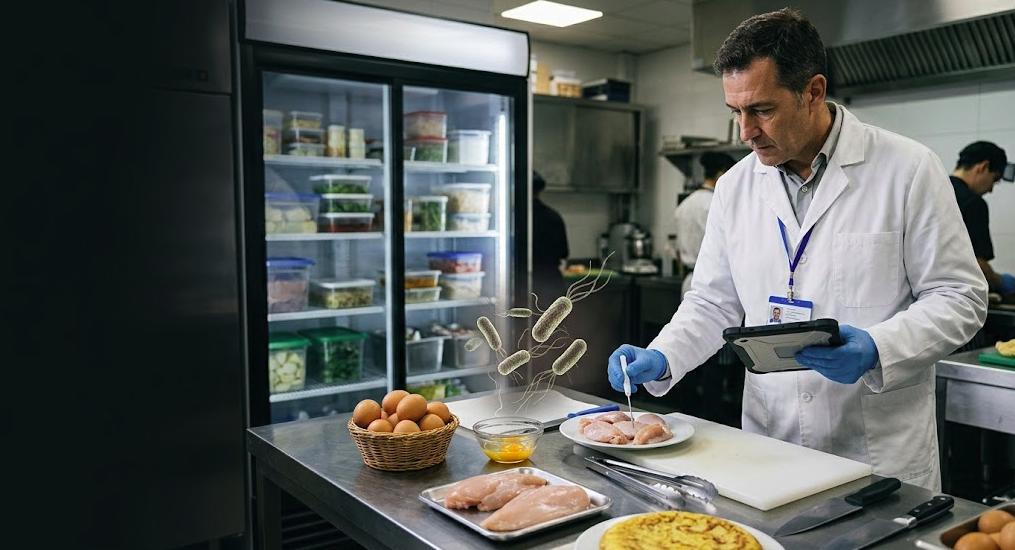

HIGRH NEWS: Salmonella in Spain remains a significant food-safety concern, with thousands of infections recorded through the national surveillance system and hundreds of outbreaks investigated. Official Spanish data show that contaminated food accounts for most outbreaks for which the transmission route is known, while eggs and egg-based products remain among the foods most frequently linked to these incidents. What do the figures reveal about where the risk lies, and what can consumers do to reduce it?

Salmonella in Spain: the figures behind the cases and outbreaks
Spain monitors salmonellosis through the Red Nacional de Vigilancia Epidemiológica (RENAVE), coordinated by the Centro Nacional de Epidemiología of the Instituto de Salud Carlos III.
The latest consolidated annual figures used in this report recorded 11,173 cases of salmonellosis among residents in Spain, corresponding to an incidence of 27.94 cases per 100,000 inhabitants. The figure excludes 86 imported cases.

The surveillance category covers salmonellosis but excludes typhoid and paratyphoid fever. This distinction matters because the figures refer specifically to infections caused by non-typhoidal Salmonella rather than all illnesses associated with the genus.
The annual data also show a slight difference between men and women. There were 5,839 cases among men, compared with 5,329 among women. The notification rate reached 29.83 cases per 100,000 inhabitants among men and 26.11 among women.
The national surveillance system also records the Salmonella serotype when that information is available. Among the reported infections with identified serotypes, Salmonella Enteritidis and Salmonella Typhimurium were among the principal types detected.
These figures provide the broader picture, but individual cases do not explain where transmission takes place. For that, outbreak investigations are particularly important.
The outbreaks of Salmonella reveal where the risk is concentrated
Spain’s surveillance system recorded 314 salmonellosis outbreaks, involving 2,129 cases. The median number of people affected per outbreak was three.
The investigation of outbreaks provides information that individual case notifications cannot provide on their own. Authorities can examine the suspected source, the setting where people were exposed and the possible route of transmission.
Food was the dominant route in the outbreaks for which the transmission mechanism was known. The official report attributes 250 of 296 outbreaks with available information to the consumption of contaminated food, representing 84.5%.
That percentage should be read carefully. It applies to outbreaks for which information about the transmission mechanism was available; it does not mean that 84.5% of every outbreak notified had a confirmed food source.
The data also show that outbreaks were not confined to one environment. 107 of 227 outbreaks with information about the setting occurred in collective catering, representing 47.1%. Another 91 outbreaks, or 40.1%, were associated with the home.
The figures underline the importance of food handling across the entire chain, from professional kitchens to domestic preparation.
Eggs account for a large share of identified food sources
Eggs and egg-based products occupy a prominent position in the Spanish outbreak data.
According to the official surveillance report, eggs and derivatives, including preparations such as mayonnaise, were implicated in 96 of 187 outbreaks with information about the food involved. That represents 51.3% of those outbreaks.
The finding helps explain why egg handling features prominently in food-safety advice.
An important point for consumers is that contaminated food does not necessarily look, smell or taste abnormal. Visual inspection cannot reliably determine whether a food contains Salmonella.
Risk can also increase through cross-contamination. A knife, cutting board, plate, container or pair of hands that has come into contact with contaminated raw food can transfer bacteria to another product if it is not cleaned properly.
This means that cooking one food thoroughly does not remove every risk in a kitchen. If a cooked meal is placed on a contaminated surface or handled with contaminated utensils, bacteria can be transferred again after cooking.
How Salmonella reaches consumers
Foodborne transmission is the principal route highlighted by the Spanish surveillance data.
People can become infected after eating food contaminated with Salmonella, particularly when food has been handled incorrectly or has not received sufficient cooking.
Eggs and egg products are important sources, but Salmonella can also be associated with meat, poultry and other contaminated foods.
Transmission is not limited to food. Salmonella can also spread through contact with infected or colonised animals. Reptiles, birds and other animals can carry the bacteria without necessarily showing obvious signs of illness.
Person-to-person transmission can occur through the faecal-oral route, making hand hygiene an essential part of prevention.
The risk is particularly relevant after using the toilet, changing nappies, handling animals or cleaning areas contaminated with faecal material. Hands should be washed thoroughly before preparing food and before eating.
Cross-contamination can turn a safe meal into a risk
One of the easiest mistakes to overlook is cross-contamination.
A consumer may cook chicken, meat or another food thoroughly and assume the danger has disappeared. However, if the cooked food comes into contact with a cutting board used moments earlier for raw meat, the cooking step no longer provides complete protection.
The same principle applies to knives, plates, kitchen cloths and hands.
Raw foods should therefore be kept apart from foods that are ready to eat. Utensils and surfaces used for raw products should be washed properly before they are used again.
This is particularly important when preparing foods that will not receive another cooking step, such as salads, sandwiches, cut fruit or ready-to-eat dishes.
Food safety is therefore not a single action. It depends on a series of decisions made during shopping, transportation, storage, preparation, cooking and serving.
Symptoms can appear within hours of infection
Salmonellosis commonly affects the digestive system.
Typical symptoms include diarrhoea, fever, abdominal pain, nausea and vomiting. The World Health Organization states that symptoms can begin between six and 72 hours after infection, although they commonly appear between 12 and 36 hours.
The illness generally lasts between two and seven days, although the course can vary from one person to another.
The main concern in some cases is dehydration caused by diarrhoea and vomiting. This can become particularly important for young children, older adults and people who are more vulnerable to complications.
Symptoms alone cannot confirm that Salmonella is responsible. Other infections can produce similar gastrointestinal symptoms, so laboratory testing may be required when medical assessment indicates it.
The Spanish surveillance protocol uses laboratory confirmation as an important part of the case definition, including the identification of Salmonella in clinical samples.
Who faces a greater risk of severe illness?
Salmonella can infect people of all ages, but the consequences are not necessarily the same for everyone.
Young children and older adults can be more vulnerable to complications. People with certain conditions affecting the immune system may also face a higher risk of severe disease.
The national surveillance data have repeatedly shown high notification rates among young children, while older age groups can also experience increased vulnerability to serious outcomes.
Dehydration remains one of the main concerns when diarrhoea or vomiting becomes severe.
Medical advice should be sought when symptoms are intense, the person becomes dehydrated, blood appears in the stool, fever is significant or the general condition deteriorates. Particular caution is appropriate when the patient is a young child, an older person or someone with factors that increase the risk of complications.
Summer can bring additional food-safety challenges
The surveillance data show a seasonal pattern in salmonellosis outbreaks.
In the annual outbreak analysis, 179 of 313 outbreaks with available information on the month of occurrence took place between July and October, representing 57%. August and September recorded the highest numbers, with 49 outbreaks each.
The figures do not mean that Salmonella is a seasonal infection that occurs only during warmer months. Cases can occur throughout the year.
However, food storage and handling require particular attention whenever foods are exposed to conditions that can favour bacterial growth. Refrigerated products should remain under appropriate temperature control, and prepared food should not be left unnecessarily at room temperature.
Consumers should also follow the storage instructions provided for each product and avoid breaking the cold chain during shopping and transportation.
Prevention starts before food reaches the plate
Reducing the risk of Salmonella begins at the point of purchase.
Foods requiring refrigeration should be kept cold and transported home without unnecessary delays. Raw products should be stored separately from ready-to-eat foods to reduce the possibility of contamination.
Once in the kitchen, hands should be washed before preparing food and after handling raw products.
Cutting boards and utensils should be cleaned between different preparation tasks. Raw meat, poultry and eggs should not come into contact with foods that will be eaten without further cooking.
Cooking is another key barrier. Food should be cooked sufficiently, particularly when dealing with products that can carry Salmonella.
Prepared food that will not be eaten immediately should also be stored under appropriate refrigeration conditions.
These practices may appear simple, but together they address several of the main opportunities for contamination and cross-contamination.
Five habits that can lower the risk
Wash your hands properly.
Clean hands before preparing food, before eating and after handling raw products, using the bathroom or touching animals.
Keep raw and ready-to-eat foods apart.
Use clean utensils and surfaces when moving from raw ingredients to food that is ready to serve.
Cook food thoroughly.
Pay particular attention to eggs, poultry and meat when they are being prepared for consumption.
Keep food at safe temperatures.
Follow refrigeration instructions and avoid leaving perishable foods at room temperature for extended periods.
Prevent cross-contamination.
Never place cooked food on a plate, board or surface that has been used for raw food without cleaning it first.
What happens when several people become ill?
When multiple people develop similar gastrointestinal symptoms after sharing a meal or being exposed to the same food, public-health investigation can become important.
Outbreak investigations can help identify whether the cases are connected, determine the likely source and establish measures to prevent additional infections.
The Spanish surveillance system recorded 45 outbreaks associated with direct person-to-person transmission. The home was the principal setting in this group, accounting for 35 outbreaks, or 77.8%.
This illustrates that Salmonella prevention is not solely an industrial or restaurant issue. Household hygiene can also influence transmission.
When a suspected foodborne outbreak occurs, information about what people ate, where they ate it and when symptoms began can help health authorities investigate the event.
Antibiotics are not automatically required
A diagnosis of salmonellosis does not automatically mean that antibiotics are needed.
The World Health Organization states that antimicrobial treatment is generally not recommended for mild or moderate illness in otherwise healthy people. Treatment may be considered in severe infections or in people at increased risk, under medical supervision.
Unnecessary antibiotic use can contribute to antimicrobial resistance. For that reason, people should not self-medicate with antibiotics when they develop diarrhoea or suspect food poisoning.
Fluid replacement remains an important part of managing diarrhoea and vomiting, particularly when significant fluid loss occurs.
Anyone experiencing severe or persistent symptoms should seek appropriate medical advice rather than relying on self-treatment.
What the latest surveillance figures add
Alongside annual reports, Spain publishes regular epidemiological surveillance bulletins. These updates provide a more recent view of reported infections, but their figures are provisional and can change as notifications are revised or additional cases are incorporated.
The latest provisional weekly figure reviewed for this report recorded 3,855 accumulated salmonellosis cases, with 182 cases reported during the corresponding week.
That figure should not be confused with a final annual total. Weekly surveillance is designed to monitor the disease as notifications arrive, while annual reports provide a consolidated analysis after the reporting period has closed and the data have undergone further validation.
For readers, the distinction is important. A provisional surveillance figure describes what had been reported at a particular point in time; it does not represent the final number of infections that will necessarily appear in a completed annual report.
Why official surveillance matters
Salmonellosis surveillance serves a purpose beyond producing statistics.
By tracking cases and investigating outbreaks, public-health authorities can identify unusual increases, investigate possible sources and introduce measures intended to prevent further infections.
The information also helps identify recurring risk factors. In the Spanish data, contaminated food accounts for the majority of outbreaks with a known transmission mechanism, while eggs and egg-based products appear prominently among the foods identified.
The figures also show why prevention needs to involve both professional and domestic settings. Collective catering accounted for a large proportion of outbreaks with known exposure settings, while the home represented another substantial share.
Food safety therefore depends on several layers of protection: controls throughout the food chain, safe handling by food businesses and careful practices in the home.
The bottom line for consumers
The official figures show that Salmonella remains a measurable public-health concern in Spain.
Thousands of cases are reported through the national surveillance system, and outbreak investigations continue to identify food as the leading transmission route when the mechanism is known.
Eggs and egg-based products remain particularly important in the outbreak data. At the same time, the presence of outbreaks linked to homes and direct person-to-person transmission demonstrates that prevention cannot focus on one setting alone.
For consumers, the most practical protection is consistent food hygiene: wash hands, keep raw foods away from ready-to-eat products, clean utensils and surfaces, cook food properly and maintain appropriate storage temperatures.
These measures do not eliminate every possible source of infection, but they address several of the main opportunities for Salmonella transmission and remain central to food-safety guidance.
Official Source
Instituto de Salud Carlos III – Centro Nacional de Epidemiología – Red Nacional de Vigilancia Epidemiológica (RENAVE).
Official RENAVE Salmonella surveillance report
Frequently Asked Questions
How is Salmonella usually transmitted?
The main route is eating food contaminated with Salmonella. Transmission can also occur through contact with infected animals or between people through the faecal-oral route.
Are eggs a major source of Salmonella outbreaks?
Yes. Eggs and egg-based products were implicated in 96 of 187 outbreaks with available food-source information, representing 51.3%.
How long does it take for symptoms to appear?
Symptoms can begin between six and 72 hours after infection, with onset commonly occurring between 12 and 36 hours.
Can Salmonella be prevented at home?
Risk can be reduced through handwashing, separation of raw and ready-to-eat foods, thorough cooking, proper refrigeration and careful cleaning of utensils and food-preparation surfaces…….MORE