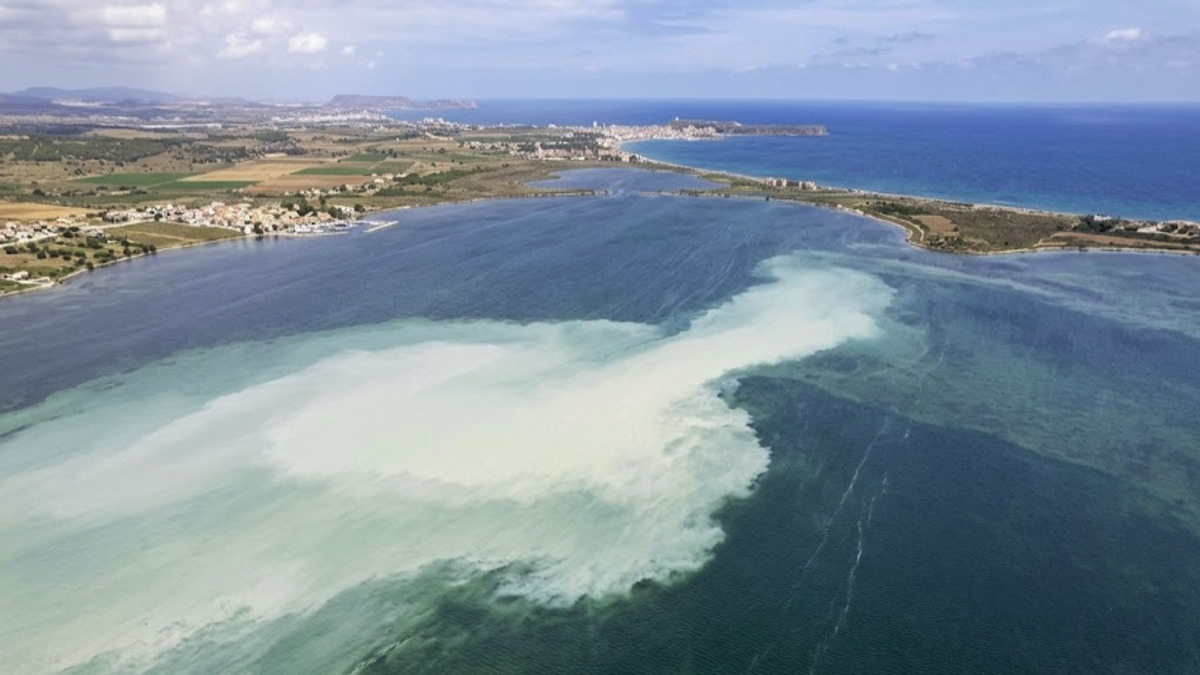

Murcia – HIGH NEWS: The Mar Menor white blob has been linked to a sharp decline in fish species diversity in the most affected part of Spain’s lagoon. Researchers found only three fish species in the centre of the affected area, compared with 21 in nearby healthy waters. What is happening beneath the milky-white surface of the Mar Menor?

The Mar Menor white blob is linked to a major loss of fish diversity
A research team from the Spanish Institute of Oceanography and the University of Murcia spent a year examining the ecological effects of the unusual white discoloration in the Mar Menor.
During the study, scientists examined more than 4,000 fish and compared the most affected section with nearby waters that did not show the same level of disturbance.

The difference in fish diversity was substantial.
Researchers found only three species in the centre of the white area. In nearby waters considered healthy, they identified 21 species.
According to the study, the difference represents an 86% decline in fish species diversity in the worst-affected zone.
The findings were published in the scientific journal Marine Pollution Bulletin and document several changes taking place within the affected part of the lagoon.
The researchers did not focus solely on fish. Their work also examined the conditions in the water and their relationship with the disappearance of underwater vegetation.
These underwater meadows provide important habitat for fish, including areas used for feeding, shelter and reproduction. Their disappearance therefore changes the environment available to species that depend on them.
The study found that fish associated with this vegetation had almost disappeared from the most affected area.
Other species appear to have been better able to tolerate the changed conditions. The black goby was among the fish that remained more resilient in the affected section.
The findings show that the unusual colour of the water coincides with broader environmental changes beneath the surface.
The white area covers around 12.3 square kilometres
The affected phenomenon covers approximately 12.3 square kilometres, equivalent to around 9% of the Mar Menor.
Within the most severely affected section, underwater vegetation has disappeared across an area of almost 6.7 square kilometres.
The milky appearance of the water is associated with tiny crystals of calcite, a form of calcium carbonate.
These crystals remain suspended in the water, increasing its cloudiness and reducing the amount of sunlight that can reach the seabed.
Researchers measured the amount of light reaching the bottom in different parts of the lagoon and found a substantial difference between healthier and affected waters.
In healthy areas, approximately 18.3% of sunlight reached the seabed. Inside the affected zone, that figure fell to just 3.9%.
The researchers also found that water turbidity in the affected area could reach levels up to nine times higher than normal.
This reduction in available light affects underwater vegetation, which needs sufficient sunlight to survive.
As the vegetation disappears, fish lose parts of the habitat they use for feeding, shelter and reproduction.
The study therefore documents several connected environmental changes, including higher turbidity, reduced light penetration, loss of underwater vegetation and lower fish species diversity.
The white colour of the water is consequently only one visible part of a wider change taking place beneath the surface.
Reduced sunlight is changing the seabed environment
One of the study’s key findings concerns the amount of sunlight reaching the bottom of the Mar Menor.
Suspended calcite crystals make the water more turbid and reduce the amount of sunlight capable of penetrating to the seabed.
The measurements show the scale of the difference.
In healthy waters, 18.3% of sunlight reached the bottom. In the affected area, only 3.9% reached the seabed.
This reduction coincided with the disappearance of underwater vegetation across almost 6.7 square kilometres in the most affected section.
Changes in the seabed environment were also reflected in the fish community.
Only three species were recorded in the centre of the white area, compared with 21 species in nearby healthy waters.
The impact was not identical across all fish species.
Species that depend on underwater vegetation were among those most affected, while fish with greater tolerance to the altered conditions were able to remain.
The black goby was one of the species identified as more capable of surviving in the changing environment.
The year-long study, which involved more than 4,000 fish, allowed researchers to compare fish communities across different parts of the lagoon.
The results indicate that the change in water colour forms part of a wider environmental phenomenon involving the physical characteristics of the water and conditions on the seabed.
The disappearance of underwater vegetation also means fewer areas are available for fish to feed, seek shelter and reproduce.
That loss helps explain the substantial difference in species diversity recorded between the affected zone and nearby healthier waters.
Groundwater and bicarbonate may contribute to the phenomenon
Researchers also examined factors that could be helping the phenomenon persist in the Mar Menor.
According to the study, groundwater containing high levels of bicarbonate may contribute to maintaining the condition.
The researchers also linked some changes in the surrounding aquifer partly to intensive irrigation.
These findings form part of the investigation into the conditions associated with the persistence of the white area, rather than providing a definitive explanation for every aspect of the phenomenon.
The study also makes clear that researchers did not identify urban wastewater as the direct cause of the white patch.
Instead, the research focuses on a combination of observed characteristics and effects, including calcite crystals, increased turbidity, reduced sunlight, the disappearance of underwater vegetation and changes in fish diversity.
The findings come against the background of previous environmental problems in the Mar Menor.
In 2016, the lagoon experienced the crisis commonly known as the “green soup” episode.
The area later experienced episodes of mass fish deaths associated with low oxygen levels in the water.
The latest study concerns a different phenomenon, focusing on the milky-white water and the changes observed in light penetration, underwater vegetation and fish diversity.
The research provides measurements that help describe the scale of the changes in the most affected section.
Scientists will continue monitoring the area to understand how the phenomenon develops and how the ecosystem responds.
What happens next for the Mar Menor white blob?
One of the questions researchers now want to answer is whether the underwater vegetation that has disappeared can return.
The ability of these plants to recover will depend on environmental conditions on the seabed, including the amount of light reaching the area.
The study recorded a major difference in available sunlight between healthy and affected waters, coinciding with the disappearance of underwater vegetation.
Scientists also want to determine whether the area affected by the white phenomenon will remain at its current size or change over time.
The affected area currently covers approximately 12.3 square kilometres, or around 9% of the lagoon.
Continued monitoring could show whether the affected zone changes and whether fish communities begin to regain some of their previous diversity.
Nearby healthy waters provide a useful comparison.
Researchers recorded 21 fish species there, compared with only three in the centre of the most affected area.
Differences in turbidity and light levels may also provide useful indicators for monitoring the lagoon’s future condition.
Turbidity in the affected water reached levels up to nine times higher than normal, while the proportion of sunlight reaching the seabed fell from 18.3% in healthier areas to 3.9% in the affected zone.
Scientists will continue examining these conditions to determine whether the ecosystem can recover.
Underwater vegetation is particularly important because it provides fish with food, shelter and breeding areas.
Its potential return could therefore influence whether some species are able to re-establish themselves in parts of the lagoon where they have declined.
For now, however, the research shows a clear difference between the centre of the white area and nearby healthier waters.
The impact extends beyond the colour of the water
The white appearance may be the most obvious feature of the affected area, but the study documents wider changes beneath the surface.
Tiny calcite crystals increase the turbidity of the water while reducing the amount of sunlight reaching the seabed.
Only 3.9% of sunlight reached the bottom in the affected zone, compared with 18.3% in healthier areas.
At the same time, underwater vegetation disappeared across almost 6.7 square kilometres.
The loss of this vegetation changed the habitat available to fish that depend on it for food, protection and reproduction.
Researchers recorded only three fish species in the centre of the white area, compared with 21 species in nearby healthy waters. That difference represents an 86% decline in species diversity in the most affected section.
Scientists from the Spanish Institute of Oceanography and the University of Murcia conducted the research over a year and examined more than 4,000 fish.
The results were published in Marine Pollution Bulletin, providing measurements of the changes in the affected area, including its size, turbidity, light levels, underwater vegetation and fish diversity.
The study also points to groundwater rich in bicarbonate as a possible factor contributing to the persistence of the phenomenon. Some changes in the surrounding aquifer have been linked to intensive irrigation.
However, researchers did not identify urban wastewater as the direct cause of the white patch.
The next stage will focus on monitoring the development of the affected area and determining whether underwater vegetation can recover.
The figures documented by the research provide a clear picture of the current situation: approximately 12.3 square kilometres affected by the white phenomenon, almost 6.7 square kilometres where underwater vegetation has disappeared, turbidity reaching up to nine times normal levels and an 86% decline in fish species diversity in the worst-affected area.
Continued scientific monitoring will be needed to determine whether these conditions change and whether the Mar Menor ecosystem can recover some of the habitats it has lost.
FAQ
What is the Mar Menor white blob?
It is a milky-looking area of water associated with tiny calcite crystals that increase turbidity and reduce the amount of light reaching the seabed.
How much has fish diversity declined?
Researchers found three species in the centre of the affected area compared with 21 in nearby healthy waters, representing an 86% decline.
How large is the white area?
It covers approximately 12.3 square kilometres, or around 9% of the Mar Menor.
What happened to the underwater vegetation?
It disappeared across almost 6.7 square kilometres in the most affected section…….MORE