
MADRID – High News: Cost of Living in Spain remains one of the biggest concerns for households as families continue to face pressure from housing costs, food prices and summer energy bills. While Spain’s economy has shown resilience compared with many European neighbors, rising everyday expenses are forcing many residents to rethink their budgets. What is driving the latest changes, and what should consumers expect in the coming months?

Cost of Living in Spain: Housing Continues to Be the Biggest Challenge
The cost of living in Spain remains a major topic across the country as affordability dominates public debate. Although inflation has eased from previous peaks, the price of renting or buying a home continues to place significant pressure on both Spanish families and international residents.
Housing is widely considered the largest monthly expense. Demand continues to exceed supply in major cities such as Madrid, Barcelona, Valencia and Málaga, keeping rental prices elevated despite government efforts to improve affordability. Economists say housing shortages remain one of the biggest structural challenges facing the Spanish economy.

Recent estimates indicate that a single person typically needs between €1,200 and €1,500 per month, excluding luxury spending, while families require considerably larger budgets depending on location and housing choices.
Everyday Expenses Continue to Rise
Beyond housing, food and household essentials remain under close scrutiny.
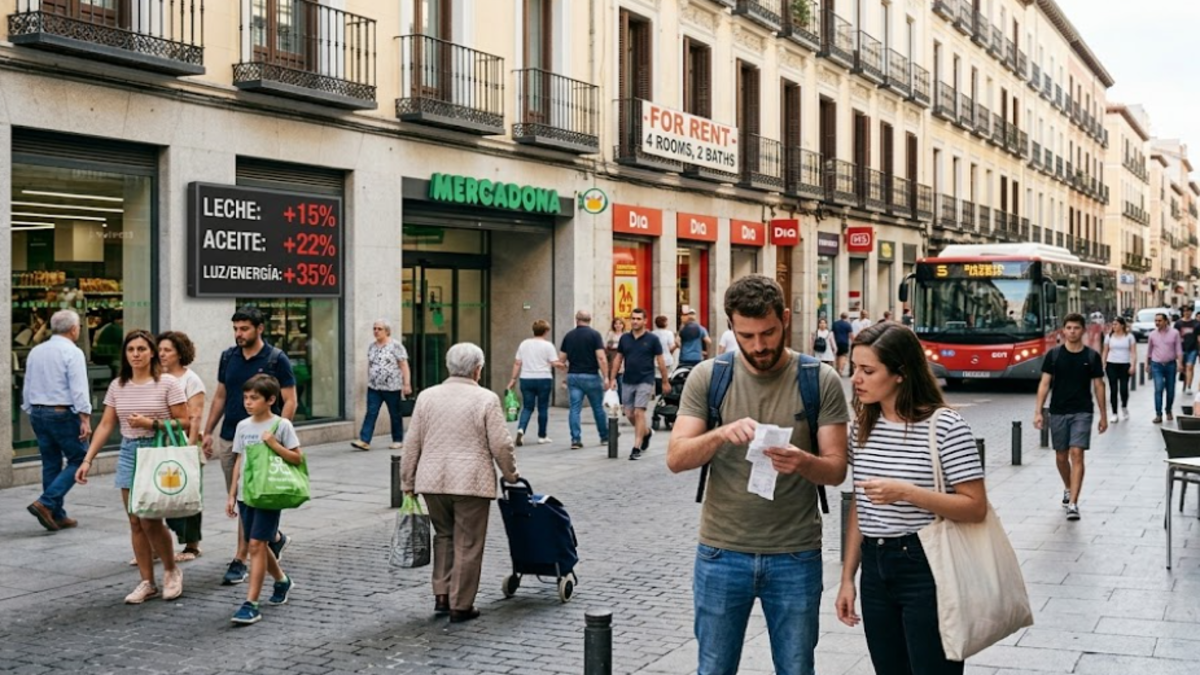
Supermarkets continue to report fluctuating prices for fresh produce, dairy products and packaged foods. While Spain still offers lower grocery costs than many Western European countries, consumers have become increasingly cautious with their weekly shopping.
Restaurant prices have also increased gradually, although Spain continues to offer relatively affordable dining compared with neighboring countries. The traditional menú del día remains one of the most economical meal options for workers and visitors alike.
Energy bills are another concern during the summer months. Air conditioning usage typically rises during periods of extreme heat, increasing electricity consumption for households already managing higher living costs.
Cost of Living in Spain Faces Additional Pressure From Extreme Weather
This week’s extreme heat and widespread wildfires have added another layer of uncertainty for residents and businesses.
Large wildfires across several Spanish regions have forced evacuations, disrupted tourism and damaged agricultural land. Authorities have warned that continuing high temperatures and strong winds could prolong the emergency.
The destruction affects local economies directly, particularly tourism businesses, farms and rural communities that depend on seasonal income. Analysts note that prolonged climate-related emergencies may eventually contribute to higher insurance costs, agricultural prices and reconstruction expenses.
Prime Minister Pedro Sánchez has described the coming days as critical while emergency services continue battling major fires across affected regions.
Employment Offers Some Stability
Despite concerns over living expenses, Spain’s labor market has remained relatively resilient.
Employment conditions have generally improved over recent years, helping support consumer spending. However, economists point out that wage growth has not fully matched increases in housing costs, leaving many households with less disposable income.
Young adults continue to face particular challenges entering the housing market, with many delaying independent living because of high rents and limited affordable housing options.
Spain Remains Competitive Compared With Much of Europe
Although residents continue to feel financial pressure, Spain remains one of Western Europe’s more affordable countries overall.
Consumer prices generally remain below the European Union average, making Spain attractive for retirees, digital professionals and foreign workers seeking a lower cost of living than countries such as Germany, France or the Netherlands.
However, affordability varies significantly by region. Madrid, Barcelona and popular Mediterranean coastal cities continue to record much higher housing costs than inland provinces and smaller municipalities.
Government officials continue working on policies aimed at expanding housing supply and improving affordability, though experts caution that meaningful improvements may require long-term structural reforms.
For official consumer and economic statistics, readers can consult the National Statistics Institute (INE).
FAQ
Why is the cost of living rising in Spain?
Housing shortages, higher food prices, energy costs and regional demand continue to influence household expenses.
Which expense is the largest for most households?
Housing remains the biggest monthly expense, especially in Madrid, Barcelona and other major cities.
Is Spain still affordable compared with other European countries?
Yes. Overall consumer prices remain below the EU average, although housing in major cities has become significantly more expensive.
How are the current wildfires affecting living costs?
Wildfires are disrupting tourism, agriculture and local businesses, potentially creating additional economic pressure in affected regions.