

Storm Adam Floods Eastern Spain: Three Dead as Helicopters Rescue Residents from Rooftops
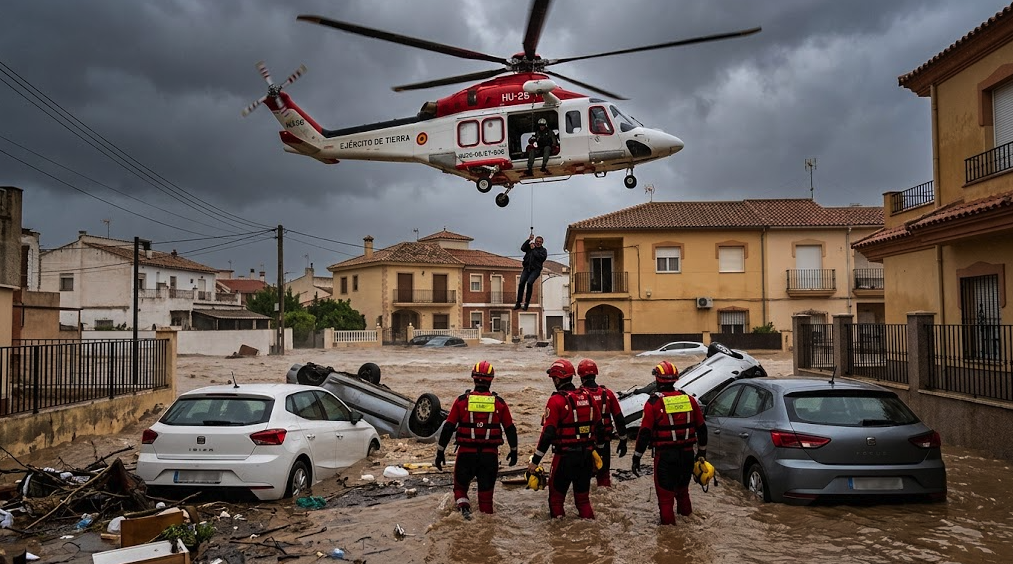
Torrential rain from Storm Adam has triggered severe flooding across eastern Spain, killing at least three people, forcing more than 2,000 residents to evacuate and leaving thousands of others under emergency shelter-in-place orders. Rescue teams have deployed helicopters and military personnel to reach people trapped in flooded homes as authorities warn of further heavy rainfall.

The storm has battered parts of the Valencia region, particularly Alicante and southern Valencia, where overflowing rivers, flooded roads and powerful currents have disrupted communities and caused extensive property damage. Emergency services have struggled to access some areas as floodwaters blocked roads and submerged vehicles.
Three Deaths Reported as Floodwaters Swallow Streets
At least three people have died in incidents linked to the severe weather, according to reports published on Monday.

A woman’s body was reportedly found in Oliva during rescue operations, according to regional broadcaster A Punt, citing sources from Spain’s Military Emergency Unit. Two other women died in separate incidents over the weekend: one in Sagunto, in the Valencia region, and another in Cabrera de Mar, near Barcelona, after being swept away by floodwaters.
More than 2,000 people have been evacuated, mainly from Oliva, while the Civil Guard reported nearly 100 rescues across Valencia and Alicante.
The number of people subject to shelter-in-place orders fell during the day. Around 800,000 residents were initially covered by the restrictions, but that figure had dropped to approximately 87,000 people across eight municipalities by late afternoon.
Authorities continue to assess the situation as emergency operations progress.
Pego Records 632 Millimetres of Rain in 36 Hours
The scale of the rainfall has intensified concerns about further flooding across the Mediterranean coast.
Spain’s national weather agency, AEMET, reported that Pego, in Alicante province, recorded 632 millimetres of rain over 36 hours. Several locations in southern Valencia and northern Alicante received more than 500 millimetres during the same period.
Such exceptional rainfall can overwhelm drainage systems, rapidly raise river levels and turn streets into dangerous torrents. Saturated ground also reduces the amount of additional rain that can be absorbed, increasing surface runoff and the risk of sudden flooding.
AEMET issued red weather alerts, advising residents to avoid unnecessary travel and seek higher ground where necessary.
Helicopters Rescue Residents Trapped on Rooftops
Emergency responders have faced difficult conditions in several flooded towns, with some roads rendered impassable even to heavy-duty vehicles.
In Pego, residents were reportedly still waiting to be evacuated by helicopter from rooftops after access routes to the town were blocked.
In nearby Oliva, rescue teams worked to reach residents trapped inside their homes. Elderly people were among those affected, with water reportedly rising to waist height in some properties.
The flooding has also devastated parts of Els Poblets, northeast of Alicante. Vehicles were pushed together by the force of the water, while residents attempted to recover belongings from damaged homes.
Spain has deployed military emergency personnel and national police to support rescue operations and help evacuate people from affected areas.
Schools Close as Transport and Infrastructure Are Disrupted
The storm has disrupted daily life throughout the Valencia region.
More than 100,000 students had classes suspended because of the weather alerts. Authorities have also faced difficulties maintaining road access to isolated communities and ensuring emergency vehicles can reach those needing assistance.
Floodwater can conceal damaged road surfaces, open drains and strong currents, making apparently passable routes extremely dangerous.
Residents have been urged to follow official emergency instructions, avoid flooded roads and stay away from rivers and ravines during periods of intense rainfall.
Catalonia Faces Further Heavy Rain
The focus of the storm was expected to shift towards Catalonia on Monday afternoon, particularly Barcelona and Girona provinces.
Forecasts indicated that some areas could receive more than 100 millimetres of rain in less than 12 hours. Authorities are particularly concerned because the ground is already saturated from previous storms, raising the risk of further runoff and flooding.
The precise distribution of rainfall remains uncertain, and conditions may vary considerably between neighbouring areas. Residents are advised to monitor official forecasts and emergency alerts rather than assume that the risk has passed when rainfall temporarily eases.
What Residents Should Do During Flash Floods
During severe rainfall, taking precautions early can reduce the risk of injury or death.
- Avoid flooded roads: Never drive or walk through fast-moving water.
- Move away from rivers and ravines: Water levels can rise rapidly, even when heavy rain is falling elsewhere.
- Follow evacuation instructions: Leave threatened areas when directed by emergency authorities.
- Move to safer ground: If flooding threatens a property, follow official guidance on whether to evacuate or move to a higher level.
- Call emergency services: In Spain, dial 112 if there is immediate danger.
Residents should also keep their phones charged, monitor official weather warnings and avoid approaching rescue operations.
HIGRH NEWS Analysis: Preparing for More Extreme Rainfall
The flooding caused by Storm Adam highlights the importance of rapid emergency communication, effective evacuation planning and resilient infrastructure in areas exposed to intense Mediterranean rainfall.
The immediate priority is protecting lives and ensuring rescue teams can reach isolated residents. Once conditions improve, authorities will need to assess damage to homes, roads and public infrastructure and determine what assistance affected communities require.
The relationship between human-driven climate change and extreme rainfall is an important area of scientific research. However, the contribution of climate change to this particular storm would require a dedicated scientific attribution assessment rather than assumptions based on the event alone.
For residents, the most important message is to take official warnings seriously. Flood conditions can change rapidly, and avoiding dangerous routes or leaving a threatened area early can make a critical difference.
The death toll and damage assessment remain subject to change as rescue operations continue and authorities obtain a clearer picture of the storm’s impact.
Official Sources
- Agencia Estatal de Meteorología (AEMET) — Official weather forecasts and severe-weather warnings: https://www.aemet.es/
- Spanish Ministry of the Interior — Civil Protection and emergency information: https://www.interior.gob.es/
- Emergency Services in Spain — Emergency telephone number 112: https://112.es/