
CEUTA – HIGRH NEWS: Ceuta healthcare crisis in Ceuta is placing unusual pressure on medical services as healthcare workers report cases of gastroenteritis, scabies, impetigo and tuberculosis, while Spanish authorities acknowledge serious strain but reject claims that the system has collapsed. At the same time, officials have warned against automatically linking infectious diseases to migrants. So what do the available figures actually show?

Shortages of Staff Make Medical Response More Difficult
Healthcare professionals in Ceuta say the demand for medical attention has increased sharply during the humanitarian emergency.
The Ceuta Nursing Association says its professionals have been dealing with more than 200 cases a day and that staffing levels have made it difficult to maintain normal working conditions.

The organization has called for additional personnel and resources as healthcare teams continue to deal with patients in hospitals, primary-care facilities and temporary locations.
According to figures reported by the nursing organization, more than 200 cases of acute gastroenteritis have been identified, along with 20 cases of scabies, 21 cases of impetigo and four cases of tuberculosis. These figures do not include all possible cases in makeshift settlements along the beaches, where medical monitoring is more difficult.
However, these figures should not be treated as a single official health-service tally.
Different sources have reported different numbers, particularly regarding gastroenteritis and tuberculosis. Spanish public broadcaster RTVE reported that Health Ministry figures differed from the figures cited by nursing professionals.
That distinction is important when assessing the situation.
The Spanish Society of Epidemiology has also warned against portraying migrants as the cause of infectious diseases. Its president, Maria João Forjaz, said that blaming migrants for disease is medically incorrect and potentially harmful.
Experts instead point to factors such as overcrowding, limited access to safe water and inadequate sanitary conditions as circumstances that can facilitate the spread of some infections.
The debate therefore involves two separate issues: the pressure being placed on healthcare workers and the need to determine the causes of individual infections through medical and epidemiological evidence.
Defense Confirms Scabies Cases Among Deployed Personnel
The health situation has also affected military personnel stationed in Ceuta.
Spain’s Defense Ministry reported 24 cases of scabies among members of the armed forces.
The ministry rejected a connection between the cases and the military’s role in assisting migrants during the humanitarian emergency.
It also said that two of the affected soldiers had already contracted the infection before the recent mass arrival of migrants.
The military personnel diagnosed with scabies are receiving treatment according to recommendations from health authorities.
Defense also said that measures had been introduced to treat those affected and sanitize facilities.
The ministry described scabies as an infection commonly found in areas with high humidity.
The information is significant because some public discussion has attempted to connect the appearance of infectious diseases directly with migration.
The available evidence does not establish such a general connection.
In particular, the fact that two military cases predated the recent mass arrival is one of the points highlighted by Defense.
Medical specialists have stressed that infectious-disease investigations need to consider living conditions, close contact, hygiene, access to water and other epidemiological factors rather than assigning responsibility to an entire population.
Medical Workers Report Changing Health Needs
Alejandro Artero, a nurse and doctor of health sciences working in Ceuta, says the types of cases being seen have changed as the emergency has continued.
According to his account, early medical attention focused heavily on injuries and trauma.
Later, healthcare workers began seeing more dermatological problems, including scabies, as well as respiratory illnesses.
Other health needs have emerged alongside those conditions.
Artero has pointed to chronic illnesses such as diabetes and asthma, as well as mental-health conditions for which treatment and follow-up have become more difficult.
He has also described an increase in gastrointestinal problems in some areas.
The medical worker has linked some of these difficulties to poor sanitary conditions and limited access to safe water in certain locations.
But diagnosis is only part of the challenge.
Following patients after their initial consultation can also be difficult when people move between different areas of the city or live in temporary settlements.
A patient may need additional tests or another appointment several days later.
If medical workers cannot locate that person again, completing the diagnostic process becomes considerably harder.
This problem can affect both treatment and disease surveillance.
Patient Follow-Up Is One of the Main Obstacles
Some of the healthcare difficulties occur outside hospitals and conventional health centers.
Medical teams are dealing with people who are dispersed across different parts of Ceuta, including temporary settlements.
This makes it harder to establish continuous medical follow-up.
A patient may receive an initial examination and then become difficult to locate when additional tests or treatment are required.
The problem is particularly relevant for illnesses that require repeated medical checks.
Artero has also described cases in which injuries that initially appeared relatively straightforward later developed into more serious infections.
Among the complications mentioned are cellulitis and impetigo.
The difficulty does not necessarily lie in treating the initial injury.
Instead, problems can arise when the patient cannot maintain a regular treatment schedule or return for follow-up.
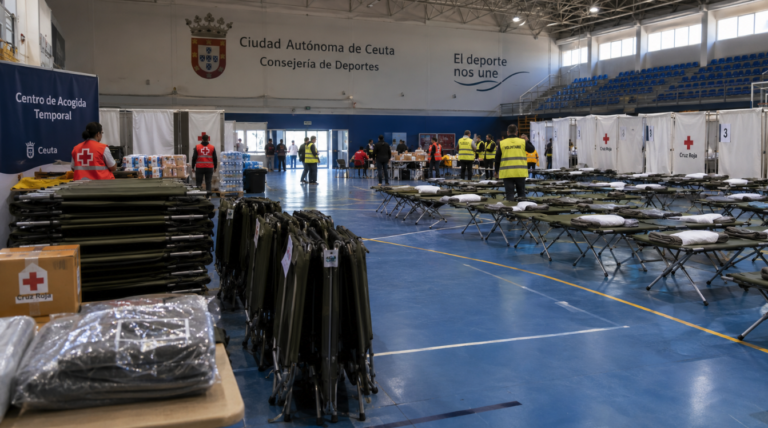
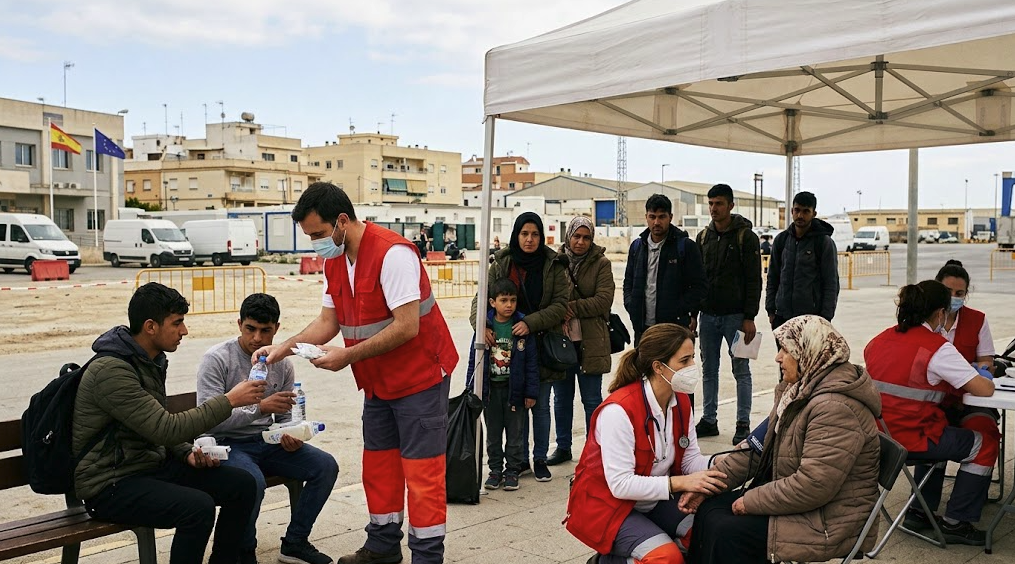
Organizations including the Red Cross and Doctors of the World are also providing medical assistance to people in need.
Their work extends healthcare provision to locations where access to conventional medical services can be more difficult.
The situation highlights the importance of basic sanitation and continuous medical access alongside hospital treatment.
The ofical website: Instituto Nacional de Gestión Sanitaria (INGESA)
Tuberculosis Requires Careful Monitoring
Tuberculosis has become another sensitive issue in discussions about healthcare in Ceuta.
The figures reported publicly are not identical.
The nursing organization has referred to four diagnosed cases, while other official health information has cited different numbers.
For that reason, tuberculosis figures should always be attributed to the source providing them rather than presented as one universally agreed total.
The available information also does not establish that tuberculosis cases originated in Ceuta or that they resulted from the arrival of migrants.
A Newtral review reported that some tuberculosis patients had arrived already receiving treatment, while another case involved a person who was already resident in Ceuta and had been under medical suspicion for some time.
Tuberculosis requires appropriate testing and medical follow-up.
That process becomes more difficult when patients lack a fixed address or cannot easily return to healthcare facilities.
For medical teams, ensuring continuity of care is therefore one of the central challenges.
The issue is not simply identifying a disease.
It is also ensuring that patients complete the necessary examinations and maintain treatment once they leave the initial point of care.
Government Acknowledges Pressure but Rejects Collapse
Spain’s Health Minister, Mónica García, has acknowledged that Ceuta’s healthcare system is under significant pressure.
She has nevertheless rejected descriptions of a complete collapse.
According to Health Ministry figures, medical services treated 5,800 migrants during the first 15 days of the emergency.
Some 3,500 received care through primary-care services, while 2,300 were treated at the hospital.
The ministry also reported that demand declined after the first day.
A total of 1,149 medical consultations were recorded during the initial day, with the number later falling to around 300 cases per day.
Those figures support the government’s position that the healthcare system continued to function despite the exceptional demand.
They do not, however, eliminate the concerns raised by healthcare workers about staffing levels and working conditions.
The disagreement is therefore partly about how the situation should be described.
Medical organizations emphasize exhaustion, shortages and the difficulty of maintaining normal care.
The government emphasizes the continued operation of the system and the decline in daily demand after the initial peak.
Both elements are relevant to understanding the situation.
Conditions Outside Medical Centers Add Another Challenge
Healthcare pressure in Ceuta extends beyond hospitals and clinics.
Medical teams must also reach people living in temporary or informal settlements.
In those locations, access to clean water, sanitation facilities and regular medical care can be more difficult.
These circumstances can complicate efforts to prevent and monitor infectious diseases.
They can also make it harder for healthcare workers to determine whether a patient has completed treatment or needs additional attention.
The Spanish Society of Epidemiology has emphasized that overcrowding and limited access to basic resources can contribute to the spread of certain diseases.
That does not mean that migrants themselves should be regarded as the source of those illnesses.
The distinction matters because infectious diseases can emerge in any population living under difficult sanitary conditions.
The focus of public-health measures is therefore on diagnosis, treatment, hygiene, monitoring and access to basic services.
Organizations working in Ceuta are providing assistance alongside the public health system.
Their role includes treating people in locations where reaching a conventional healthcare facility may be difficult.
Healthcare Organizations Call for Better Coordination
Professional organizations have called for a more coordinated response to the situation.
The General Council of Nursing has requested a unified command structure for healthcare operations in Ceuta.
Its president, Florentino Pérez Raya, has also called for additional resources and better planning.
Medical unions have made similar demands.
The State Confederation of Medical Unions has warned that healthcare professionals have been working under exceptional conditions while trying to maintain adequate medical care.
The organization has urged the Health Ministry to strengthen its response through INGESA, the body responsible for managing healthcare services in Ceuta and Melilla.
Unlike Spain’s autonomous communities, which manage their own healthcare systems, the two North African cities remain under the responsibility of the central government for healthcare administration.
This makes national-level planning particularly important when Ceuta faces an exceptional increase in demand.
For healthcare professionals, additional staff and better coordination would help reduce pressure and improve the ability to monitor patients after their first consultation.
The Numbers Need to Be Read Carefully
The available information shows that Ceuta’s healthcare services have faced a significant increase in demand.
But the different sets of figures should not be combined indiscriminately.
The Health Ministry’s figure of 5,800 migrants treated during the first 15 days represents one official measure of healthcare demand.
The figures released by the nursing organization concerning gastroenteritis, scabies, impetigo and tuberculosis come from professional reporting and do not necessarily represent the same statistical category.
This explains why different totals can appear in reports about the same situation.
The discrepancy is particularly important when discussing tuberculosis.
Similarly, the 24 cases of scabies reported among military personnel represent a separate group from the migrant healthcare figures.
Defense has specifically stated that two of those military cases predated the recent mass arrival of migrants.
There is therefore no basis for simply adding the figures together and describing the result as the total number of infected people in Ceuta.
The same caution applies when discussing causes.
The presence of an infectious disease among migrants does not, by itself, establish that migration caused its appearance.
Likewise, the existence of cases among military personnel does not automatically identify where transmission occurred.
Public-health conclusions require medical investigation and epidemiological evidence.
Ceuta’s Healthcare System Remains Under Pressure
The situation in Ceuta combines high demand, difficult patient follow-up and disagreement over how severe the pressure on the healthcare system has become.
Healthcare professionals are calling for more staff, resources and coordination.
The government recognizes that the system is under considerable strain but rejects the description of a complete collapse.
Meanwhile, thousands of people have received medical attention during the emergency, and official figures show that daily demand declined after the initial peak.
The health concerns are not limited to one disease.
Medical workers have reported cases involving gastrointestinal illness, skin infections, respiratory problems and tuberculosis.
The authorities have also separately reported scabies among military personnel and have rejected a direct connection with migrant assistance.
For public-health experts, the key issue is to focus on evidence rather than assumptions.
Overcrowding, sanitation, access to safe water and continuity of medical care can all influence the spread and management of infectious diseases.
As Ceuta continues to manage the emergency, the ability of its healthcare services to maintain staffing, treatment and patient follow-up will remain central to the situation.
Frequently Asked Questions About the Healthcare Crisis in Ceuta
What illnesses have been reported in Ceuta?
Healthcare professionals have reported cases of gastroenteritis, scabies, impetigo and tuberculosis, although figures differ between sources.
How many migrants received medical care?
Spain’s Health Ministry reported that 5,800 migrants received medical attention during the first 15 days of the emergency.
Has the Spanish government said that Ceuta’s healthcare system collapsed?
No. Health Minister Mónica García acknowledged significant pressure but rejected the description of a complete collapse.
Are the military scabies cases linked to migrants?
The Defense Ministry says they are not and reported that two of the 24 military cases occurred before the recent mass arrival of migrants…….MORE