
Madrid – HIGRH NEWS: Driving licence points in Spain: how many points drivers have and how they can get them back

The driving licence points system in Spain gives every driver a points balance that can rise or fall depending on their driving record. Most licence holders begin with 12 points, while newly qualified drivers and people who obtain a new licence after losing their previous one start with eight.
The balance can also increase. Drivers who maintain a clean record for the required periods can earn additional points, up to a maximum of 15.

But certain serious and very serious offences can reduce the balance. If all the points disappear, the driver faces a separate procedure that can lead to the loss of the licence’s validity. So how does the system work, and what can drivers do before reaching zero?
How many points does a Spanish driving licence have?
The normal starting balance is 12 points.
New drivers are treated differently. People whose licence has been held for no more than three years generally begin with 8 points. The same starting balance applies to drivers who obtain a new licence after losing their entire previous points allowance.
The points balance belongs to the driver. Holding licences or authorisations for different vehicle categories does not create separate pools of points.
The amount deducted depends on the offence. Spanish traffic rules provide for penalties of 2, 3, 4 or 6 points for different offences.
There is also a general daily limit of eight points that can be removed, although the rules contain exceptions for certain particularly serious offences.
Can drivers have more than 12 points?
Yes.
The system allows drivers with a clean record to build up their balance.
A driver who starts with 12 points and goes three years without an offence that carries a points deduction receives two additional points, reaching 14.
After another three years without a points-related offence, another point is added. That brings the driver to the maximum of 15 points.
Newly qualified drivers start from eight. After two years without an offence that removes points, they can move up to 12. From there, the same bonus system applies.
Which offences can remove driving licence points?
A traffic fine does not automatically mean that points will be deducted.
The points system applies when the specific offence is one of those for which Spanish law provides a deduction.
The number of points depends on the offence and its seriousness. Certain speeding offences, mobile-phone use while driving, some seat-belt violations and specific offences involving alcohol or drugs can affect the driver’s balance.
Some of the most serious offences carry a six-point deduction.
The DGT also identifies particularly serious situations involving alcohol or drugs, refusal to undergo certain tests, major speeding offences, manifestly reckless driving and the use of devices designed to interfere with traffic-control systems.
For that reason, two traffic penalties can have very different consequences for a driver’s licence.
How can lost points be recovered?
Drivers who have lost some points but still have a valid balance have two main routes available.
The first is to avoid further offences that result in points being removed. After two years without a final administrative sanction for a points-related offence, the driver returns to the initial 12-point credit.
The second route is a road-safety awareness and re-education course designed for partial recovery.
The current partial recovery course lasts at least 10 hours and can restore up to 4 points, subject to the applicable starting balance.
A driver can generally take this course once every two years. Professional drivers can use this route once a year.
What happens during the recovery course?
The programme combines general road-safety education with activities aimed at addressing the driver’s behaviour.
The individual section is adapted to the driver’s offending profile. It can focus on areas such as speeding, alcohol and other drugs, distractions, reckless behaviour or risky behaviour involving motorcycles.
The updated programme also includes the participation of a road-crash victim and group activities within the common part of the course.
The objective is not simply to restore points. The programme is intended to make drivers reconsider the behaviour that led to the deduction and encourage safer decisions on the road.
What happens when a driver reaches zero points?
Reaching zero triggers a different process.
Once the driver’s entire points balance has been exhausted, the DGT begins the procedure to withdraw the validity of the driving licence.
The driver receives formal notification and has 10 days to submit allegations. If the loss of validity becomes final, the licence must be surrendered and the person can no longer legally drive.
A partial recovery course is not enough at this stage.
To obtain a new licence, the driver must complete a 20-hour road-safety awareness and re-education course and, after the applicable period without driving has ended, pass a theoretical test covering the course material.
The replacement licence starts with eight points
A new licence issued after the complete loss of the points balance starts with 8 points.
The general period during which the driver cannot drive is six months. For professional drivers, the period is three months.
A second or subsequent loss of validity caused by the exhaustion of points results in a longer period: 12 months, or six months for professional drivers.
Only after the relevant requirements have been completed can the driver return to the road.
Can someone drive after losing all their points?
No.
Once the loss of licence validity has been formally notified and becomes final, the driver cannot simply continue driving while completing the recovery process.
The DGT warns that driving after the loss of validity has been notified can have criminal consequences.
This makes it important to distinguish between receiving a traffic penalty that removes points and formally losing the validity of the driving licence. They are not the same situation.
Can safe-driving courses add points?
Yes, but these courses are different from the programme used to recover points already lost.
Voluntary safe and efficient driving courses are designed to improve driving skills and help motorists deal with dangerous situations.
When the requirements are met, completing one can provide a 2-point bonus, although the driver’s balance cannot exceed 15 points.
There are courses for passenger cars and motorcycles, with rules governing how frequently a driver can receive the bonus.
The distinction is important: the recovery course replaces points that have already been lost, while the safe-driving course can provide a bonus within the permitted maximum.
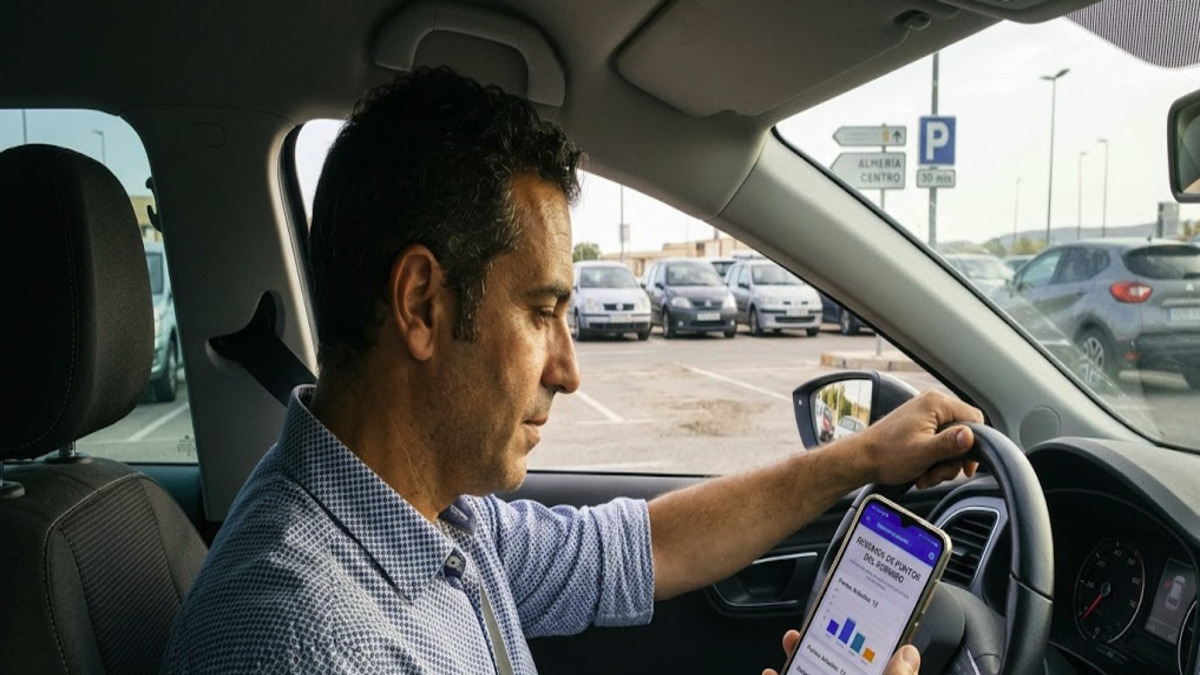
How can drivers check their points?
The DGT provides official services for checking the current points balance.
Drivers can view their balance and access information about changes recorded on their driving record.
This can be particularly useful after a penalty that may involve points.
The DGT also allows drivers to obtain documentation showing their current balance and a detailed record of points gained or deducted.
Checking the balance can prevent surprises
Receiving a traffic fine does not automatically mean that points have been removed.
The deduction depends on the specific offence and the penalty attached to it.
Likewise, a driver with 12 points can see the balance fall after a later offence carrying a points penalty.
Checking the official record gives drivers a clearer picture of their actual position.
Spain’s points system also rewards good driving
The system is not based exclusively on punishment.
Drivers who maintain a clean record can increase their balance over time, moving from 12 to 14 and eventually to the maximum of 15.
Newly qualified drivers follow a different starting path because they begin with eight points. After two years without a points-related offence, they can reach 12.
From that point, the normal bonus system applies.
The result is a system in which a driver’s balance can reflect both past offences and a sustained record of responsible driving.
Official source on Spanish driving licence points
Official source: Dirección General de Tráfico — Recovery of driving licence points
The Spanish traffic legislation establishes the rules governing the allocation and operation of the points system.
Driving licence points in Spain: the key facts
Most drivers start with 12 points, while newly qualified drivers and those who regain a licence after losing it start with eight.
The maximum balance is 15.
Specific serious and very serious offences can remove between two and six points, depending on the conduct involved.
Drivers who still have points can recover them through the relevant course or by completing the required period without another offence that carries a deduction.
Reaching zero is much more serious. The licence loses its validity and the driver must complete the recovery process before returning to the road.
Voluntary safe-driving courses can also provide a two-point bonus when the conditions are met.
The most important step for any driver is to know their current balance and understand which offences can affect it.
Frequently Asked Questions about driving licence points
How many points does a Spanish licence normally have?
The standard starting balance is 12 points. Newly qualified drivers normally start with eight.
What is the maximum balance?
Drivers can reach a maximum of 15 points.
How can lost points be recovered?
Drivers can use the relevant recovery course or regain the initial balance after the required period without another points-related offence.
What happens at zero points?
The licence loses its validity. The driver must complete the required recovery process, including the course and theoretical test…….MORE