
Death of Maricarmen Abascal: The 87-Year-Old Eviction Victim Who Sparked Spain’s Housing Rights Movement
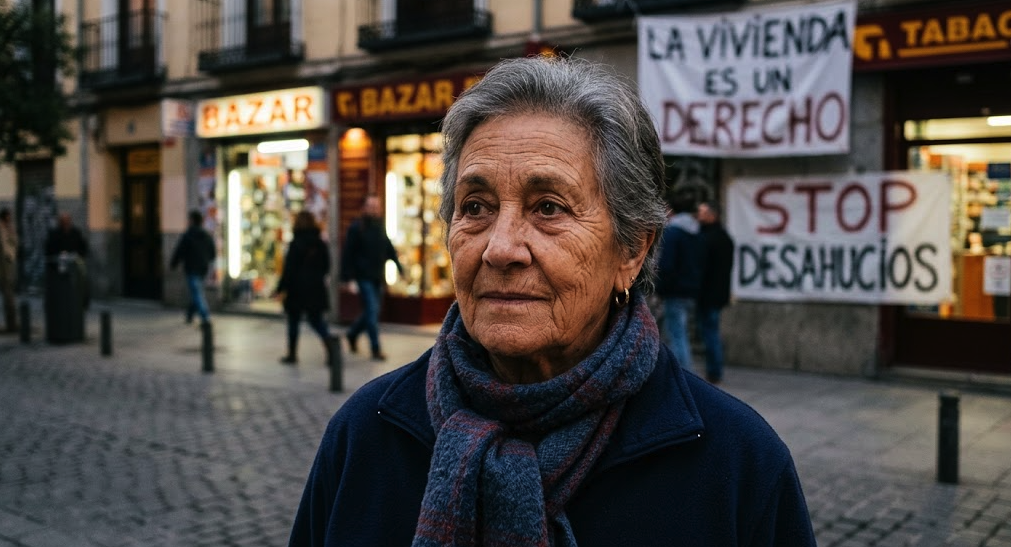
María Carmen “Maricarmen” Abascal, an 87-year-old resident of Madrid whose forced eviction triggered nationwide protests over housing affordability, has passed away in the hospital. Her case rapidly transformed from a personal crisis into a national symbol of grassroots resistance, refocusing public attention on Spain’s ongoing housing shortage and landlord-tenant legislation.
Her passing has sparked vigils, demonstrations, and renewed calls from tenant unions and social movements for immediate structural reforms in the real estate sector.
From Personal Struggle to a National Rallying Cry
Maricarmen had resided in her home in Madrid’s Retiro district for over seven decades. Following a change in building ownership, the new corporate landlord sought substantial rent increases that exceeded her monthly pension. Despite legal appeals and community blockades organized by local neighborhood assemblies, her eviction was executed on September 23.
Compounded by frail health, she was hospitalized shortly after being removed from her apartment. Following her death, thousands gathered outside public institutions in Madrid and other major cities, highlighting her final public statement encouraging citizens to organize for their fundamental rights.
Key Developments in the Housing Rights Movement
- Community Defense Networks: Neighborhood assemblies and tenant unions expanded local support systems to assist vulnerable households facing eviction proceedings.
- Policy Mobilization: Activists continue to push for tighter rent controls, longer lease protections, and a temporary ban on evictions for elderly or low-income tenants.
- Institutional Response: Political debates regarding state-level housing legislation have intensified, with lawmakers examining measures to expand emergency housing alternatives.
Structural Challenges in the Spanish Housing Market
The public response to Maricarmen’s situation reflects broader economic pressure on tenants across Spain. Data from the General Council of the Judiciary (CGPJ) and the National Statistics Institute (INE) show sustained levels of eviction proceedings linked to rental defaults, particularly in major urban centers.
Spain’s public social housing stock remains significantly below international benchmarks. According to housing ministry estimates, public housing accounts for approximately 1.5% to 2% of total residential properties, compared to a European Union average exceeding 9%. This shortage limits the capacity of municipal authorities to offer immediate shelter to individuals facing displacement.
HIGRH NEWS Editorial Perspective: Housing Must Be Protected as a Public Necessity
The loss of Maricarmen Abascal underscores a persistent gap between constitutional guarantees of adequate housing and market realities. For years, the immediate buffer against housing vulnerability in many cities has been neighbor-led solidarity rather than institutional safety nets.
From the perspective of HIGRH NEWS, sustainable housing stability requires systemic policy adjustments. Accelerating the expansion of public housing reserves and establishing clear protocols to prevent the eviction of elderly or vulnerable citizens without guaranteed alternative accommodation are essential steps. Treating residential property primarily as a speculative investment asset risks leaving vulnerable populations unprotected when economic conditions shift.
Frequently Asked Questions
Who was Maricarmen Abascal and why did her case gain widespread attention?
Maricarmen Abascal was an 87-year-old woman in Madrid who faced eviction from her home of 71 years following a dispute over rent increases with a corporate landlord. Her resilience and support from local tenant unions made her case a central focus for national media and housing rights campaigns.
What is the current state of social housing in Spain compared to the rest of Europe?
Spain’s public social housing stock represents roughly 1.5% to 2% of total dwellings, which is lower than the EU average of over 9%. This disparity creates challenges when providing emergency housing solutions during eviction procedures.
How do official bodies monitor evictions in Spain?
Eviction proceedings and foreclosures are formally tracked by the General Council of the Judiciary (CGPJ) through quarterly reports detailing judicial decisions and market-related enforcement actions.
Official Sources
- General Council of the Judiciary (CGPJ) — Reports on Judicial Activity, Evictions, and Foreclosures — https://www.poderjudicial.es
- Ministry of Housing and Urban Agenda — National Housing Statistics and Policy Initiatives — https://www.mivau.gob.es
- National Statistics Institute (INE) — Living Conditions Survey and Real Estate Indices — https://www.ine.es

Contact us: info@higrh.com