
Madrid – HIGRH NEWS: MOT test in Spain: what inspectors really check, the most common failures and when you need to take it.

The MOT test in Spain is far more than a quick look at whether a car appears to be in good condition. Inspectors examine a wide range of safety and technical components, from brakes and tyres to lights, suspension, steering and emissions. But what exactly happens when a vehicle enters the inspection lane, which problems are most likely to cause a failure and when does each type of vehicle have to undergo its inspection?
Spain’s vehicle inspection system is designed to verify that vehicles remain in suitable technical condition to circulate safely and within the requirements established by law.

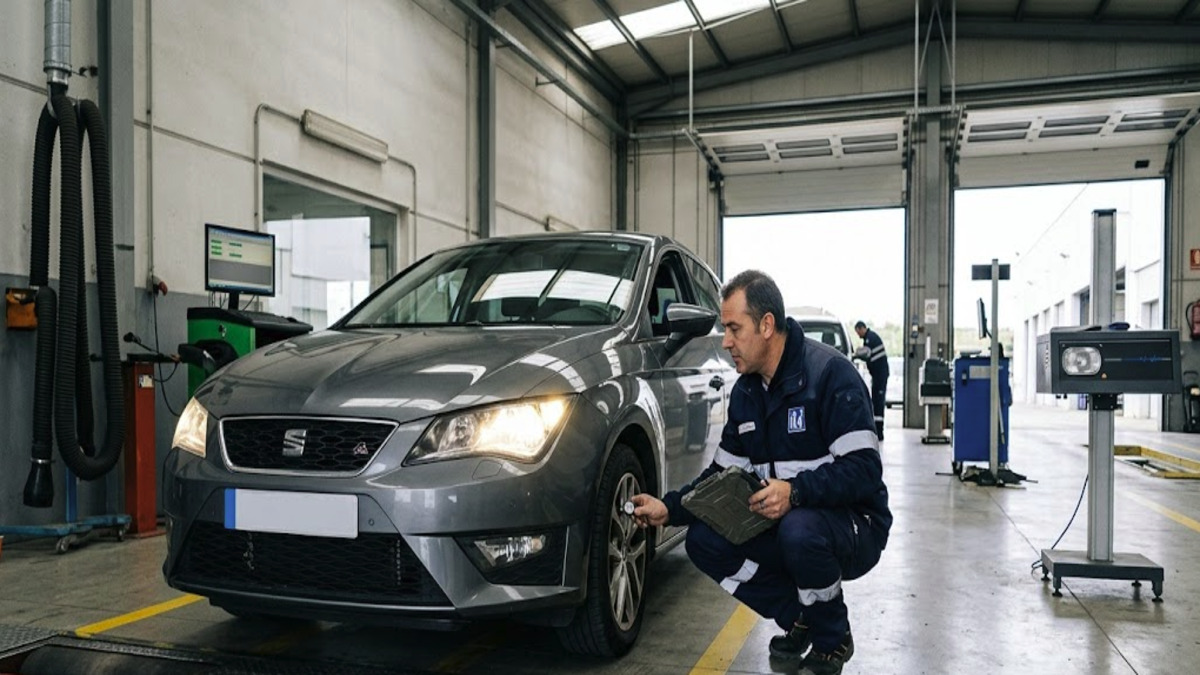
The inspection follows a regulated procedure. It is not the same as taking a vehicle to a workshop for a complete mechanical diagnosis. Instead, inspectors use specific methods and equipment to assess the components covered by the official inspection procedure.
That distinction matters because passing the MOT does not mean that a vehicle is mechanically perfect. It means that the vehicle has met the technical requirements assessed during that particular inspection.
What the MOT test in Spain actually checks
The inspection begins with the identification of the vehicle. Technicians verify details such as the registration plate, vehicle identification number and information contained in the relevant documentation.
The exterior is then examined. This includes the bodywork, chassis and certain external components that could affect safety.
Inspectors also check doors, mirrors, windows, windscreen wipers and other elements associated with the vehicle’s exterior condition and the driver’s visibility.
Inside the vehicle, the inspection includes components such as seats, seatbelt systems and their anchor points. These elements are particularly important because they form part of the vehicle’s occupant protection system.
Lighting and signalling are another major part of the inspection. Headlights, position lights, indicators, brake lights, reversing lights and other signalling devices are checked according to the vehicle’s characteristics.
The inspection also covers the braking system. Testing equipment is used to assess braking performance and identify problems that could affect the vehicle’s ability to stop safely.
Tyres, wheels, axles and suspension are examined as well. Inspectors look for defects that could compromise road safety or indicate that a component no longer meets the required technical conditions.
The steering system, engine and transmission are also included in the inspection procedure. Emissions are measured where applicable, with the aim of checking that the vehicle complies with the limits established for its category and propulsion system.
The inspection is carried out according to an official procedure and normally does not involve dismantling vehicle components. Its purpose is to assess the condition of the vehicle through the prescribed checks rather than to provide a complete workshop diagnosis.
An MOT is not the same as a garage inspection
This is one of the most important distinctions for drivers.
A garage can investigate unusual noises, diagnose electronic faults, dismantle components and carry out extensive maintenance work. An MOT station follows a defined inspection procedure instead.
As a result, a vehicle can require maintenance even after passing its MOT. Routine servicing remains the responsibility of the owner throughout the vehicle’s life.
Oil, filters, fluids, brakes, tyres, suspension and other mechanical components still require regular attention regardless of the date of the last inspection.
The most common MOT failures in Spain
Some parts of a vehicle generate considerably more inspection defects than others.
Lighting and signalling are among the areas where inspectors frequently identify problems. A defective light, damaged component or signalling problem can lead to a defect depending on its nature and severity.
Emissions are another important area. Vehicles with problems affecting their emissions-control systems may fail the relevant test if their measured values exceed the applicable limits.
Tyres, wheels and suspension also account for a significant proportion of serious defects recorded during inspections.
Official figures cited by the Spanish ITV sector show that defects involving axles, wheels, tyres and suspension represented 20.5% of all serious defects detected in inspections analysed for 2023, with more than 1.7 million serious defects recorded in that group.
Brakes are another major inspection point. Problems with braking performance, balance or the condition of braking components can prevent a vehicle from receiving a favourable result.
More recent figures cited by the ITV sector put lighting and signalling at 22.6% of serious defects, while wheels, tyres and suspension accounted for around 19.9% and brakes 11.4%.
Tyres deserve special attention
Tyres are one of the easiest components for a driver to check before an inspection and one of the areas that deserves particular attention.
Drivers should look for excessive wear, visible damage and other obvious irregularities before taking the vehicle to an inspection station.
The condition of the tyres can directly affect braking, handling and road safety. A problem identified during the inspection may therefore result in the vehicle being classified as having a serious defect.
Checking the tyres before the appointment is a simple step that can prevent an unnecessary second visit.
Faulty lights can also cause problems
The vehicle’s lighting system should be checked before the inspection.
Drivers can verify that the indicators, brake lights, reversing lights, position lights and headlights are working correctly.
It is also worth checking the condition of the light units themselves. Damage or defects affecting their operation can become an inspection issue.
Because lighting and signalling represent one of the largest categories of serious defects, a basic check before the appointment can be worthwhile.
When do you have to take the MOT test in Spain?
For privately used passenger cars, the inspection schedule depends mainly on the vehicle’s age.
The first inspection is generally required four years after the vehicle’s first registration.
After that, passenger cars between four and ten years old normally undergo the inspection every two years.
Once the vehicle is more than ten years old, the inspection becomes annual.
These are the general intervals for privately used passenger cars. Other vehicle categories and uses can have different inspection schedules.
The exact deadline therefore depends not only on how old the vehicle is but also on its category and classification.
Drivers also do not necessarily have to wait until the final day. The Spanish traffic authority states that a periodic inspection can be carried out up to 30 days before the deadline.
This gives vehicle owners some flexibility when arranging an appointment and reduces the risk of reaching the expiry date without having completed the inspection.
What happens if the vehicle fails?
Not every defect has the same legal consequence.
The inspection classifies defects according to their seriousness. A minor defect is treated differently from a serious or very serious defect.
When a serious defect is detected, the inspection receives an unfavourable result and the vehicle must have the problem repaired before successfully completing the inspection process.
Very serious defects can lead to a negative inspection result, which carries more restrictive consequences for the vehicle.
The inspection documentation identifies the defects found so that the owner knows which problems need to be corrected.
The vehicle must then meet the relevant requirements when it returns for the necessary follow-up inspection.
What should you check before going to the MOT?
A few basic checks can help drivers identify obvious problems before arriving at the inspection station.
Start with the tyres. Check their general condition and look for visible damage or excessive wear.
Then check every exterior light. Ask someone to help if necessary, particularly when checking brake and reversing lights.
The windscreen and wipers should also be inspected. The driver needs a clear field of vision, and damaged glass or defective wiping equipment can become an inspection issue.
Mirrors, doors, seatbelts and registration plates are also worth checking.
Brakes require a different approach. Drivers should pay attention to unusual noises, vibrations or changes in pedal behaviour. If something feels wrong, the safest option is to have the braking system checked by a qualified professional before the MOT.
Emissions can also provide warning signs. Excessive smoke, irregular engine operation or warning lights associated with the emissions system should not be ignored.
Vehicle modifications deserve attention too. Certain changes to a vehicle’s original characteristics can require a specific inspection procedure.
The safest approach is therefore not to wait until the day of the MOT to discover potential problems.
Where can you check the official MOT requirements?
The official inspection procedure and relevant regulatory information are available through Spain’s Ministry of Industry.
Official source: Ministry of Industry — Vehicle Technical Inspection.
The official documentation is particularly useful when a driver has questions about modifications, a specific vehicle category or technical requirements that may vary depending on the type of vehicle.
MOT test in Spain: what really determines the result?
Passing the MOT does not depend on whether a car looks clean or well maintained from the outside.
The inspection focuses on defined technical and safety requirements and classifies any detected defects according to their seriousness.
Lighting, emissions, tyres, suspension and braking systems are among the areas that deserve particular attention because they account for a substantial share of the problems detected during inspections.
That does not mean that drivers should only check these components. The inspection covers many different parts of a vehicle, and a defect in another area can also affect the final result.
Regular maintenance remains essential. An MOT certificate confirms that the vehicle met the inspection requirements at the time of the test; it does not replace servicing or guarantee that no mechanical problem will develop afterwards.
For privately used passenger cars, the basic schedule is straightforward: the first inspection after four years, every two years between four and ten years, and annually once the vehicle is more than ten years old.
Knowing the deadline and checking the main safety components beforehand can make the inspection process easier and reduce the chance of an avoidable failure.
Frequently Asked Questions about the MOT test in Spain
When does a car need its first MOT in Spain?
A privately used passenger car generally needs its first inspection four years after its first registration.
What are the most common MOT problems?
Lighting and signalling, emissions, tyres, wheels, suspension and braking systems are among the areas where significant numbers of defects are found.
Can I take the MOT before the deadline?
Yes. The Spanish traffic authority states that a periodic inspection can be carried out up to 30 days before the deadline.
What happens if my car receives an unfavourable result?
The vehicle must have the identified serious defects repaired and comply with the requirements before successfully completing the inspection process…….MORE