We also provide our news in Spanish and Arabic. For inquiries, please contact us via the website's email.


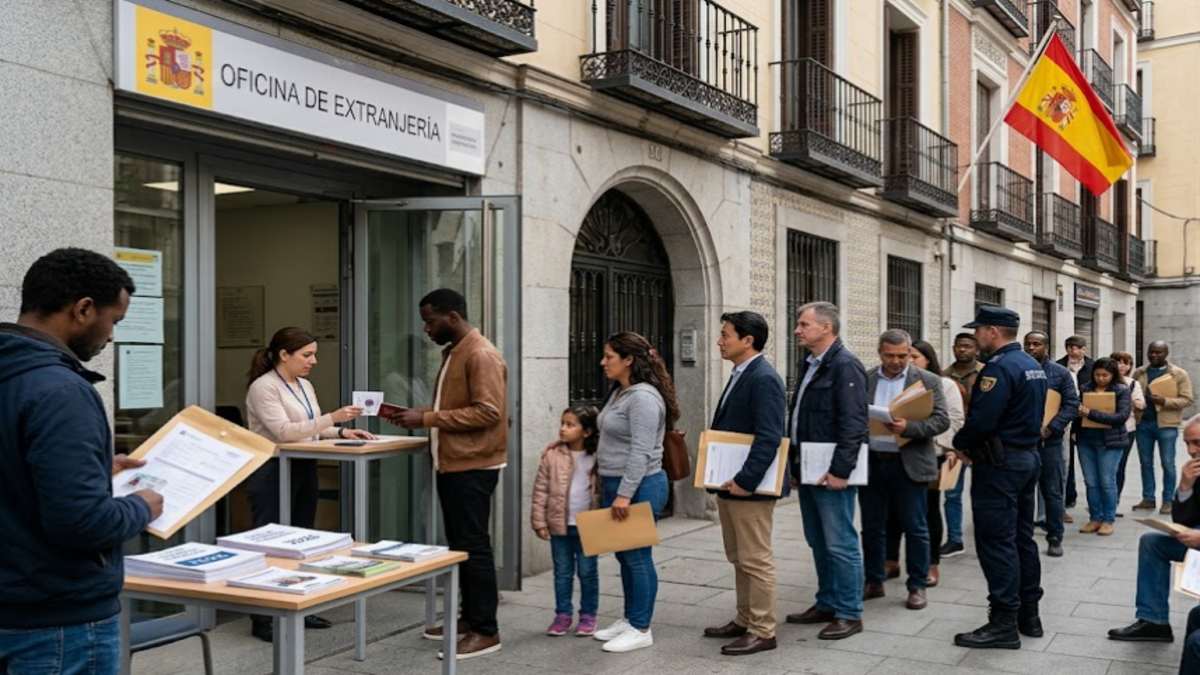
Madrid – HIGRH NEWS: Spain’s immigration landscape is being shaped by a major regularization process, new official residence data and continued monitoring of irregular migration, but what are the latest developments for migrants, applicants and foreign residents in Spain?

Latest Spain Immigration Updates 2026: Regularization Process Reaches 1.17 Million Applications
Spain’s extraordinary regularization process received 1,174,978 applications by the close of the application period, according to figures released by the Ministry of Inclusion, Social Security and Migration.
The application window opened on April 16 and ended on June 30. By July 2, authorities had processed 609,737 cases.

The ministry said 79.6% of applications concerned residence authorization based on exceptional circumstances linked to extraordinary roots, while the remaining 20.4% involved applicants for international protection.
The government also reported that 83.2% of applications were submitted online. The 448 authorized offices of Correos, Social Security and immigration services received nearly 200,000 applications.
The process has also had an immediate effect on social security registrations. As of June 30, 159,097 people were registered with Spain’s Social Security system as a result of the regularization process.
The scale of the process has attracted international attention. Reuters reported in July that more than 600,000 applicants had obtained temporary work authorization while their cases were being reviewed, highlighting the potential impact of the measure on access to formal employment.
Latest Spain Immigration Updates 2026: What the Official Data Shows
New figures from Spain’s Permanent Immigration Observatory provide a broader picture of the country’s foreign-resident population.
The latest published data show that 7,500,944 foreign nationals held valid residence documentation at the end of 2025, representing an increase of 4.5% over the previous year.
Of that total, 53.8%, or more than four million people, held documentation under the EU, European Free Trade Association or British residence frameworks. The number of foreign nationals covered by the general immigration regime stood at around 3.5 million, an increase of 9% over the previous year.
The Permanent Immigration Observatory has also published updated figures on residence permits granted through regularization based on ties to Spain. The latest data, released on July 7, show that authorities granted 221,802 such residence permits during 2025.
The permits covered several routes, including second-chance, employment, social, socio-educational and family grounds.
These figures are separate from the extraordinary regularization process and reflect the broader system of residence authorizations under Spain’s immigration framework.
Spain Immigration Updates 2026: Irregular Migration Remains Under Official Monitoring
Spain’s Ministry of the Interior continues to publish regular reports tracking irregular immigration.
The ministry’s 2026 reports include cumulative data through July 15, alongside earlier reports covering June 30 and June 15. The reports form part of the government’s regular monitoring of irregular migration movements and provide updated official data during the year.
The latest developments therefore point to two parallel areas of immigration policy: the processing and integration of people already living in Spain through regularization measures, and the continued monitoring of irregular migration flows.
For migrants and foreign residents, the most significant immediate development remains the extraordinary regularization process and the processing of the applications already submitted.
What Migrants Should Know About the Latest Spain Immigration Updates
The figures released by the Spanish government show that the extraordinary regularization process has moved beyond the application stage and into case processing.
More than half of the applications had been processed by the time the government released its July 2 update, while the authorities continued to handle the remaining cases.
The government also said that six out of ten applicants were under the age of 34, indicating a relatively young applicant population.
At the same time, official immigration statistics show that Spain’s foreign-resident population remains substantial, with millions of people holding valid residence documentation under different legal frameworks.
Applicants should therefore distinguish between the extraordinary regularization process and existing residence routes. The official data cover different procedures and categories, and the figures should not be treated as a single immigration program.
For the most accurate information on individual cases, eligibility requirements and administrative procedures, applicants should rely on official government guidance rather than social media claims or unofficial immigration advice.
FAQ: Latest Spain Immigration Updates 2026
How many applications were submitted under Spain’s extraordinary regularization process?
The Spanish government reported 1,174,978 applications by the end of the application period.
How many applications had been processed?
Authorities reported that 609,737 cases had been processed by the time of the government’s July 2 update.
How many foreign nationals had valid residence documentation in Spain?
The latest official data cited by the Permanent Immigration Observatory recorded 7,500,944 foreign nationals with valid residence documentation at the end of 2025.
Are Spain’s regularization process and ordinary residence permits the same?
No. The extraordinary regularization process is a specific measure, while ordinary residence permits and regularization based on ties to Spain operate through separate immigration procedures and legal routes.
Conclusion
Spain’s immigration policy in 2026 is currently marked by the large-scale processing of an extraordinary regularization program alongside the continued publication of residence and irregular migration data. With more than 1.17 million applications submitted and more than 609,000 cases processed in the government’s latest update, the regularization process remains one of the country’s most significant immigration developments.
…….MORE
Contact us: info@higrh.com