
What Does a Red Warning from AEMET Mean? What to Do in Case of Heavy Rain, Storms, and Floods
AEMET Red Warning: Quick Action Guide
When Spain’s State Meteorological Agency (AEMET) issues a red warning, it is far more than a simple forecast for heavy rain. This level indicates an extraordinary meteorological danger capable of causing severe or catastrophic impacts in affected areas. The official recommendation is straightforward: take immediate preventive measures, follow instructions from local emergency services, and refrain from traveling unless absolutely necessary.
What exactly does this risk level mean? How can you find out if it affects your municipality? And what steps should you take if you are at home, on the road, or if an emergency alert sounds on your phone? This guide explains how to check official warnings and what self-protection protocols to follow during heavy rain and flash flooding.
Current Weather SituationWeather warnings can change level or be updated throughout the day. Before planning any journey, check the official AEMET warning map to confirm the situation in your municipality.
What to Do If AEMET Activates a Red Warning
When a red weather warning for torrential rain or severe storms is activated, personal safety and self-protection are the top priorities. Emergency services advise postponing any non-essential road trips. If you are in an exposed area, remain in a secure building, stay clear of riverbeds, ravines, and low-lying flooded zones, and keep tuned to official Civil Protection and 112 emergency channels.
What a Red Weather Warning Means
A red warning is the highest alert level issued by AEMET within the national Meteoalerta plan. It indicates that forecasted weather phenomena pose an extraordinary danger, with the potential for very severe or catastrophic damage to infrastructure and vulnerable populations.
It is essential to distinguish between meteorological authorities and emergency response agencies: AEMET issues weather warnings, while declaring official state of emergency levels and managing disaster response is the responsibility of Civil Protection authorities within each Autonomous Community or local municipality.
For rainfall events, the specific precipitation thresholds (such as liters per square meter per hour) that trigger a warning vary depending on the region and weather system. AEMET establishes these criteria within the Meteoalerta system based on regional climate characteristics and potential local impacts.
Differences Between Yellow, Orange, and Red Warnings
AEMET uses a standardized color-coded system aligned with Europe’s Meteoalarm network. While four levels exist (Green, Yellow, Orange, and Red), Green simply indicates no significant weather risk. The active warnings are defined as follows:
| Warning Level | What It Means | Recommended Action |
| Yellow | Low risk / Unusual local phenomenon | Stay informed about changing weather conditions. |
| Orange | Important risk | Be prepared and take precautions during outdoor activities. |
| Red | Extraordinary risk | Follow instructions from authorities and avoid travel unless strictly necessary. |
How to Check If the Warning Affects Your Municipality
To find precise weather information for your local area, check beyond the general provincial map:
- Visit the official AEMET website (aemet.es).
- Use the main search bar to enter the exact name of your town or municipality.
- Select the “Avisos” (Warnings) tab to review active weather warnings for your specific area, broken down by hourly timeline and probability.
Can You Drive During a Red Weather Warning?
Official guidance from AEMET and Civil Protection during a red warning is clear: do not travel unless strictly necessary.
Vehicles can quickly become trapped or swept away when floodwaters rise rapidly. If a journey is unavoidable, check road conditions beforehand via the Directorate-General for Traffic (DGT) or regional traffic authorities, and avoid secondary roads running alongside rivers, ravines, or underpasses.
What to Do If You Encounter Flooding in a Vehicle
If you are driving and the road begins to flood, emergency response services recommend acting immediately:
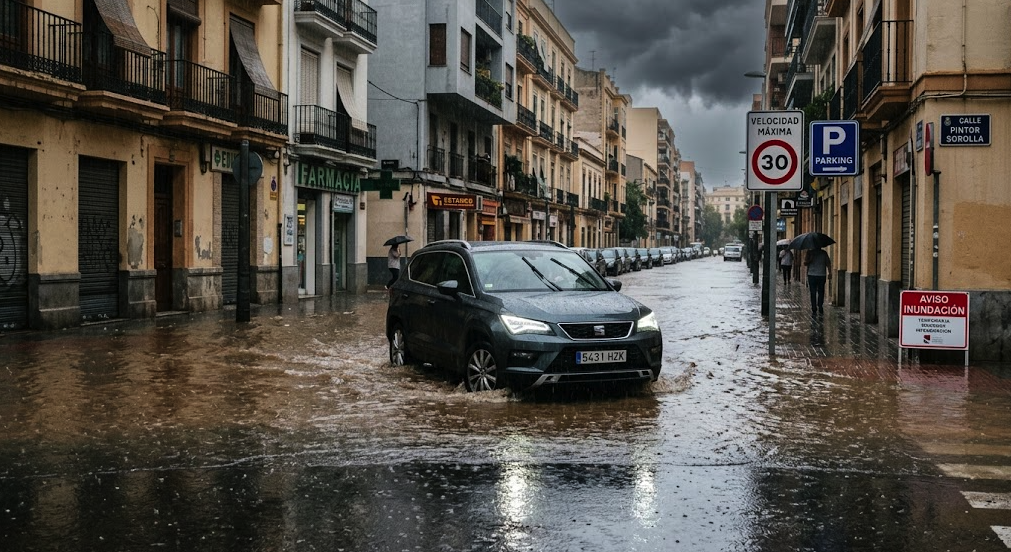
- Never attempt to drive through flooded road stretches or dry riverbeds (ramblas): Fast-moving water can carry away a passenger car in just a few inches of depth.
- If your vehicle stalls: Abandon the car immediately.
- If water pressure prevents you from opening doors: Exit through the windows.
- If floodwater rises above the axles or reaches knee level: Leave the vehicle at once and move to higher ground, staying well away from rivers, streams, dry riverbeds, bridges, and low-lying areas susceptible to flash flooding.
What to Do at Home During Heavy Rainfall
If intense rain threatens to flood your home or building, take preventive measures indoors:
- Clear drainage points: Ensure gutters, downspouts, and balcony or patio drains are clean and unobstructed by leaves or debris.
- Secure outdoor items: Store or fasten down garden furniture, plant pots, and any items that could be carried away by wind or water.
- Protect ground-level entrances: Install flood barriers or sandbags at garage doors and low-lying entry points if you live in a flood-prone area.
- Disconnect utilities: If floodwater enters the building, safely shut off the main electricity switch and gas supply to prevent short circuits or leaks.
- Move to upper floors: Take essential documents, medication, and valuables to higher levels. Never go down into basements or underground garages to retrieve a vehicle once flooding has begun.
What Is ES-Alert and What Should You Do If You Receive One?
ES-Alert is the public warning system operated by Spain’s National Civil Protection Network. It allows emergency coordination centers to send emergency alert messages directly to mobile phones located within an area facing an imminent disaster or hazard.
When an alert is delivered to your phone:
- A full-screen notification will appear, accompanied by a loud, high-pitched chime and continuous vibration, even if your device is set to silent or “Do Not Disturb” mode.
- Read the message carefully: it provides urgent instructions on self-protection actions, such as shelter-in-place orders, evacuation routes, or road closures.
- Follow the official instructions provided in the alert message.
- Do not call 112 for general information—keep emergency telephone lines free for individuals facing immediate danger.
Precautions for Residents Living Near Rivers or Floodplains
People residing near riverbanks, dry creeks (ramblas), or historically flood-prone zones should pay close attention to weather updates and instructions from Civil Protection and local authorities:
- Never park vehicles in dry riverbeds or along embankments, even if it is not currently raining in your immediate neighborhood (flash floods can travel rapidly from upstream).
- Keep an emergency go-bag ready with personal identification documents, phone chargers, and necessary prescriptions in case a preventive evacuation is ordered.
- Stay attentive to public address announcements or updates from local police, Guardia Civil, or municipal emergency teams.
Who Decides on School Closures and Travel Restrictions?
Neither AEMET nor meteorologists have the legal authority to close schools, cancel public transport, or restrict workplace attendance.
Decisions regarding school closures, municipal facility shutdowns, remote work recommendations, or road access restrictions rest with regional and local authorities (such as regional Ministries of Education and Regional Ministries of the Interior, alongside local Town Halls). Official decisions are communicated through government channels and public media outlets.
Does Insurance Cover Flood Damage in Spain?
Damage caused by extraordinary flooding in Spain is typically handled by the Consorcio de Compensación de Seguros (Insurance Compensation Consortium), provided that the event qualifies as an extraordinary risk and standard insurance requirements are met. The insurance policy covering the property or vehicle must be active and up to date with premium payments at the time of the event.
How to Submit a Claim to the Consortium
- Report the damage promptly: You can file a claim directly with the Consortium via its official website (
consorseguros.es) or through your insurance provider. - Provide necessary documentation: Prepare your insurance policy details, proof of recent premium payment, bank details, and a clear description of the damage.
- Keep evidence and records: Take photos or videos of all water damage prior to cleaning up, and retain repair estimates or receipts for damaged items.
Where to Find Verifiable Official Information
To stay accurately informed and prevent the spread of unverified rumors, always rely on official sources:
- Weather Forecasts & Warnings: Official website and mobile application of AEMET.
- Traffic & Road Conditions: Directorate-General for Traffic (DGT) or regional traffic agencies (e.g., Transit in Catalonia, Trafikoa in the Basque Country).
- Emergency Response & Guidance: Official social channels and news bulletins from Civil Protection and regional 112 Emergency Services.
Frequently Asked Questions (FAQ)
What does a red warning from AEMET mean?
It indicates forecasted weather phenomena of extraordinary intensity that pose a severe hazard. It requires immediate preventive measures, adherence to instructions from emergency services, and avoiding unnecessary travel.
Is driving allowed during a red weather warning?
Official advice is to refrain from traveling unless it is strictly necessary. If driving is essential, check road conditions with the DGT and avoid secondary routes or crossings near waterways.
What is the difference between an orange and a red warning?
An orange warning denotes an important risk from unusual weather where precautions must be taken. A red warning denotes an extraordinary risk capable of causing severe or catastrophic impacts, requiring maximum self-protection and restricted movement.
How can I check if my town is under a red warning?
Search for your municipality on AEMET’s official site (
aemet.es) to view active weather warnings for your specific locality.What should I do if my phone receives an ES-Alert?
Read the notification instructions on screen, stay calm, and execute the self-protection steps outlined by Civil Protection. Avoid calling 112 for non-emergency inquiries.
What should I do if water starts entering my home?
Safely disconnect electricity and gas mains if possible, move to upper floors with your essential documents, and dial 112 if you require emergency rescue. Never enter basements or underground garages.
Who announces school cancellations due to heavy rain?
School closures are decided by competent regional or local authorities (such as regional Education Departments or municipal councils). Check official communication channels for updates.
Official Sources
- State Meteorological Agency (AEMET) — Meteoalerta Plan and weather warning criteria — aemet.es
- Directorate-General for Civil Protection and Emergencies — Self-protection recommendations for floods and heavy rainfall — proteccioncivil.es
- Consorcio de Compensación de Seguros — Coverage and claims procedure for extraordinary risks — consorseguros.es

Contact us: info@higrh.com