
MADRID – HIGRH NEWS: Spain’s new school year begins amid teacher strikes and protests across the country

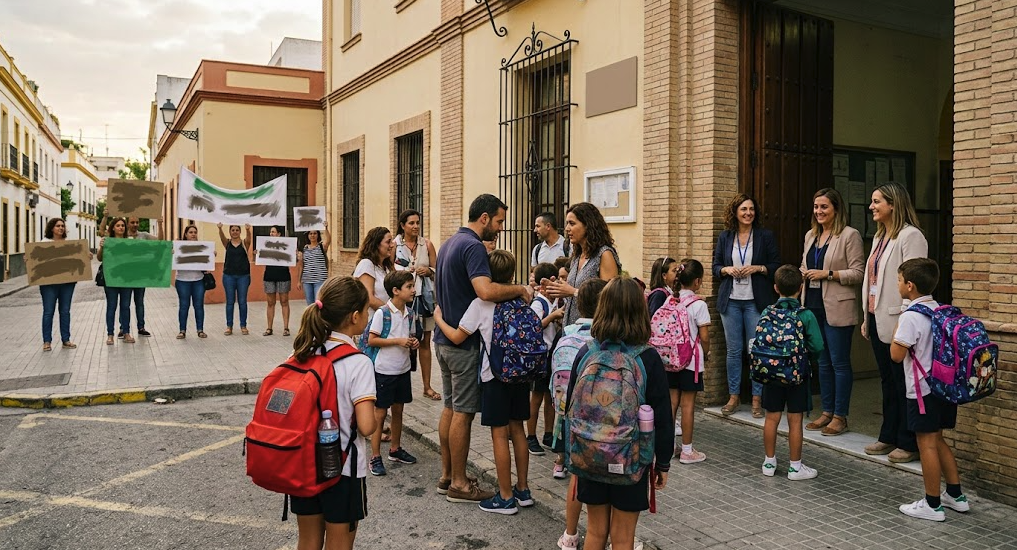
Spain’s new school year is getting underway with more than eight million students preparing to return to classrooms while teachers’ unions maintain disputes with regional authorities over pay, staffing, class sizes and working conditions. Several regions are facing strikes or demonstrations as schools reopen, but where are the main conflicts and what are teachers demanding?
Spain’s new school year begins with protests in several regions
The return to school is taking place against a backdrop of labour disputes affecting education workers in different parts of Spain.

The situation is not the same across the country. Education is largely managed by the autonomous communities, meaning that school calendars, negotiations and strike calls can differ significantly from one region to another.
More than eight million pupils are expected to begin the new academic year on a staggered basis.
Madrid is among the first regions to reopen schools, while other autonomous communities will follow with their own calendars over the following days.
For families, the impact of the protests will therefore depend largely on where they live and which education system their children attend.
Teachers’ unions have put several issues at the centre of their demands.
They include smaller classes, more teaching staff, additional support for pupils with special educational needs, salary improvements and a reduction in administrative work.
Unions are also demanding investment in school buildings and better systems for dealing with extreme temperatures.
The disputes come after months of negotiations and demonstrations in different parts of the country.
In several regions, unions argue that previous agreements have not resolved all of the problems affecting teachers and public education.
Catalonia faces a strike at the start of classes
Catalonia is one of the main areas of tension.
Several teachers’ unions have called a strike for September 8, coinciding with the start of classes in the region.
The unions involved include USTEC·STEs, CGT, Intersindical, CNT and COS.
Their demands include lower pupil-to-teacher ratios, more resources for inclusive education, improvements to school infrastructure and better working conditions for teachers.
The Catalan government has reopened negotiations with unions in an effort to prevent the strike from going ahead on the first day of school.
Education Minister Esther Niubó has held meetings with representatives of the teaching unions as the deadline approaches.
The government points to agreements already reached with part of the union movement.
Those agreements include the recruitment of 6,400 additional education professionals, salary increases of up to 400 euros per month and measures to reduce class sizes in secondary education.
The government has put the total investment associated with these measures at 2.7 billion euros over four years.
However, USTEC, CGT and Intersindical continue to support the planned strike.
USTEC is calling for the recruitment of 15,000 additional professionals, reductions in class sizes and salary increases linked to the cost of living.
The negotiations therefore remain important in determining whether the strike will eventually take place.
Spain’s new school year faces another major dispute in Madrid
Madrid is preparing another significant education dispute.
CCOO and UGT have announced an indefinite strike in the non-university public education sector beginning on October 14.
The unions are demanding fewer teaching hours, smaller classes, better salaries and additional resources for special education.
They also want teachers to face less administrative work and are calling for improvements to school buildings, including better climate control.
The regional government says it is increasing investment in education.
Among the measures announced for the new academic year is the recruitment of 1,280 teachers.
Madrid has also announced plans to reduce secondary school class sizes to a maximum of 25 pupils and to build 49 new educational centres.
However, the unions argue that the measures do not go far enough to address their demands.
The dispute could therefore continue into the autumn.
CSIF has also announced demonstrations beginning in September, adding another layer to the growing pressure on the regional education authorities.
The unions are calling for progress on staffing, class sizes, working hours and employment stability.
Valencia maintains pressure on education authorities
The Valencian Community is also preparing new demonstrations.
Teachers’ unions have called protests in Alicante, Valencia and Castellón for September 12.
The mobilisations follow months of disagreements over salaries, staffing levels, class sizes, administrative duties and school infrastructure.
Teachers have also raised concerns about resources for inclusive education.
The unions suspended the possibility of an indefinite strike earlier in the year after the regional administration presented a new proposal.
However, they have maintained demonstrations while negotiations continue.
The STEPV union is calling for larger teaching teams, smaller classes and measures to recover purchasing power lost by education workers.
It has also demanded improvements to school facilities and additional resources for inclusive education.
Classes in the Valencian Community are scheduled to begin on September 9.
Teachers have already returned to schools to prepare for the arrival of pupils.
Their work includes organising groups, timetables and tutoring arrangements, as well as preparing lessons and coordinating with families and other members of staff.
Andalucía and the Balearic Islands also face mobilisations
The education disputes extend beyond Catalonia, Madrid and Valencia.
Andalusia has a teachers’ strike scheduled for November 11.
The planned action forms part of wider union pressure over conditions in public education and the resources available to schools.
The Balearic Islands are also facing industrial action.
Workers in education for children aged between zero and three are preparing a general strike for October 6, alongside other planned demonstrations.
The dispute covers working conditions and the regulatory framework governing early childhood education.
Other regions, including Cantabria and Castilla-La Mancha, are also among the territories where unions have announced or considered further action.
The intensity of the disputes varies between regions.
Some negotiations remain active, while other unions have already fixed strike dates.
This means the education protest calendar could change if agreements are reached between teachers and regional governments.
Smaller classes are among teachers’ main demands
The number of pupils in each classroom has become one of the most common issues in the current disputes.
Teachers’ representatives argue that smaller classes allow educators to give more individual attention to students.
They also say lower ratios would make it easier to support children with additional educational needs.
The issue is also part of the central government’s education proposals.
Plans under discussion include a maximum of 22 pupils in primary education and 25 in secondary education.
Different limits have also been proposed for other stages of education.
For children under three, proposed ratios vary according to age.
The proposals include four babies per educator for children under one year old, six children per educator for those aged one to two and eight for children aged two to three.
A maximum of 22 pupils has been proposed for children aged three to six.
For upper secondary education, a maximum of 30 pupils per teacher has been proposed, while the proposed limit for basic vocational training is 15 students.
Teachers’ unions argue that changing ratios must be accompanied by enough additional staff.
They say schools need more specialists, counsellors and support workers if smaller classes are to translate into better individual attention.
Inclusive education remains a major concern
Support for pupils with special educational needs is another central issue.
Teachers’ unions say schools require additional specialists and resources to respond effectively to pupils who need extra assistance.
They have called for more professionals in classrooms and stronger support services.
The issue has become particularly important as schools deal with increasingly diverse student populations.
Unions argue that teachers cannot meet every need without sufficient staffing and specialist support.
Pay and administrative work add to the tension
Salary negotiations are another major source of disagreement.
Teachers’ unions are demanding higher pay and measures to recover purchasing power.
They have also highlighted differences between teachers working in different autonomous communities.
In Catalonia, unions opposing the current agreements are seeking salary adjustments linked to the cost of living.
Salary improvements are also among the demands made by teachers’ organisations in Madrid and Valencia.
Administrative workload is another recurring complaint.
Teachers argue that they spend too much time completing paperwork and carrying out administrative tasks.
They want those obligations reduced so that more working time can be dedicated to teaching, preparing lessons and supporting pupils.
Employment stability is also a concern.
Unions have called for measures to reduce temporary employment and provide greater stability for teachers who work on temporary contracts.
The issue is particularly relevant to substitute and temporary staff.
School buildings and extreme heat
The condition of school buildings has also become part of the wider education debate.
Teachers’ organisations are demanding greater investment in school facilities and better climate-control systems.
Extreme temperatures have increased attention on classroom conditions, particularly in regions where heat can coincide with the beginning or end of the academic year.
Unions want schools to have adequate systems to keep classrooms at suitable temperatures.
The demand forms part of a broader call for investment in public education infrastructure.
The government is also proposing changes to education rules
While regional authorities negotiate with teachers’ unions, the central government is working on measures affecting schools across Spain.
One of the main proposals concerns class sizes and teachers’ working hours.
The plans include reducing the maximum number of pupils in several educational stages and limiting teaching hours for educators.
The proposals still require further legislative progress before all of the planned measures can take effect.
Teachers’ unions want the process to move forward more quickly.
They are also calling for progress on a long-awaited teaching statute covering areas such as access to the profession, career development and working conditions.
The education debate is also expanding into newer areas.
The use of artificial intelligence in schools has emerged as another issue for education organisations, which are seeking clearer rules on how the technology should be used by teachers and students.
Vocational education is also part of the wider discussion, particularly regarding resources and staffing.
A difficult autumn for Spanish education
The new academic year therefore begins with a complicated labour situation.
Catalonia has a strike planned for the first day of classes.
Madrid is preparing an indefinite strike for October.
Valencia has demonstrations scheduled for September, while Andalusia has a strike planned for November.
The Balearic Islands are also preparing industrial action in the early childhood education sector.
Other autonomous communities are considering or organising further demonstrations.
The final extent of the disruption will depend on negotiations between unions and education authorities.
Some strike calls could still be modified or cancelled if agreements are reached.
For families, the most important point is that the situation differs from one region to another.
There is no nationwide education strike affecting every school simultaneously.
Instead, each autonomous community has its own timetable, negotiations and potential industrial action.
Parents should therefore follow announcements from their regional education authorities and individual schools.
The start of the academic year itself remains scheduled according to the official calendars established by each community.
The disputes, however, could continue well beyond the first days of classes.
Teachers and governments face a key period of negotiations
The coming weeks will be crucial for Spain’s education system.
Teachers’ unions are pressing for concrete improvements in salaries, staffing, class sizes and working conditions.
Regional governments are defending measures already announced while continuing talks with union representatives.
The most immediate test will come in Catalonia, where the planned strike coincides with the beginning of classes.
Madrid represents another major challenge because of the indefinite strike announced for October.
Other regions have their own timetables for demonstrations and industrial action.
The outcome of the negotiations could determine whether the disputes remain limited to isolated actions or develop into a wider period of disruption.
For schools, the priority remains preparing for students to return.
Teachers are organising classrooms, schedules, groups and teaching plans while negotiations continue outside the school gates.
For families, the return to school therefore comes with uncertainty in several parts of the country.
What happens next will depend largely on whether education authorities and unions can reach agreements on the issues that have brought teachers onto the streets.
Official information about national education policy is available through the Spanish Ministry of Education, Vocational Training and Sports.
For now, the new school year begins with classrooms reopening across Spain and a series of labour disputes still unresolved.
Frequently Asked Questions
When does the new school year begin in Spain?
Schools reopen on different dates depending on the autonomous community and the educational stage.
Is there a nationwide teachers’ strike?
No. Strike action varies by autonomous community, with different unions and regional authorities involved in separate disputes.
Which region faces the earliest major strike?
Catalonia has a teachers’ strike planned for September 8, coinciding with the start of classes in the region.
What are teachers mainly demanding?
The main demands include smaller class sizes, more staff and resources, better pay, reduced bureaucracy and improved working conditions…….MORE