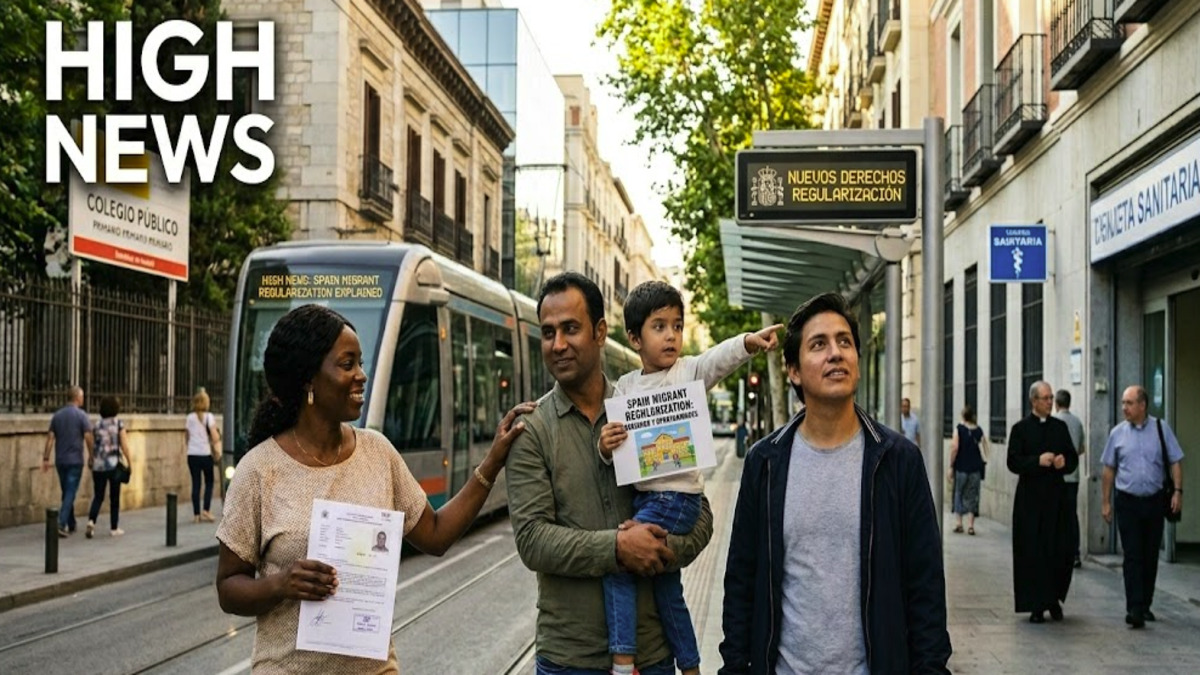

Madrid – HIGH NEWS: The recent decision regarding Spain migrant regularization is far more than a simple administrative shuffle; it is a life-altering shift for an estimated 800,000 people moving from the shadows into the light. Obtaining legal residency means that, for the first time, these individuals can walk through doors that were previously bolted shut.

However, does a residency card grant instant access to every state benefit? The reality is that while the playing field is leveling, Spain’s bureaucratic system still maintains specific waiting periods. From what we’ve gathered through official channels, here is the breakdown of what actually changes on day one.
Key Advantages of the Spain Migrant Regularization
The most immediate and vital gain is undoubtedly in public healthcare. Previously, access for those without papers was often fragmented or limited to emergencies. With a legal status, the right to a “Personal Health Card” (Tarjeta Sanitaria) becomes a reality. This integrates new residents into the public health system, granting them a primary care physician and the same treatment standards as any Spanish national.

Education and Professional Growth
While children in Spain already have a guaranteed right to schooling, the regularization brings a massive upgrade for adults. Now, they can officially enroll in:
Vocational Training (FP) and technical degrees.
University programs and state-funded master’s degrees.
Official Language Schools and specialized certification courses.
Social Support and Transport: What Is Legally Accessible?
A major pillar of the Spain migrant regularization is the ability to apply for public support programs. It is important to note that these are not “handouts” given automatically; rather, they are rights that migrants can now compete for based on income levels and specific regional requirements across Spain’s Autonomous Communities.
Transportation and Mobility Discounts
Legal residents can finally tap into subsidized public transport passes. They are also eligible for mobility programs, such as grants for electric vehicle purchases or fuel subsidies during economic crises, provided they meet the same financial criteria applied to any other resident.
Housing and Childbirth Grants
The law also opens the door to family-related benefits. This includes the potential for a one-time childbirth or adoption grant of up to €1,000 in specific cases, such as for large families or those with very low income. Regarding housing, the “Rental Bond” (Bono Alquiler) and regional social services—often the most sought-after resources—are now legally within reach for the first time.
The “Wall” of Minimum Vital Income and Fact-Checking
It is crucial to clear the air regarding misinformation circulating on social media. Obtaining residency does not grant an immediate right to vote in general elections, nor does it mean citizenship is automatic. Perhaps the most significant “wall” is the Minimum Vital Income (IMV).
Even under the Spain migrant regularization, the IMV cannot be claimed instantly. Spanish law strictly requires at least one full year of continuous legal residency before an application can even be submitted. This means the first year is essentially a period of self-reliance while building a legal track record.
Protecting the Vulnerable
On a human level, this legal shift significantly bolsters protection for victims of domestic or sexual violence. With a secure administrative status, individuals can seek help from shelters and access specialized financial aid without the paralyzing fear that their lack of papers will lead to deportation or legal retaliation.
A New Horizon for Social Integration
The editorial team at HIGH NEWS views this move as a strategic effort to bridge the labor gap in vital sectors while bringing hundreds of thousands into the formal economy. While political debates continue to swirl around social aid, the transition from “invisible worker” to “tax-paying resident” is a milestone for national stability.
In practice, the journey toward full integration is just beginning. While healthcare and education provide the foundation, the most significant financial supports remain tied to time, patience, and administrative diligence.
FAQ
Can I apply for housing aid as soon as I get my papers?
Yes, you are eligible to apply, but approval depends on your region’s budget and meeting specific low-income requirements.
Does the regularization allow me to work in any sector?
Yes, once you have your residency and work permit, you are legally entitled to be hired in any professional field in Spain.
Is the health card for migrants different from the Spanish one?
No, it is the same Personal Health Card, providing full access to the public health network and specialists.
Does this regularization lead to a Spanish passport?
It provides legal residency. Citizenship is a separate process that usually requires several years of continuous legal residence and passing specific exams.
The Spain migrant regularization represents a massive leap forward in civil rights. While it normalizes access to health and education, it remains a disciplined process where financial aid is earned through time and legal presence.