
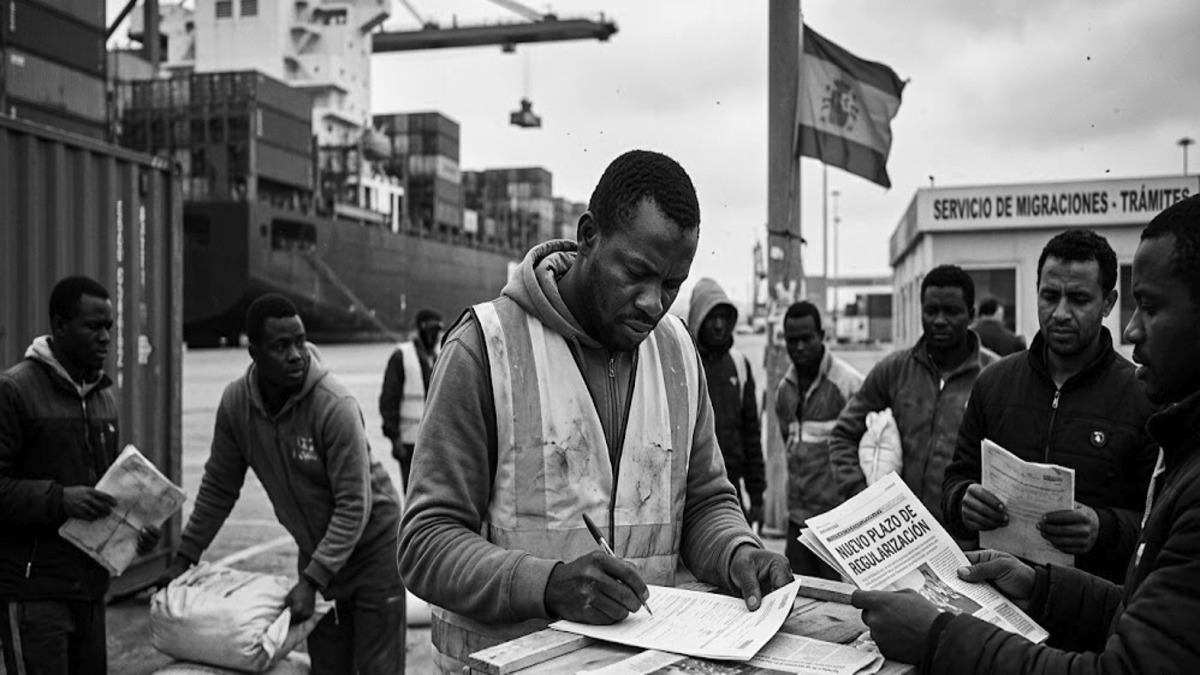

MADRID – HIGRH NEWS: migration amnesty Spain 2026 criminal record. This phrase is currently echoing through every legal office and migrant community across the country. Spain has officially launched what many consider the most ambitious regularization process since 2004, aiming to grant legal status to nearly 500,000 people. But beyond the headlines, a critical question remains: can the Spanish administration actually handle this tidal wave of paperwork without a total bureaucratic meltdown?

The program isn’t a free pass for everyone. It’s a highly selective process where the smallest mistake can lead to a flat rejection. To qualify, applicants must prove they were living in Spain before January 1, 2026, and show at least five months of continuous residence. However, the real “make or break” factor is the criminal background check. Without a clean slate, the door to legality remains firmly shut.
Many migrants are currently working in the shadows, propping up sectors like agriculture and tourism. The government’s logic is simple: turn these “invisible” workers into official taxpayers to help sustain an aging population. But as we see on the ground, the gap between political ambition and administrative reality is wider than ever. Is this a genuine solution or just a recipe for chaos?

The “Filter” of migration amnesty Spain 2026 criminal record
The requirement for a clean criminal record is the ultimate barrier. It’s not just about crimes committed within Spain; applicants must provide certificates from their home countries. According to information obtained by the HIGRH NEWS team, obtaining these documents is proving to be a nightmare. Consulates are overwhelmed, and mail services in many regions are failing to meet the June 30 deadline.
The migration amnesty Spain 2026 criminal record policy leaves no room for negotiation. Even minor offenses from years ago can trigger an automatic denial. This has sent thousands of people scrambling to legal clinics, hoping to “cancel” old records before their window of opportunity closes. The stress in neighborhoods with high migrant populations is palpable as the clock ticks down.
Why the system is on the brink of collapse
Handling half a million files in just a few months is a Herculean task. Internal sources told HIGRH NEWS that immigration offices (Extranjería) are already struggling with the initial surge. The digital platforms, intended to streamline the process, have been glitching since mid-April. We aren’t just talking about a few delays; we are looking at a potential systemic failure.
The reality, as observed by HIGRH NEWS, is that the face-to-face appointment system is practically “dead on arrival.” Unless there is a massive breakthrough in the current appointment crisis, thousands of eligible people might be left out simply because they couldn’t get a person to look at their papers. This “administrative bottleneck” is the biggest threat to the program’s success.
Economic survival vs. Political backlash
Spain needs workers. It’s a demographic fact. Sectors like elder care and construction would likely freeze without migrant labor. By regularizing 500,000 people, the state expects a massive boost in Social Security contributions. It’s a high-stakes economic play. If successful, it integrates a huge workforce into the formal economy, moving them from “under the table” to official payrolls.
However, the political climate is far from calm. Opposition parties are already warning of a “pull effect” that could encourage more irregular migration. They argue that public services like healthcare and schools aren’t ready for such a sudden influx of documented residents. But the government counters that these people are already here, using services and living in our buildings—they just aren’t paying into the system yet.
The human cost of the June 30 deadline
For people like Elena or Mamadou, who have been working in domestic service or construction for years, this isn’t just a policy—it’s their life. The pressure to get every stamp and signature perfectly aligned is immense. According to reports gathered by HIGRH NEWS, the “black market” for appointments has resurfaced, with some people charging hundreds of euros just to secure a spot in the digital queue.
The final success of the migration amnesty Spain 2026 criminal record process won’t be measured by the number of speeches given in Madrid, but by the number of IDs actually issued. If the government fails to fix the digital glitches and staff the offices, this “historic opportunity” will turn into a historic frustration for half a million souls.
Will the Spanish administration manage to process these 500,000 applications before the summer deadline without a total collapse?
How can I prove I was in Spain before January 1st? You can use a variety of documents, including “empadronamiento” (census registration), medical records, or even dated transportation passes. The more official the document, the better your chances.
What happens if I have a pending court case?
Usually, an open judicial process will pause or disqualify your application. Legal experts advise resolving any outstanding legal issues before the June 30 deadline.
Can I apply online without a digital certificate?
It is technically possible through a legal representative, but having your own digital certificate is the most reliable way to ensure your application is submitted correctly and tracked.
Is there any chance the deadline will be extended?
As of now, the government insists on the June 30 cutoff. However, given the current administrative pressure, many NGOs are already lobbying for an extension to prevent thousands from being left behind.
The end of June will be the ultimate test for Spain’s bureaucracy. If the servers hold up and the staff can keep pace, the country will take a giant leap toward social and economic integration. If not, the shadows will only grow longer.