
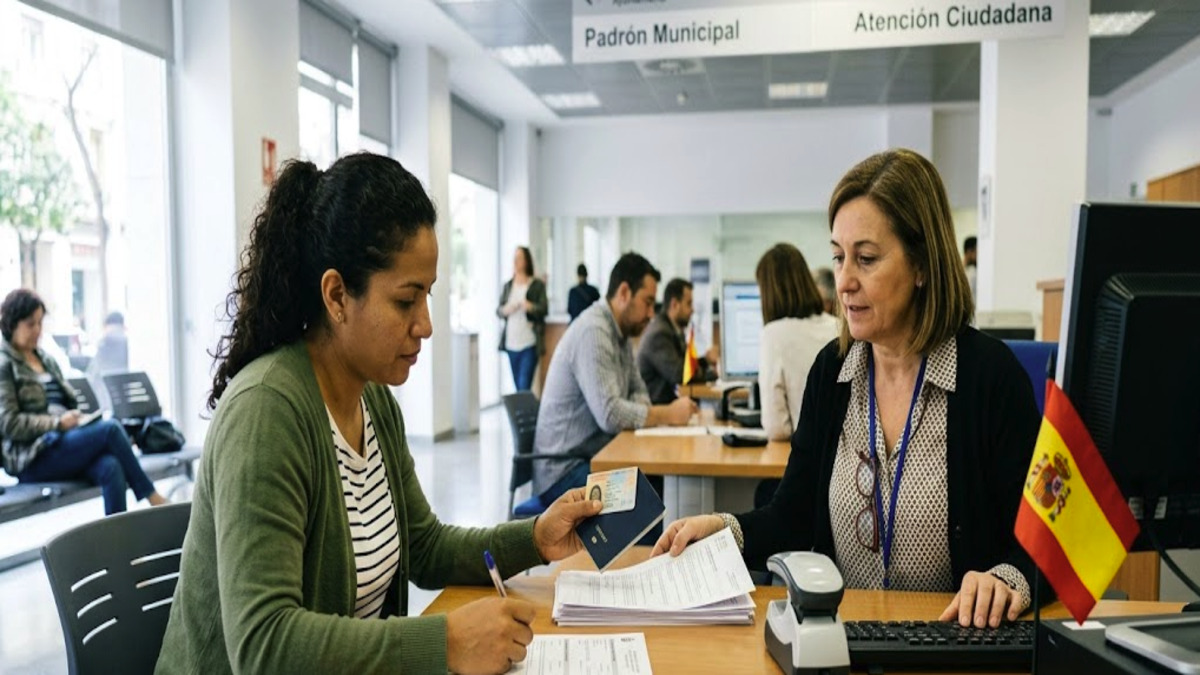

CITY – HIGRH NEWS: Residency Registration in Spain. For anyone living in Spain, one of the first administrative questions is often where their home address must be officially recorded. The answer is found in the municipal register, commonly known as the padrón municipal. Residency Registration in Spain connects a person with the municipality where they normally live and provides an official record of that address. So, who needs to register, what evidence can the local authority ask for and what options exist for people without a standard home?

What the Spanish Municipal Register Actually Does
Spain maintains a municipal population register for each town and city. It records the people who normally live within that municipality and provides local authorities with information about their resident population.
Registration is not limited to Spanish nationals. Foreign citizens living in Spain are also covered by the rules governing the municipal register.

The key issue is where a person actually has their habitual residence. Property ownership is not the test used to determine whether someone should be registered.
This means that renting a property, living with relatives or sharing accommodation does not automatically prevent a person from registering their address.
The municipal council is responsible for maintaining the register in its area. It can update records and carry out checks when necessary to establish whether the information supplied is accurate.
There is also a rule for people who divide their time between different municipalities. In general, the registration should correspond to the place where they spend the greatest part of the year.
Children are included in the municipal register as well. Their registration is subject to specific rules involving parents, guardians or other legal representatives.
The register therefore serves a relatively straightforward purpose: it records a person’s habitual place of residence for municipal and administrative purposes.
That purpose should not be confused with immigration status. A municipal registration does not automatically provide a foreign citizen with legal permission to live in Spain.
Why Being Registered Can Matter
A person’s registered address can become relevant when dealing with public administrations.
Depending on the procedure, an authority may ask for a certificate or other document showing that the person is registered at a particular address. The exact requirement depends on the service being requested.
The municipal register also gives local authorities information about the population they serve. Population figures are important for the organisation and administration of municipalities.
For residents, one of the most important points is that the information should remain accurate.
If someone moves permanently from one municipality to another, their registration should reflect the new habitual residence rather than an old address.
The same principle applies when a person’s circumstances change and the address previously recorded no longer represents where they actually live.
Registration and Immigration Status Are Not the Same
This distinction is particularly important for people who have moved to Spain from another country.
Being listed in the municipal register does not, by itself, establish that a foreign citizen has legal residence under Spanish immigration law.
The municipal register deals with the person’s place of residence. Immigration authorities use different rules and documents to determine whether a foreign national has permission to reside in Spain.
As a result, registration should not be treated as a substitute for a residence permit, visa or other immigration documentation where such documents are required.
Documents You May Need
The paperwork required for Residency Registration in Spain depends on the circumstances of the applicant and the procedure followed by the municipality.
Identity is normally one of the first matters that must be established. The acceptable document will depend on whether the applicant is Spanish, an EU citizen or a national of another country.
Foreign nationals may need to present documents such as a passport, foreigner’s identity card or the identification documentation applicable to their particular status.
The municipality may also need evidence concerning the address being registered.
This does not necessarily mean that every applicant will be asked for exactly the same documents. Local procedures can differ, and the circumstances of the household can also affect what evidence is appropriate.
Documents connected with occupation of the property can help demonstrate that the applicant actually lives at the address provided.
For that reason, anyone preparing to register should check the requirements published by the relevant municipality before attending the office.
The aim of the process is not simply to collect paperwork. The local authority needs enough information to establish who the applicant is and whether the declared address corresponds to their actual residence.
Does Owning a Home Matter?
No general rule requires a person to own their home in order to appear in the municipal register.
A tenant can register. Someone living with family members can also register. Other forms of accommodation may also be relevant when determining where a person actually lives.
The important factor is the person’s real residential situation rather than whether they hold the property title.
This is why municipalities can ask for information or documentation relating to the occupation of the address.
The registration should reflect reality. If someone declares an address where they do not actually live, the information may be subject to verification.
The same principle applies to people who move from one home to another. Once their habitual residence changes, their municipal registration should eventually reflect that change.
What If You Do Not Have a Conventional Address?
Not everyone in Spain lives in a standard apartment or house.
Spanish rules take account of people whose living arrangements make it difficult to provide an ordinary residential address. Certain cases involving people without fixed accommodation can be dealt with through specific procedures.
Municipal social services can have an important role in these circumstances.
Where the relevant conditions are met, they can establish that the person normally lives within the municipality and determine how the person’s address should be recorded for registration purposes.
The rules can also allow a designated address to be used in situations where the person does not have a conventional home.
This is particularly significant because the municipal register is intended to reflect the population actually living in the municipality. A person should not automatically assume that the absence of a standard home makes registration impossible.
Each situation must be considered under the applicable rules and, where necessary, with the involvement of the relevant municipal services.
Special Arrangements for People at Risk
There are circumstances where recording a person’s actual address could create a security problem.
Spanish registration rules include specific arrangements for certain protected individuals, including some victims of gender-based violence who are receiving assistance and cannot safely use their real address.
Where the legal conditions are met, social services can determine an address for registration purposes without publicly exposing the person’s actual location.
The arrangement is designed to combine access to the municipal register with the necessary protection of the individual’s safety and privacy.
Information Recorded by the Municipality
The municipal register contains several categories of personal information.
Basic registration data includes the person’s name and surname, sex, nationality, place and date of birth and habitual address.
Identification details are also recorded according to the rules applicable to the individual.
For foreign nationals, the identification information used in the register can vary depending on their nationality and the documentation they hold.
The register can also contain educational information and other details required for specific administrative purposes.
Some information is mandatory, while other details may be provided voluntarily.
Contact information, including a telephone number or email address, can fall within the voluntary category.
This distinction means that residents should not assume that every piece of information requested during a municipal procedure has exactly the same status under the rules.
Moving to a Different Part of Spain
Moving house can mean that a person’s municipal registration needs to change as well.
If someone establishes their habitual residence in another municipality, their registration should correspond to that new location.
This applies whether the move is from one city to another, between towns in the same region or from one part of Spain to another.
People who maintain more than one residence have to consider the amount of time they spend in each location. The general criterion is the municipality where they spend most of the year.
The purpose is to ensure that the municipal register reflects habitual residence rather than simply listing every place where someone occasionally stays.
Local authorities can review registration information where circumstances require verification.
Keeping the address up to date is therefore more than a formality. It ensures that municipal records correspond with a person’s current living situation.
What Foreign Residents Should Know
For foreign nationals, Residency Registration in Spain can be an important administrative step, but it should be understood correctly.
The municipal register establishes a link between the resident and the municipality where they live. It does not replace the immigration documentation that may be required under Spanish law.
A foreign citizen’s registration therefore does not automatically change their immigration status.
The documents used during registration depend on the applicant’s nationality and circumstances. Different identification rules can apply to EU citizens and people from countries outside the European Union.
The municipality may check the identity of the applicant and the address being declared.
This is why foreign residents should keep their identification documents and relevant address documentation available when completing the process.
The registration process and immigration procedures may involve different authorities and different legal requirements. Completing one does not automatically complete the other.
Where to Get Reliable Information
The rules governing Spain’s municipal registers are set out in national legislation and official administrative instructions.
The official legal framework covers issues including registration, changes of address, identification and particular residential situations.
For practical questions, however, the municipality where the person actually lives remains the most relevant point of contact.
Local authorities can provide information about appointment requirements, accepted documents and the way applications must be submitted.
Requirements should therefore be checked before attending an office, particularly when the applicant’s circumstances are unusual or their accommodation does not involve a conventional tenancy or property ownership.
Key Points Before You Apply
Before starting the registration process, a person should establish which municipality represents their habitual residence.
The next step is to check which identity document applies to their situation.
Applicants should also find out whether the municipality expects evidence concerning the home or accommodation.
People who rent, live with relatives or share accommodation should not assume that property ownership is necessary.
Those without a conventional address may have other options under the rules governing special residential circumstances, particularly where municipal social services become involved.
Foreign nationals should also keep two separate issues in mind: municipal registration and legal residence are not interchangeable.
The first records where a person normally lives. The second concerns their immigration or residence status and is governed by different requirements.
Ultimately, the purpose of the municipal register is to maintain an accurate record of the people who normally live in each municipality.
Frequently Asked Questions
Is municipal registration compulsory in Spain?
People who normally live in Spain are expected to be registered in the municipality where they have their habitual residence.
Can foreign nationals register?
Yes. Foreign nationals can register with the municipality where they live, subject to the applicable identification and address requirements.
Does registration give me legal residence?
No. Municipal registration records residence at a local level but does not, by itself, grant legal immigration status.
Do I have to own a property?
No. Ownership is not generally required. What matters is the person’s actual residential situation and the evidence accepted by the municipality…….MORE