
MADRID — HIGRH NEWS: Real Estate Investment in Spain :
The Spanish property market has always possessed a certain magnetic pull. Walks down Madrid’s Gran Vía or Barcelona’s Eixample reveal a booming skyline, but historically, participating in this growth required incredibly deep pockets.

Have you ever looked at a massive new apartment complex under construction and wondered why only institutional funds get to profit from it?
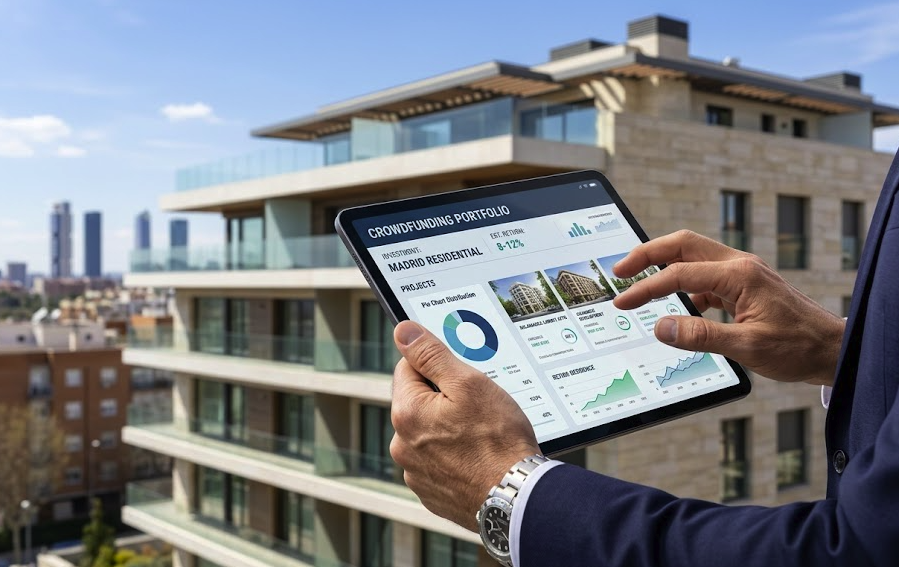
Things are shifting rapidly in 2026. Real estate crowdfunding is changing the rules of the game, making the traditional brick-and-mortar market accessible to practically anyone with a smartphone.

A Regulated Safe Haven
When it comes to hard-earned cash, trust is everything. The Spanish market isn’t a financial wild west anymore, thanks to strict oversight by the Comisión Nacional del Mercado de Valores (CNMV).
This regulatory shield means every project listed on platforms like Urbanitae undergoes rigorous auditing. It’s comforting to know an official watchdog is keeping an eye on your money.
For ordinary citizens, this framework minimizes the fear of opaque dealings. If you’re looking to dip your toes into a secure property ecosystem, click here to register as an investor.
Breaking Down the Crowdfunding Mechanics
The setup is surprisingly straightforward. A local developer finds a lucrative plot of land but needs extra equity to kick off construction.
Instead of waiting months for traditional banks to approve slow corporate loans, they pitch the project to a tech-driven platform. Once vetted, the project opens to thousands of small-scale investors.
This collective pool funds the project, and when the buildings are sold or rented, the profits are distributed back. It’s a win-win for speed and agility.
Developers are also finding this alternative route incredibly refreshing. If you are a developer seeking efficient capital, click here to register your project.
The Power of Not Putting All Your Eggs in One Basket
Property markets move in cycles, and local fluctuations are very real. The genius of the digital model lies in effortless diversification.
Investing five thousand euros into a single apartment leaves you vulnerable to specific neighborhood risks or bad tenants. Splitting that same amount across ten different developments across Spain feels much safer.
You can back a residential tower in Madrid, a commercial space in Valencia, and a holiday resort in Málaga simultaneously. Best of all? No dealing with broken boilers or late rent.
Unmasking the Risks
Let’s be honest: no investment comes with a bulletproof guarantee. Construction delays happen, raw material costs fluctuate, and municipal licenses can get stuck in bureaucratic red tape.
That’s why skimming through project datasheets is essential. Transparency isn’t just a buzzword here; it’s managed through constant, detailed progress reports.
Staying informed is your best weapon against market uncertainty. Blind speculation rarely ends well, especially in real estate.
Add these two paragraphs directly before the “Frequently Asked Questions” section:
It is practically impossible to truly understand this massive digital transition without first looking closely at the deep scars left behind by Spain’s historical financial upheavals, turning points that fundamentally rewired how traditional Iberian banking institutions view structural risk. For nearly a decade, if you happened to be a mid-sized property developer with an exceptionally solid blueprint for a new residential complex in a booming Madrid suburb or a coastal enclave, walking into a traditional banking hall felt like begging for an absolute miracle because legacy banks almost entirely choked off their credit lines for early-stage land acquisition. This massive, gaping structural financing vacuum is precisely where property crowdfunding platforms mutated from a trendy tech experiment for millennials into an absolutely vital, institutional-grade pillar of the modern Spanish construction engine. What we are witnessing right now across the Iberian Peninsula is an unprecedented, sweeping democratization of capital, where the collective financial muscle of ordinary schoolteachers, local dentists, and independent software engineers effectively replaces the rigid, painfully slow-moving committees of old corporate banks. This structural shift does far more than just keep heavy construction cranes spinning across the changing skylines of major cities; it fundamentally alters the genetic makeup of who actually gets a lucrative slice of the real estate pie. It has successfully turned what used to be a strictly closed-door playground reserved for ultra-wealthy elites and massive foreign hedge funds into a completely transparent, fluid digital marketplace where anyone can participate. Walking past these massive, bustling construction sites in downtown Madrid today, an observant onlooker quickly realizes they aren’t just staring at raw concrete, scaffolding, and steel; they are looking at a physical, towering manifestation of thousands of individual micro-investments seamlessly synchronized through a single mobile phone interface, proving beyond a doubt that the old financial gatekeepers have officially lost their historical monopoly over the nation’s urban growth.
From a purely macroeconomic perspective, this digital rush toward the property sector makes total sense when you analyze the psychological state of modern retail savers who are downright exhausted by watching their traditional bank deposits slowly erode under the weight of persistent inflation. For generation after generation, Spanish families viewed buying a physical apartment as the ultimate, bulletproof method for preserving generational wealth, but skyrocketing property prices across metropolitan centers rapidly turned that traditional dream into an impossible financial hurdle for the average household. By breaking down these massive multi-million-euro developments into tiny, digestible five-hundred-euro fragments, crowdfunding platforms have essentially weaponized retail psychology, allowing everyday savers to build a highly sophisticated, multi-layered defensive shield around their capital without taking on ruinous debt. Of course, looking at this trend with a healthy dose of journalistic skepticism, one must acknowledge that this sophisticated model demands a much higher level of financial literacy from the public than simply leaving money in a sleepy savings account. Managing risk in this new era requires investors to look past the shiny, idealized architectural renderings on their phone screens and truly grasp the gritty, real-world logistics of building construction, from sudden supply chain bottlenecks affecting raw material costs to the unpredictable local municipal boards that grant final occupancy licenses. The real magic happens when an investor learns to strategically spread their capital geographically, balancing a high-yield, fast-paced residential project in a prime northern Madrid neighborhood with a more conservative, steady-income commercial lease down south in Andalusia. Ultimately, this isn’t just about chasing a higher percentage yield on a digital dashboard; it represents a profound, permanent shift in how ordinary people interact with the physical world around them, transforming passive savers into active, well-informed participants in the very infrastructure of the communities they live in.
Frequently Asked Questions
What is the minimum amount required to invest?
You can get started with as little as 500 euros per project, lowering the barrier to entry significantly.
Are my funds guaranteed by the government?
No. Your capital is held securely by independent payment institutions, but returns strictly depend on the commercial success of the real estate project.
How do I collect my returns?
Profits are paid out as capital gains plus interests once the developer successfully sells or leases the completed properties.
The Spanish real estate landscape is evolving. Staying sharp and leveraging regulated digital tools seems like the smartest way to build a modern portfolio without the traditional headaches.
Click here for more opportunities