

SEVILLE – HIGRH NEWS: Foods That Need Refrigeration: What Really Belongs in the Fridge

Foods that need refrigeration are not always as easy to identify as they may seem. Some fresh products require cold storage from the moment they are purchased until they are eaten, while others can remain safely in the pantry. Meat, fish, dairy products, leftovers, fruit and vegetables all have different storage requirements. So, which foods really belong in the refrigerator and which can stay outside?
Which foods need to stay refrigerated?
Some foods are more vulnerable to spoilage than others, making temperature an important part of their storage.

Keeping these products cold slows the growth of certain microorganisms and helps maintain their quality for longer. Spain’s Agency for Food Safety and Nutrition (AESAN) recommends keeping a household refrigerator between 0 and 5°C.
Fresh meat, poultry, minced meat and fish are among the foods that require particular attention. Milk and certain dairy products also need specific storage conditions.
Prepared foods containing ingredients that require refrigeration should also be kept cold. The same applies to fruit and vegetables that have already been peeled or cut.
From the time they are purchased until they are stored at home, meat, fish and certain dairy products should be handled according to their required storage conditions.
Taking care of these foods does not end when you leave the supermarket: the journey home should also be planned in a way that helps maintain appropriate cold-storage conditions.
Once the groceries arrive home, refrigerated products should be put away promptly rather than being left on the kitchen counter.
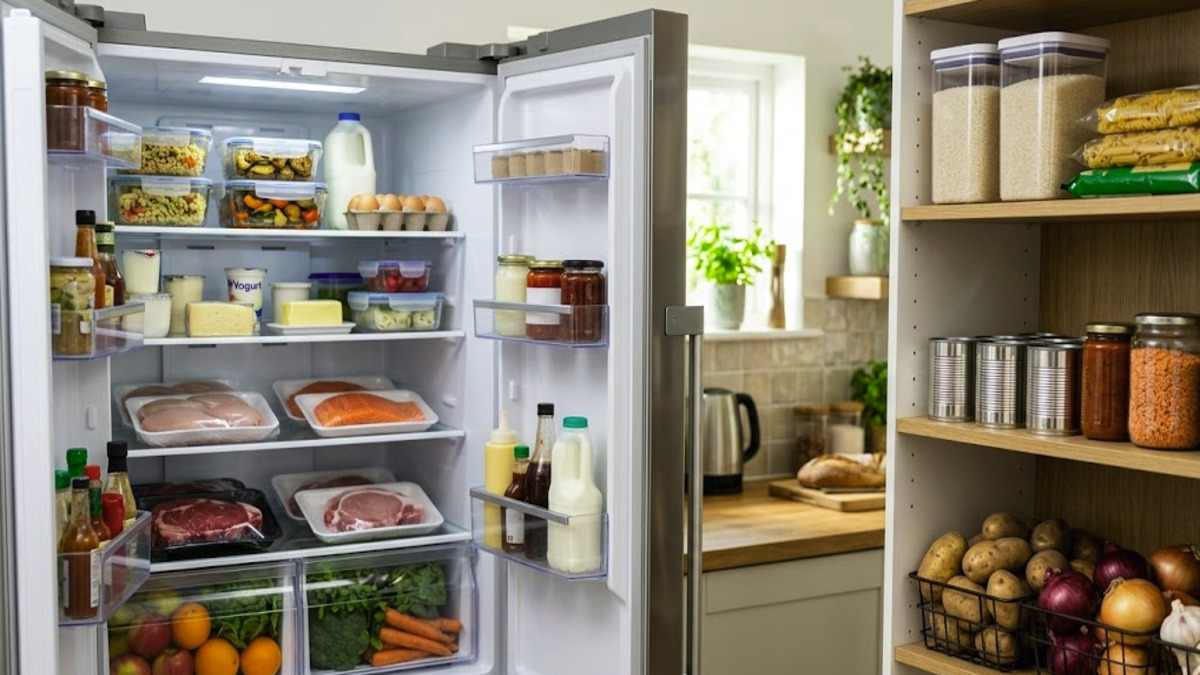
Distributing each type of food in the appropriate section of the refrigerator makes storage easier and helps keep raw products apart from foods that are already prepared.
Cooked foods can be placed on upper shelves, while raw meat, poultry and fish should be kept lower down in suitable containers or packaging to prevent liquids from dripping onto other foods.
Meat, fish and poultry need particular care
Fresh meat, chicken and fish should remain refrigerated until they are ready to be prepared.
Minced meat requires particular attention and should stay cold until it is cooked.
Appearance alone is not enough to establish whether food is safe. A product may still look normal even when it is no longer suitable for consumption.
The use-by date shown on the packaging should also be checked before consuming certain perishable foods. Following both the date and the storage instructions is particularly important for these products.
The label may also specify a particular temperature or state how quickly the food should be consumed after opening.
Which foods can stay outside the refrigerator?
Not everything in a weekly grocery shop needs to take up space in the fridge.
Rice, pasta, flour, dried pulses and certain canned foods can generally be stored in a pantry when their packaging and storage instructions allow it.
The storage area matters too. A dry, relatively cool place away from direct heat is more suitable than an area exposed to moisture or strong sunlight.
Unopened canned products can normally remain outside the refrigerator when the manufacturer does not specify otherwise.
Once a container has been opened, however, the storage requirements may change. If some of the contents remain, the manufacturer’s instructions should be checked to determine whether refrigeration is necessary.
This means that the same product can have different storage requirements before and after opening.
When there is uncertainty, the information provided on the packaging should take priority. Products in the same food category do not necessarily have identical storage conditions.
Pantry foods that do not need refrigerator space
Rice, pasta and dried pulses are among the foods that can commonly remain in a cupboard or pantry.
Unopened canned foods can also stay outside the refrigerator when the packaging is intact and there is no instruction requiring refrigeration.
Cooking oil generally does not need to be refrigerated either. It is better protected from excessive heat and direct light.
Potatoes and onions can also be stored outside the refrigerator when kept in appropriate conditions.
The important point is not to apply one storage rule to every food. The characteristics of the product, its packaging and the manufacturer’s instructions determine where it should be kept.
What changes when fruit and vegetables are cut?
Fruit and vegetables need different treatment depending on whether they are whole, peeled, cut or prepared for immediate consumption.
A whole piece of fruit does not have exactly the same storage requirements as one that has already been cut. Once food has been handled and cut, its storage conditions can change.
Peeled and cut fruit and vegetables should be refrigerated.
Some produce can remain outside the refrigerator for limited periods, depending on its characteristics and the surrounding conditions.
Onions and certain citrus fruits are examples of produce that can remain outside the refrigerator for limited periods when stored appropriately.
Fruit and vegetables should also be kept away from raw meat, fish and poultry. Separating these foods helps reduce the risk of cross-contamination.
During shopping, it is also sensible to keep raw animal products apart from foods that will be eaten without further cooking.
Eggs, milk, leftovers and cooked food
Eggs, dairy products and cold cuts should be stored according to the instructions provided on their packaging.
Milk deserves particular attention because storage requirements can differ between products. The label indicates whether refrigeration is required and what temperature should be maintained.
Cooked meals also require appropriate storage. If prepared food will not be eaten immediately, it should be placed in the refrigerator.
Leftovers can be kept in suitable covered containers to protect them and prevent contact with other foods.
AESAN recommends keeping prepared meals refrigerated at 5°C or below.
Cooked food should be kept apart from raw meat, fish and poultry. This reduces the possibility of microorganisms from uncooked products reaching food that is ready to eat.
It is also advisable not to leave food uncovered inside the refrigerator. Closed containers protect prepared meals and help keep the inside of the appliance cleaner.
What happens when food stays out for too long?
Room temperature can encourage the growth of microorganisms in certain foods.
One of the difficulties is that this process does not always produce visible changes. Smell, colour or appearance alone cannot establish whether food remains safe.
For this reason, tasting food is not a reliable way to check whether it is still safe after spending too long outside refrigeration.
The period outside the refrigerator begins when the product leaves a cold environment. That includes the journey home from the shop, the time spent on the kitchen counter and the period it remains on the table during a meal.
High ambient temperatures require additional care with perishable foods.
When a shopping trip includes refrigerated products, it is sensible to organise the journey so they reach the refrigerator as quickly as possible.
The same principle applies to leftovers. If a meal is going to be saved for later, it should be refrigerated after the meal rather than left sitting at room temperature.
How to organise the refrigerator properly
An organised refrigerator makes it easier to separate foods and find products quickly.
AESAN recommends keeping the refrigerator between 0 and 5°C. Checking the temperature regularly can help determine whether the appliance is operating within the recommended range.
The refrigerator should also not be packed so tightly that air cannot circulate properly.
A practical arrangement can look like this:
- Upper shelf: cooked meals and covered leftovers.
- Middle section: eggs, dairy products and cold cuts.
- Lower shelf: raw meat, fish and poultry kept inside suitable containers.
- Drawers: fruit and vegetables.
- Door: drinks and other products whose labels allow this type of storage.
Raw products should remain protected so that their liquids cannot come into contact with food that is ready to eat.
If a spill occurs, particularly one involving raw meat or fish, it should be cleaned promptly.
Regular refrigerator cleaning also contributes to appropriate food storage conditions.
When in doubt, check the label
General storage rules can provide guidance, but the instructions printed on the packaging take priority.
A label may say “keep refrigerated”, specify a temperature or state that a product must be refrigerated after opening.
It is also important to distinguish between a use-by date and a best-before date.
A use-by date applies to certain perishable foods and indicates the point up to which they can be safely consumed when the required storage conditions have been respected.
A best-before date relates to the period during which the food is expected to retain its intended characteristics when properly stored.
The two dates should therefore not be treated as interchangeable.
The condition of the packaging also deserves attention. Cans, jars and other containers should be kept in good condition and stored according to the relevant instructions.
Ultimately, deciding which foods need refrigeration is not simply a matter of putting everything in the fridge. The nature of the product, its condition, packaging, date and manufacturer’s instructions all matter.
Perishable products require particular attention, while many dry foods and unopened canned products can remain in the pantry. Fruit and vegetables need a more individual approach, especially after they have been peeled or cut.
The simplest approach is to check the label, keep foods that genuinely require refrigeration cold and avoid leaving refrigerated products at room temperature unnecessarily.
Official source
Spanish Agency for Food Safety and Nutrition (AESAN)
Frequently Asked Questions
What temperature should a refrigerator be?
AESAN recommends keeping the refrigerator between 0 and 5°C.
Does all fruit need to be refrigerated?
No. Some fruit can remain outside for limited periods. Cut or peeled fruit should be refrigerated.
Do unopened canned foods need to be refrigerated?
Not necessarily. They can generally remain outside the refrigerator unless the manufacturer states otherwise.
What should I do with leftovers?
Food that you want to keep should be refrigerated and stored in suitable covered containers…….MORE