
Sánchez Calls Snap General Elections in Spain for 29 November After Housing Decrees Fail
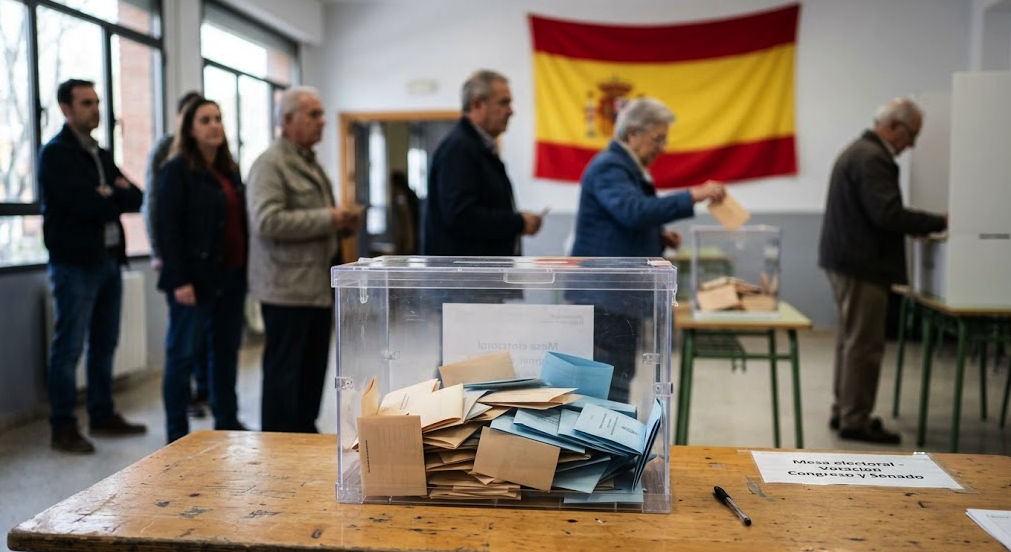
Spanish Prime Minister Pedro Sánchez has officially announced snap general elections for Sunday, 29 November 2026. The decision follows the defeat of the government’s flagship housing decrees in the Congress of Deputies on Friday, after the Opposition Conservative People’s Party (PP), the far-right Vox, and Catalan nationalist party Junts voted together to block the legislation.
The dissolution of the Cortes Generales is being finalized through an extraordinary Cabinet meeting, with the official royal decree published in the Official State Gazette (BOE) to initiate the legal countdown under Spanish electoral law.
Triggering the Snap Election: Key Developments and Context
The immediate catalyst for the election call was the government’s inability to pass key housing legislation designed to address rising rents and eviction pressures. Following the parliamentary defeat and growing social tension, Sánchez consulted with senior cabinet members and informed King Felipe VI of his intention to dissolve parliament.
Speaking from the Moncloa Palace in Madrid, Sánchez stated that the parliamentary impasse rendered it necessary for citizens to decide the country’s political direction. With fragile majority support crumbling over economic and housing policies, the Prime Minister acknowledged that executing his legislative program was no longer feasible under the existing parliamentary composition.
| Key Aspect | Official Details |
| Election Date | Sunday, 29 November 2026 |
| Dissolution of Parliament | 6 October 2026 (BOE Publication) |
| Campaign Period Begins | 13 November 2026 (Midnight) |
| Day of Reflection | 28 November 2026 |
| New Parliament Assembly | 23 December 2026 |
| Primary Cause | Rejection of executive housing decrees |
Electoral Calendar and Institutional Rules
The publication of the dissolution decree in the BOE sets in motion a rigid timeline governed by the Spanish Constitution and Organic Law on the General Electoral Regime (LOREG):
- Standing Committees Activated: Upon dissolution of the Congress and Senate, their respective Standing Committees (Diputación Permanente) assume legislative control to handle urgent executive orders and prevent an institutional power vacuum.
- Candidacies and Coalitions: Political parties intending to run in electoral coalitions must register their agreements with the Central Electoral Board within ten days of the call. Formal candidate lists must be submitted between 21 October and 26 October.
- Official Campaigning: The 15-day campaign officially opens at 00:00 on Friday, 13 November, concluding at midnight on Friday, 27 November, ahead of the mandatory day of reflection.
- Parliamentary Assembly: The newly elected Congress of Deputies and Senate will convene on 23 December 2026.
Despite the dissolution of parliament, the government confirmed plans to reintroduce revised housing measures via executive decree. These will be submitted directly to the Congress Standing Committee, where coalition forces retain a working majority without requiring support from Junts.
Frequently Asked Questions
Why can the government pass decrees while parliament is dissolved?
During the period between parliament’s dissolution and the assembly of a new legislature, the Standing Committee of the Congress holds constitutional power to review, ratify, or repeal urgent executive decrees issued by the Cabinet.
When is the deadline for political parties to declare electoral alliances?
Parties seeking to form electoral coalitions must formally notify the Electoral Board within ten days following the official publication of the election decree in the BOE.
When will the newly elected Spanish parliament assemble?
The constitutional deadline to convene the new Congress of Deputies and Senate is set for 23 December 2026.
High News Editorial Perspective
The decision to call early elections for 29 November underlines the fragility of Spain’s governing coalition. Relying on regional nationalist parties for key domestic policy has proven increasingly unsustainable when core legislative measures, such as housing reform, conflict with partner agendas.
At High News, we view the election call as an inevitable constitutional step to break a growing legislative stalemate. However, attempting to bypass the full parliament by routing controversial housing decrees through the Standing Committee during an election run-up signals that social policy will serve as a heavily contested centerpiece throughout the upcoming campaign.
Official Sources
- Official State Gazette (BOE) — Organic Law 5/1985 on the General Electoral Regime (LOREG) — https://www.boe.es/buscar/act.php?id=BOE-A-1985-11672
- La Moncloa (Presidency of the Government of Spain) — Institutional Statement by Prime Minister Pedro Sánchez — https://www.lamoncloa.gob.es
- Congress of Deputies — Functions and Structure of the Standing Committee — https://www.congreso.es

Contact us: info@higrh.com