We also provide our news in Spanish and Arabic. For inquiries, please contact us via the website's email.


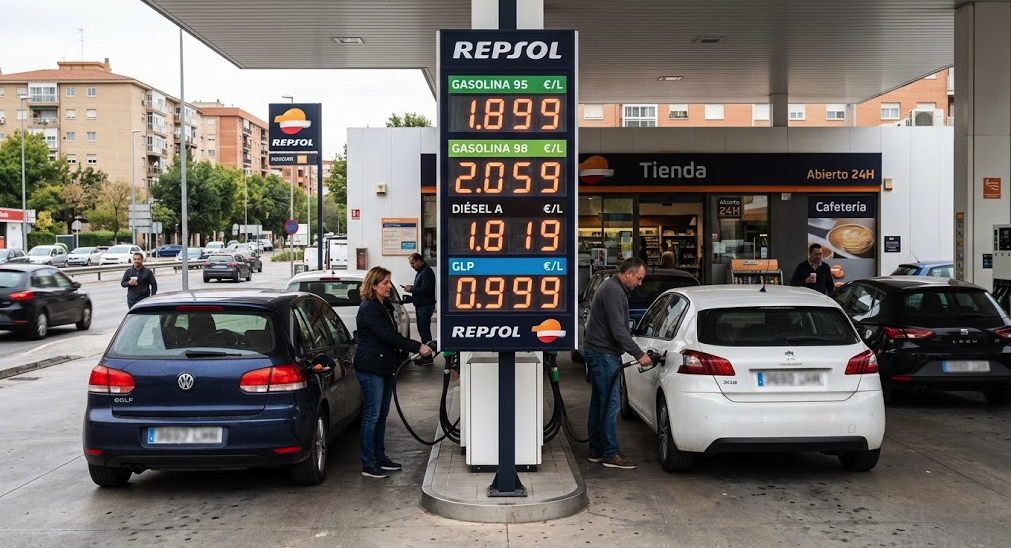
MADRID – HIGRH NEWS: Fuel prices in Spain are putting renewed pressure on households, businesses and the government as ministers negotiate the extension of financial support beyond the end of September. With inflation rising again and petrol and diesel becoming more expensive, talks are focusing on which existing measures should continue and whether additional support will be introduced. So, what is Spain considering as the current support package approaches its expiry date?

Fuel prices in Spain put pressure on government talks
The Spanish government is negotiating with trade unions and employers’ organisations over the measures that should remain in place after 30 September.
The discussions come as the latest inflation figures show renewed price pressure. Spain’s National Statistics Institute reported annual consumer inflation of 4.3% in August, seven-tenths higher than the previous month. Core inflation stood at 2.9%.

Transport recorded one of the strongest increases. Its annual rate reached 9.5%, with the statistics office pointing particularly to higher prices for fuels and lubricants used by private vehicles.
The figures have added urgency to negotiations over the next phase of government support.
The Economy Ministry has indicated that it wants to assess the measures according to the sectors and consumers most affected by higher costs. Transport and the agri-food sector have received particular attention because of their importance to the wider supply chain.
The government is also considering how to respond to energy costs without creating a permanent increase in public spending.
The current package was designed as a temporary response to the economic consequences of the international energy crisis. Government measures have included fuel-tax reductions, support for transport companies and assistance for agriculture and other exposed sectors.
Under the existing timetable, support for household fuel purchases has been gradually reduced. The government introduced a mechanism allowing the relief to increase again if fuel inflation reaches a specified threshold.
That mechanism has become an important part of the discussion because petrol and diesel prices have continued to move higher.
What unions are proposing as prices remain high
Trade unions are calling for a broader response to the increase in living costs.
The Labour Ministry has brought several proposals to discussions with employers and other government departments. These include extending existing protections, considering a temporary levy on the refining sector and examining measures affecting rents, purchasing power and grocery prices.
The ministry also wants to restore an exemption linked to unusually high gas prices.
Another part of the debate concerns wages. Trade unions argue that workers need additional protection if inflation continues to reduce household purchasing power.
CCOO Secretary General Unai Sordo has called for the restoration of the Iberian electricity mechanism and proposed a payment of at least €300 for around ten million people with below-average incomes.
CCOO has also called for any further reduction in petrol and diesel taxation to reach consumers rather than simply increasing company margins. The union wants the National Commission of Markets and Competition, known as the CNMC, to monitor the entire fuel chain, from refining through to retail sales.
UGT has taken a similar position on maintaining existing measures and considering new support if price pressures persist.
Its secretary general, Pepe Álvarez, has argued that action is needed on prices and has also highlighted the refining industry in discussions about rising energy costs.
The Labour Ministry’s proposal for a temporary levy on refining is connected to this debate.
The ministry argues that increases in energy costs and company profit margins should not simply be passed on to households.
The proposals remain part of the negotiations. They have not automatically become government policy.
Fuel prices in Spain bring the electricity market back into focus
The debate over energy support also includes the Iberian electricity mechanism.
Aelec, the association representing electricity companies, has rejected a return to the mechanism. The organisation says current market conditions differ substantially from those during the earlier energy crisis.
According to Aelec, gas now determines the electricity price for less than 15% of the time, compared with around 75% during the earlier period cited by the organisation.
The electricity industry group has also pointed to the number of consumers already using fixed-price contracts. It argues that restoring the mechanism could increase costs for a significant proportion of those customers.
Aelec instead supports targeted assistance aimed at consumers and sectors facing the greatest pressure.
The employers’ organisation CEOE has also called for a review of existing support.
Its position is that assistance should focus on the sectors and consumers most affected by higher energy costs, with particular attention to industries that use large amounts of energy and gas.
CEOE has also called for action on structural energy costs, including taxation, network charges, gas and renewable fuels.
The different positions illustrate the central issue facing the government.
The discussion is not simply about whether support should continue. It also concerns who should receive it, how long it should last and how it should affect the wider energy market.
Meanwhile, the government has not adopted all of the proposals put forward by the Labour Ministry.
The Economy Ministry is continuing to examine the situation and has said support should be adjusted according to the sectors most affected.
Petrol and diesel costs add to household pressure
The increase in fuel costs has become one of the clearest signs of renewed price pressure.
Official statistics show that transport inflation accelerated sharply during August. The annual transport rate reached 9.5%, with fuel and lubricant prices contributing strongly to the increase.
The government has already introduced a gradual reduction in fuel-tax support.
Under the current arrangement, the household reduction in the Hydrocarbon Tax was scheduled to move from 15 cents per litre in July to 10 cents in August and five cents in September.
The government also established an automatic mechanism that could restore a 20-cent reduction if annual fuel inflation exceeds 15%.
Professional transport operators, farmers and fishermen have received different treatment. The government has maintained a larger equivalent fuel benefit for these groups during the period covered by the current measures.
The government has also extended temporary assistance for road transport companies to compensate for professional diesel costs.
These measures matter beyond the petrol station.
Fuel prices affect the cost of transporting goods, agricultural production and other activities that depend heavily on road transport. Higher transport costs can then feed into the prices paid by businesses and consumers.
This is one reason the Economy Ministry has identified transport and the agri-food sector as areas requiring particular attention.
The government has also given the CNMC additional powers to obtain information from wholesalers and retailers operating in the fuel distribution chain.
The regulator can request information about prices, sales volumes, costs and other relevant data to examine how the market is functioning.
That monitoring is intended to improve transparency while the temporary measures remain in operation.
Inflation keeps the pressure on households and businesses
The latest inflation figures have strengthened the case for continued attention to household costs.
The INE reported annual CPI inflation of 4.3% in August, its highest level since February 2023. Monthly inflation was 0.7%, while core inflation stood at 2.9%.
Food and non-alcoholic beverages also recorded an annual increase of 2.3%, seven-tenths higher than the previous month.
The combination of higher fuel costs and rising prices in other categories creates a difficult environment for households managing regular expenses.
Businesses face similar pressure.
Transport operators have to absorb or pass on higher fuel costs, while energy-intensive companies face higher operating expenses. Agriculture also remains exposed because fuel and energy form part of production and distribution costs.
The government therefore faces pressure from several directions at the same time.
Trade unions want stronger protection for purchasing power. Employers want targeted support and action on structural energy costs. The government is examining which measures should continue and how they should be targeted.
The fiscal authorities have added another consideration: the cost of any new package.
Public finances limit the room for new measures
The Independent Authority for Fiscal Responsibility, AIReF, has warned about the pressure that additional spending could create.
Its latest fiscal assessment increased its forecast for net expenditure growth to 6.4%, significantly above the 3.5% path set out in Spain’s medium-term fiscal plan. AIReF said this level of spending complicates compliance with fiscal commitments in the years ahead.
The authority has also highlighted the risk of difficulties in meeting national and European expenditure rules.
This means the government cannot consider a new support package separately from its wider budget position.
Any extension or expansion of financial assistance would have to take account of its impact on public finances.
The issue is particularly important because the current measures were introduced as temporary responses to an exceptional energy and geopolitical situation.
The government’s own plan includes both short-term measures and longer-term policies designed to reduce dependence on fossil fuels and strengthen energy resilience.
The long-term part of the strategy focuses on electrification and renewable energy, while the temporary measures aim to cushion households and exposed sectors from immediate price shocks.
This distinction is important for understanding the negotiations now taking place.
The government is not only deciding whether to extend a subsidy. It is also considering how Spain should respond to future energy shocks.
What happens when the current support expires?
The government has less than two weeks to settle its next steps before the existing measures reach their scheduled expiry date.
Economy officials are continuing discussions with trade unions, employers and affected sectors.
The Labour Ministry wants to maintain wage protection and address prices, housing and purchasing power. Business organisations are calling for more targeted support and structural action on energy costs.
Meanwhile, the fiscal authority is warning that additional spending requires a credible financial framework.
There is also the question of fuel prices.
The government’s existing system was designed to reduce support progressively while retaining an automatic trigger for a stronger reduction if fuel inflation crossed the specified threshold.
The latest inflation figures show why the issue remains central to the economic debate.
The transport component of the CPI has risen sharply, while overall inflation has also moved higher.
For households, the immediate concern is the cost of everyday life. For businesses, the focus is on operating costs and demand. For the government, the challenge involves balancing temporary support with public finances and longer-term energy policy.
The final package has not yet been decided.
The coming negotiations will determine which measures continue, which expire and whether new forms of assistance are introduced after September.
For now, rising fuel prices in Spain, higher transport costs and renewed inflation remain at the centre of the discussion.
Official source
Government of Spain — crisis response measures
Frequently Asked Questions
Why are fuel prices important to the Spanish economy?
Fuel costs affect households directly and also influence transport, agriculture, distribution and other business costs.
When do the current support measures expire?
The current package is scheduled to expire on 30 September.
What are trade unions asking for?
Trade unions are seeking continued support for purchasing power, fuel costs and other household expenses, alongside additional measures affecting prices and energy.
Can the government introduce more financial support?
The government can consider additional measures, but fiscal constraints mean that any new spending must be assessed alongside Spain’s budget commitments…….MORE
Contact us: info@higrh.com