We also provide our news in Spanish and Arabic. For inquiries, please contact us via the website's email.


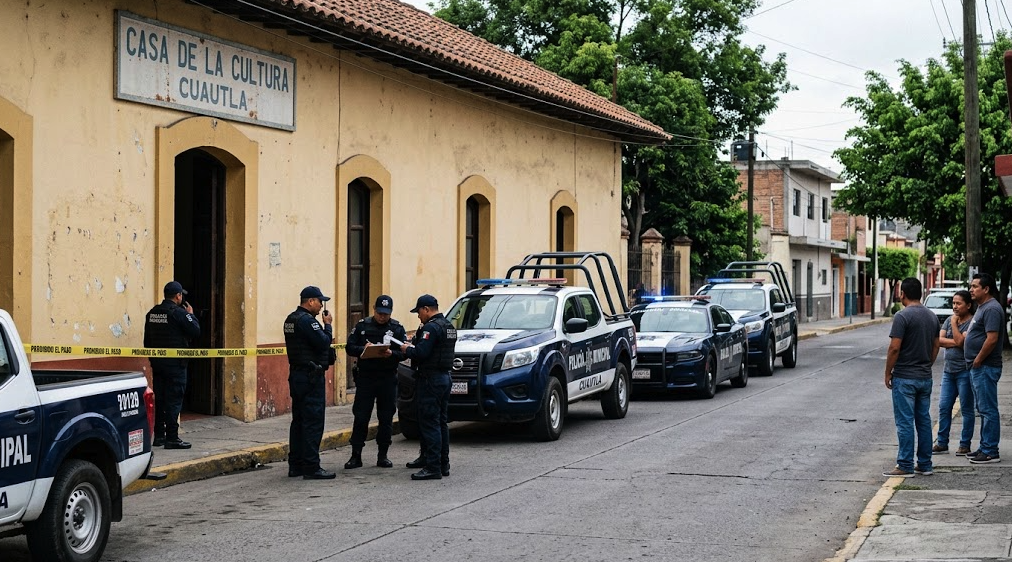
MEXICO CITY – HIGRH NEWS: Claudia Tacoronte was killed in Cuautla, Morelos, while taking part in an academic exchange in Mexico, prompting Spain to demand a full investigation into the death of the 21-year-old Spanish student. Tacoronte, a University of Granada student from the Canary Islands, had been studying at the Autonomous University of the State of Morelos and had been in the region for about a month. Mexican authorities are investigating the case as a possible femicide, while Spanish officials remain in contact with her family and Mexican authorities, but what is known about the final hours of the student’s life and the investigation now under way?

Claudia Tacoronte was studying in Morelos as an exchange student
Claudia Tacoronte Aguilera was 21 and studied early childhood education at the University of Granada in Spain. She travelled to Mexico as part of an academic mobility programme with the Autonomous University of the State of Morelos, or UAEM.
The Spanish student had been in Morelos for about a month before her death. Her exchange was intended to give her an opportunity to continue her university studies while experiencing academic and cultural life in Mexico.

Tacoronte came from the Canary Islands and was studying at the Spanish university when she travelled to Morelos. Her death has since brought attention to the risks faced by students who take part in international exchange programmes.
According to information published by EL PAÍS, Tacoronte was in Cuautla to attend the opening of a national medicinal plant festival. The event included workshops and talks and took place in the centre of the city.
The organisers said she had attended the event with an interest in learning, meeting people and taking part in activities focused on medicinal plants, health and community knowledge.
Cuautla is in the state of Morelos, roughly 100 kilometres from Mexico City. The city became the centre of an international investigation after the young Spanish student died following an attack close to the local Casa de la Cultura.
The circumstances surrounding the attack remain under investigation. Authorities have not closed off the different lines of inquiry, and the final determination of what happened will depend on the evidence collected during the investigation.
Fernando Blumenkron, the Morelos state attorney general, said authorities immediately contacted the Spanish Consulate following the death.
The investigation is being handled as a possible femicide. That classification means the authorities are examining the death within the framework of gender-based violence while they establish the precise circumstances of the crime.
The case has generated concern in both countries because Tacoronte was not travelling privately. She was in Mexico through a university exchange programme involving two higher education institutions.
Her death has therefore affected not only her family and friends but also students and academic authorities connected with the exchange.
Claudia Tacoronte was attacked near the Casa de la Cultura
The attack occurred on Saturday night near the Casa de la Cultura in central Cuautla.
Local reports cited by EL PAÍS said Tacoronte was attacked with a knife at around 11 p.m. She tried to seek refuge inside the cultural centre, but the attacker followed her into the building.
Emergency services arrived after the attack, but the young woman died before they could save her.
The investigation is examining evidence from the area as authorities try to reconstruct the sequence of events.
Security footage has also become part of the investigation. EL PAÍS reported that images showed a person carrying a backpack moving near the area and later fleeing the scene.
The footage may help investigators establish the movements of the person captured on camera. However, the available information does not establish a final judicial identification of the individual.
Authorities are also investigating the circumstances that preceded the attack.
Initial reports described the incident as an alleged robbery, but the state prosecutor has kept several investigative possibilities open. The authorities must now establish what happened, whether robbery played a role and whether the attack had another motive.
That distinction is important because investigators are treating the case as a possible femicide.
The classification places attention on the circumstances surrounding the death of the woman and on whether gender-based violence played a role.
The investigation remains active, and authorities have not announced a final conclusion about the motive.
The Spanish Consulate has remained involved in the case. Spain’s Foreign Ministry said its representatives were in contact with Tacoronte’s family and communicating with Mexican judicial authorities.
The diplomatic involvement reflects the fact that the victim was a Spanish citizen who was living temporarily in Mexico for educational purposes.
The investigation itself remains under the authority of Mexican institutions.
The Mexican authorities must determine the identity of the person responsible, establish the sequence of events and gather the evidence necessary for a judicial case.
Until those steps are completed, details about the motive or responsibility should be treated with caution.
The case has nonetheless generated significant public concern because it occurred during an international academic exchange and because of the wider debate surrounding violence against women in Morelos.
Spain demands justice for Claudia Tacoronte
Spanish authorities quickly reacted to the death.
Foreign Minister José Manuel Albares called for justice and said Spanish authorities were in contact with Tacoronte’s family.
The minister said Spain wanted to establish what happened and see the case investigated fully.
His response came as Mexican and Spanish institutions began coordinating after the death.
Spain’s Equality Minister Ana Redondo also condemned the killing. She said gender-based violence crosses borders and affects women of different ages.
The statements from Spanish ministers reflected the seriousness with which Madrid has treated the case.
The Canary Islands government also expressed its condemnation. Regional officials joined the broader calls for the circumstances of the student’s death to be clarified.
The Spanish Consulate General in Mexico City has continued to monitor the investigation and maintain communication with the family.
The University of Granada also reacted immediately.
The university held a minute of silence across its faculties, schools and workplaces in memory of Tacoronte. It also expressed its strongest condemnation of her death and offered support to her family and Spanish consular authorities.
University rector Pedro Mercado said the institution activated its international protocol after learning of the death.
The university also contacted Spanish students who were already studying in Mexico.
The response demonstrated the direct impact of the case on the Spanish academic community.
For the University of Granada, the death involved a student who had travelled abroad under an official academic arrangement. The institution therefore had to coordinate with the student’s family, Spanish diplomatic representatives and its Mexican academic partner.
The case has also led the Spanish university to reconsider planned exchanges with Morelos.
According to EL PAÍS, the University of Granada cancelled the planned stays of three students who were due to study at the Mexican university during the following academic period.
The university also contacted students already in Mexico and offered them support.
The decision demonstrates how quickly a violent incident involving an exchange student can affect wider academic mobility.
For the students who had planned to travel to Morelos, the cancellation changes their academic plans. For those already in Mexico, the university has had to provide information and support while allowing them to make decisions about their own circumstances.
The death has shaken the university community in Morelos
The reaction has also been strong inside the Autonomous University of the State of Morelos.
Students held a silent vigil after Tacoronte’s death and called on authorities to deliver justice.
The demonstration also reflected wider concerns about the safety of female students.
Tacoronte’s death came after other cases involving women connected to the university had already caused protests and concern among students.
According to EL PAÍS, three other students from the UAEM had been killed or found dead during the preceding months.
Kimberly Ramos, an 18-year-old student, disappeared while travelling to classes at the university’s Cuernavaca campus. Her body was found days later in an industrial area.
Another 18-year-old student, Karol Toledo, disappeared in early March. Her body was found several days later in Coatetelco.
A third case involved Michelle Itzayana Fuentes Calderón, a 15-year-old student at a UAEM high school. She disappeared after leaving her home and was later found dead in Tepoztlán.
Those cases had already triggered demonstrations by students demanding answers and greater protection.
Tacoronte’s death therefore arrived in a university environment where concerns about violence against women were already high.
The UAEM has called for a thorough investigation into the cases and has demanded that the relevant authorities work from a gender perspective.
Students have continued to press for justice and accountability.
The situation has also raised questions about how universities communicate safety risks to students participating in academic exchanges.
For international students, information about local security conditions can be particularly important because they may have limited knowledge of the area and may depend on their host institution for guidance.
In Tacoronte’s case, the student’s academic programme brought her to Morelos only weeks before her death.
Her participation in a cultural event outside the immediate university environment shows that exchange students can also face risks while taking part in ordinary social and educational activities away from campus.
Violence against women remains a major concern in Morelos
The case has drawn renewed attention to gender-based violence in Mexico.
According to figures cited by EL PAÍS, 1,250 women were killed in Mexico during the first seven months of the period covered by the report. Morelos had the country’s second-highest rate of femicides during that period, according to the same report.
These figures provide context for the investigation into Tacoronte’s death, but they do not establish the motive or circumstances of her individual case.
Those questions remain for investigators to resolve.
The Morelos prosecutor’s decision to investigate the death as a possible femicide has placed gender violence at the centre of the inquiry.
The authorities must now determine whether the evidence supports that classification and whether the attack was connected to gender-based violence.
At the same time, the possible robbery line of inquiry remains relevant.
Investigators have to establish whether the attacker intended to steal from Tacoronte, whether another motive existed or whether several circumstances contributed to the attack.
The evidence gathered from the scene, security footage and witness accounts will be important in answering those questions.
The investigation also carries significance beyond the immediate case because the death has become part of a broader discussion about violence against women in the state.
Students at the UAEM have used the case to renew calls for stronger protection.
For the Spanish authorities, the priority remains obtaining justice for a citizen who was in Mexico as part of her university studies.
Claudia Tacoronte’s death changes the academic exchange programme
The consequences of the case have already reached the university exchange programme.
The University of Granada cancelled three planned placements in Morelos after Tacoronte’s death.
The move affects students who had expected to continue their studies at the Mexican university and forces the Spanish institution to look for alternative arrangements.
The exchange relationship between the two universities was relatively limited, according to EL PAÍS. Tacoronte was the first student from the University of Granada to participate in that particular exchange.
That detail gives the case an additional dimension.
Tacoronte’s arrival in Morelos represented an academic opportunity built around international cooperation. Her death has now prompted the Spanish university to reconsider whether students should continue travelling to the same destination under the existing arrangement.
The University of Granada has also offered support to students who are already in Mexico.
According to the university’s statements reported by EL PAÍS, around 20 of its students were studying in Mexico at the time of the incident.
Students were contacted after the death and offered assistance.
Some students have chosen to remain in Mexico and continue their academic activities.
Others may consider returning to Spain depending on their individual circumstances.
The university’s response shows the difficult balance institutions must maintain after a serious security incident.
Academic exchanges are designed to promote international education, cultural understanding and personal development. At the same time, universities have a responsibility to provide students with appropriate information and support when serious risks emerge.
Tacoronte’s case has placed that responsibility under intense scrutiny.
The investigation into Claudia Tacoronte remains open
The central question remains who was responsible for the attack.
Mexican authorities have not announced a final resolution.
Investigators are examining the evidence gathered in Cuautla and are working to establish the sequence of events.
The security footage could prove important in identifying the person who fled the area.
Witness statements and forensic evidence may also help investigators establish what happened inside and around the Casa de la Cultura.
The authorities must also determine whether the death resulted from an attempted robbery or another motive.
At this stage, no final conclusion should be drawn beyond the facts confirmed by the investigation.
The case remains under the jurisdiction of the Morelos authorities, while Spanish diplomatic representatives continue to support the family.
Spain’s demand for justice has been clear.
Foreign Minister José Manuel Albares has called for the truth to emerge, while the Spanish Consulate continues to communicate with Mexican authorities.
The University of Granada has also maintained contact with the family and activated its international response procedures.
In Mexico, students have continued to demand justice and greater protection for women.
The case has therefore become a point of concern for two university communities separated by the Atlantic but connected through an academic exchange.
For Tacoronte’s family, however, the issue is much more personal.
A 21-year-old student travelled to Mexico to continue her education and take part in an international experience. Her life ended in Cuautla after an attack that investigators are still working to explain.
The coming stages of the investigation will determine whether authorities can identify the person responsible and establish the circumstances that led to her death.
Until then, the calls from Spain and from the university communities in Mexico remain focused on one demand: justice for Claudia Tacoronte.
Official Source
The Morelos State Attorney General’s Office provides official information and investigative resources through its institutional portal: Morelos State Attorney General’s Office
Frequently Asked Questions
Who was Claudia Tacoronte?
Claudia Tacoronte was a 21-year-old Spanish student from the Canary Islands who studied early childhood education at the University of Granada.
Why was Claudia Tacoronte in Mexico?
She was in Morelos as part of an academic exchange programme with the Autonomous University of the State of Morelos.
Where did Claudia Tacoronte die?
She was attacked in Cuautla, Morelos, near the city’s Casa de la Cultura, after attending a medicinal plant festival.
How are Mexican authorities investigating the case?
The Morelos State Attorney General’s Office is investigating the death as a possible femicide while keeping several lines of inquiry open…….MORE
Contact us: info@higrh.com