
CEUTA – HIGRH NEWS: 500 migrant children in Ceuta will be allowed to relocate to mainland Spain under an urgent plan being prepared by the Spanish government, marking a change in its position after Interior Minister Fernando Grande-Marlaska previously said people who entered Ceuta or Melilla illegally would be returned to Morocco. What does the new plan mean for the children and Spain’s migration policy?

The Spanish government has announced that around 500 migrant children currently in Ceuta will be allowed to move to mainland Spain.
The decision represents a significant change from the position expressed by the Interior Ministry only days earlier, when Grande-Marlaska said people who entered the Spanish territories of Ceuta and Melilla irregularly would be sent back to Morocco.

The situation involves unaccompanied minors who remain under Spanish protection. Spanish law requires the state to provide care for unaccompanied migrant children until they reach the age of 18.
Most of the estimated 70,000 people who crossed into Ceuta on 30 July have since returned to Morocco. The children who remain in the Spanish territory are subject to different protection obligations because they are minors and are without accompanying family members.
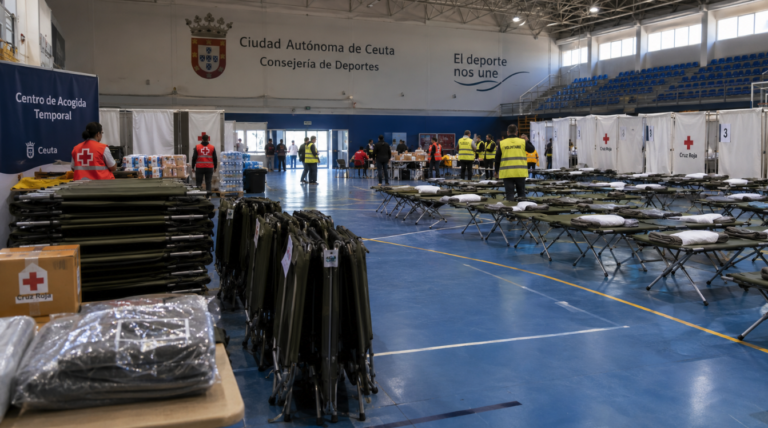
The government is now working with the authorities in Ceuta on an urgent arrangement intended to move the most vulnerable children to the mainland.
The plan is particularly focused on vulnerable minors, including girls, and could involve non-governmental organisations and child protection agencies taking responsibility for their care.
500 migrant children in Ceuta at the centre of a policy reversal
The decision concerning the 500 migrant children in Ceuta comes after several days of political and administrative pressure over the situation of minors in the city.
Rubén Pérez Correa, Spain’s secretary of state for children, has been in Ceuta since Sunday working to find a solution to the situation.
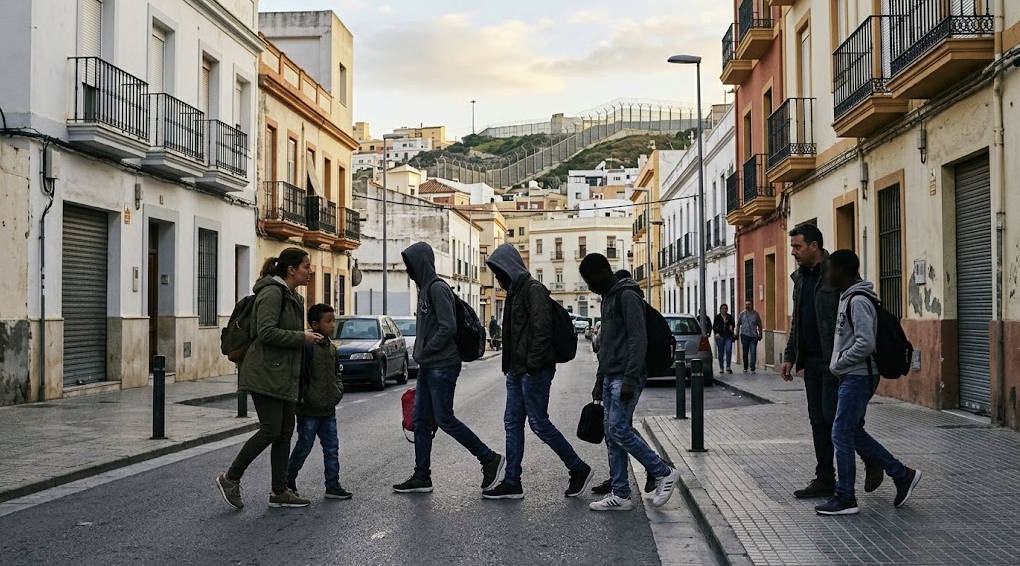
Hundreds of children have reportedly been living on the streets and relying on assistance from local residents. The government wants to provide a more structured protection system while avoiding a new political confrontation with Spain’s regional governments.
The issue is particularly sensitive because several regions governed jointly by the conservative People’s Party and the far-right Vox are reluctant or opposed to accepting their allocated share of migrant children.
The government is therefore working on a mechanism designed to minimise conflict with those regional administrations.
Under the proposed arrangement, NGOs and child protection organisations would take charge of the most vulnerable minors. The plan would avoid immediately transferring guardianship of those children to Spain’s regional governments.
The government has not simply presented the issue as a question of distributing children between regions. Instead, it is attempting to establish an urgent protection mechanism for those considered most vulnerable.
Girls are among the children receiving particular attention under the proposed approach.
The situation has placed the Spanish government between competing political, legal and administrative pressures. It must address the needs of minors who remain in Ceuta while also dealing with its cooperation arrangements with Morocco and the broader European migration framework.
How the crisis began in Ceuta
The current dispute follows the mass crossing into Ceuta on 30 July.
An estimated 70,000 people crossed into the Spanish territory on the North African coast. The majority have since returned to Morocco.
Ceuta is one of Spain’s two territories on the North African coast, alongside Melilla. Both have long been closely connected to Spain’s migration and border policies because of their geographical position.
The events of 30 July created an exceptional situation in the city. Although most of those who crossed subsequently returned to Morocco, unaccompanied minors remained subject to Spain’s child protection system.
Spanish law places a duty of care on the state for unaccompanied migrant children until they reach adulthood.
That legal responsibility is one of the central reasons why the situation of the remaining children has developed differently from that of most adults who entered Ceuta.
The government’s latest plan seeks to address that specific group rather than the wider population that crossed the border.
The proposed transfer would involve around 500 children.
Their relocation to mainland Spain is politically controversial because regional governments play an important role in the country’s child protection system.
Some regions governed by the People’s Party and Vox have already expressed reluctance or opposition to receiving their allocated number of migrant minors.
That opposition has made the government’s search for a workable solution more complicated.
Grande-Marlaska previously promised returns to Morocco
The government announcement follows comments by Interior Minister Fernando Grande-Marlaska on 13 August.
At that time, the minister said people who illegally entered Ceuta or Melilla would be sent back because Spain and Morocco cooperate on this issue.
He also said those people would not reach mainland Spain or remain indefinitely in Ceuta or Melilla.
The subsequent decision to allow around 500 children to relocate to mainland Spain has therefore created a clear change in the government’s public position.
The distinction centres on the legal status of unaccompanied minors.
While Spain maintains its cooperation with Morocco on irregular migration, its domestic legislation also establishes responsibilities towards children who arrive without their parents or other adult guardians.
The result has been a complicated policy debate in which migration control and child protection obligations have become closely linked.
The government is now seeking a solution that allows it to meet its responsibilities towards the children while limiting the political consequences for regional administrations.
The proposal involving NGOs and child protection agencies is part of that effort.
It would allow the authorities to focus resources on children considered especially vulnerable without automatically transferring guardianship to regional governments.
European Commission position adds another dispute
The Spanish government’s announcement came only hours after the European Commission said that EU law required migrants in Ceuta to be returned to Morocco.
Markus Lammert, the European Commission spokesperson for internal affairs, said the requirement also applied to unaccompanied minors.
That position has created another layer of uncertainty around the Spanish government’s plan.
The dispute partly reflects the relationship between European migration rules and Spain’s existing national legislation.
Spain’s latest European immigration pact had not yet been incorporated into Spanish law at the time of the dispute. As a result, Spain’s existing legislation governing the treatment of unaccompanied minors remains relevant.
This legal situation has contributed to different interpretations of what should happen to the children currently in Ceuta.
The Spanish government has chosen to move ahead with a plan focused on protecting the minors, while the European Commission has pointed to the rules governing the return of irregular migrants.
The issue is therefore not only political. It also involves questions about how different legal obligations apply to children who entered Spanish territory without authorisation.
People’s Party rejects the government’s plan
Spain’s People’s Party has rejected the government’s proposal.
Juan Bravo, the party’s deputy finance spokesperson, argued that the best place for the children would be with their families.
He questioned why the Spanish government should proceed with the transfer if Morocco has requested the children’s return and the European position is that irregular migrants should be returned.
The People’s Party’s position reflects the wider political disagreement over responsibility for the minors.
The government argues that an urgent protection response is required for children who remain in Ceuta.
The opposition has instead focused on family reunification and the return of minors where appropriate.
The dispute also reflects wider divisions over Spain’s migration policy.
Ceuta’s geographical position makes the city a central point in the country’s relationship with Morocco and its wider border policy. Any decision concerning people who enter the territory can therefore carry significant political consequences.
The presence of children adds another dimension because their welfare is governed by specific legal protections.
The number of children under state protection
The situation in Ceuta comes against the background of a much wider child protection system in Spain.
According to figures from Spain’s Ministry of Inclusion and Migration, 21,104 people aged between 16 and 23 were under state guardianship as of March.
Around 3,500 of those people were under the age of 17.
Approximately half of the total group were from Morocco.
Girls represented about 8% of the total number.
The figures cover a broader group than the children currently involved in the Ceuta dispute, but they illustrate the scale of the responsibilities already handled by Spain’s protection system.
The government must therefore manage the immediate situation in Ceuta while operating within a wider system responsible for thousands of young people.
The proposed plan involving NGOs and child protection agencies is intended to provide an urgent response to the most vulnerable children.
The government is coordinating the plan with the Ceuta authorities.
500 migrant children in Ceuta face an uncertain next step
The proposed relocation of the 500 migrant children in Ceuta does not end the political or legal dispute surrounding their situation.
The government still faces opposition from regional administrations that are reluctant to accept migrant children, criticism from the People’s Party and questions raised by the European Commission.
At the same time, officials in Ceuta must address the immediate circumstances of children who have been living without adequate accommodation and relying on assistance from local residents.
The government has therefore placed particular emphasis on the most vulnerable cases.
NGOs and child protection agencies could play a central role in the next stage, particularly in providing care and support for children who need immediate protection.
The proposed arrangement is also intended to prevent the transfer of guardianship from becoming the main source of conflict between the central government and Spain’s autonomous regions.
For the children themselves, however, the immediate issue is access to appropriate protection and accommodation.
The government now has to turn its announcement into a practical plan.
That means coordinating with Ceuta, identifying the children who require priority assistance and determining how their relocation and care will operate on the mainland.
The political debate is likely to continue because the Spanish government’s latest decision differs from the message given by the Interior Ministry only a few days earlier.
The European Commission’s position adds further pressure, while the People’s Party continues to argue that children should be returned to their families when possible.
For now, the government is moving towards a solution centred on the protection of around 500 minors.
The outcome will depend on how Spain reconciles its national child protection obligations with European migration rules, its cooperation with Morocco and the objections of some regional governments.
What happens next will determine whether the proposed transfer can provide a workable solution for the children while avoiding a broader confrontation over Spain’s migration policy.
According to figures from Spain’s Ministry of Inclusion and Migration, 21,104 people aged between 16 and 23 were under state guardianship as of March. Official Ministry of Inclusion and Migration data
Frequently Asked Questions
How many migrant children could move from Ceuta to mainland Spain?
The Spanish government plans to allow around 500 migrant children in Ceuta to relocate to the mainland.
Why are these children receiving special protection?
Spanish law requires the state to care for unaccompanied migrant children until they reach the age of 18.
Who could care for the children after the transfer?
The government is developing a plan involving NGOs and child protection organisations, particularly for the most vulnerable minors.
Does the European Commission support the transfer?
The European Commission has said EU law requires irregular migrants remaining in Ceuta to be returned to Morocco, including unaccompanied minors…….MORE