
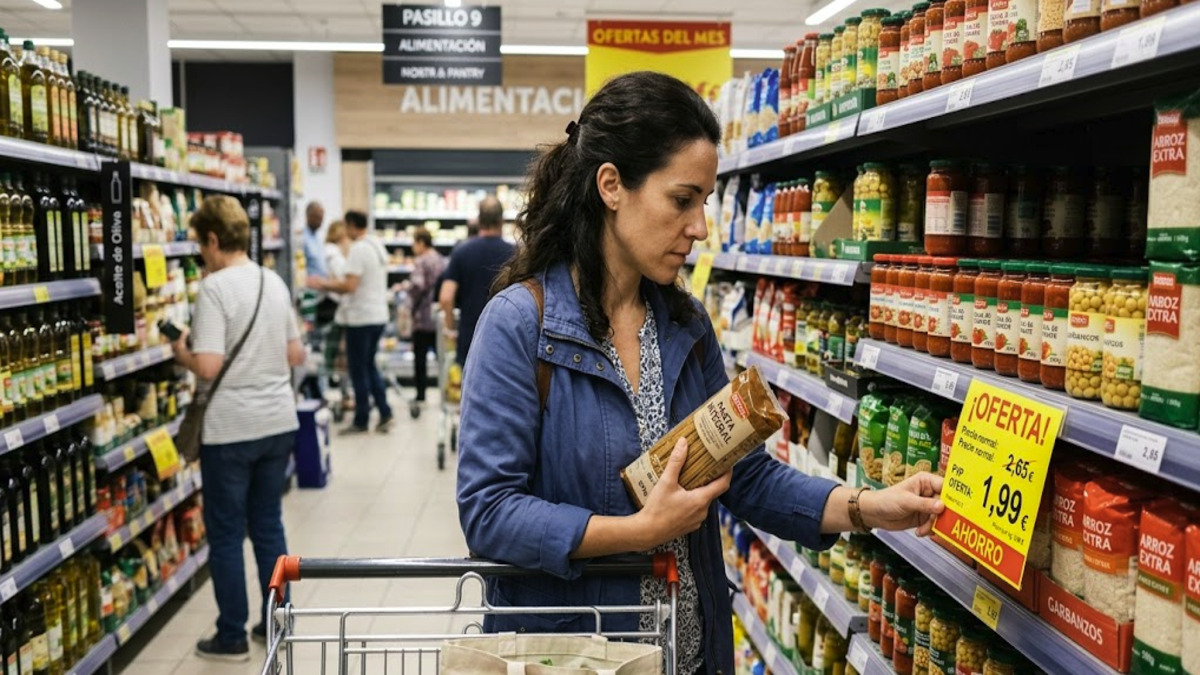

CIUDAD – HIGRH NEWS: How to Spot a Misleading Supermarket Deal is becoming an important question for shoppers trying to control their grocery spending. A large discount percentage, a bright promotional sign or a multi-buy offer can make a product look like a bargain, but what should consumers actually check before putting it in their trolley?

The first rule is simple: do not judge a promotion solely by the percentage displayed on the sign.
A discount of 30%, 40% or 50% may look impressive, but the important figures are the actual selling price, the previous price and the amount of product included.

Spanish retail legislation requires reduced-price products to show the previous price alongside the reduced price, with specific exceptions. The previous price is generally based on the lowest price applied to an identical product during the previous 30 days.
That rule gives shoppers a useful reference when assessing whether a claimed reduction represents a genuine recent saving.
The comparison must also involve the same product. Different sizes, varieties or quantities cannot always be compared simply by looking at the total price.
The unit price can therefore be just as important as the large promotional figure.
The previous price can reveal what the promotion really means
The first thing to examine is the relationship between the old and new prices.
If a product is displayed at €2.99 with a previous price of €4.99, the shopper can immediately see the claimed reduction. But the previous figure should not simply be a number chosen to make the promotion look more attractive.
Spanish legislation defines the previous price for a reduced-price product by reference to the lowest price applied to an identical product during the preceding 30 days.
That makes the previous-price figure particularly important.
Consumers should also make sure that the comparison concerns an identical product.
A 500-gram package and a 750-gram package may carry different prices, but comparing their shelf prices alone does not establish which one offers better value.
The unit price provides a more useful comparison.
For products sold by weight or volume, checking the cost per kilogram or litre can reveal differences that are not obvious from the headline price.
This is particularly useful when supermarkets place several sizes of the same product next to one another.
A large discount percentage does not always mean better value
Large percentages are designed to attract attention.
A shopper walking through a supermarket may immediately notice “-50%” without stopping to calculate the final price.
But the percentage should be treated as one piece of information rather than the final answer.
Consumers should check the actual amount they will pay and compare it with similar products.
Spanish consumer rules require price information to be clear and presented in a way that does not mislead or confuse shoppers. They also establish that a consumer should not be charged more than the advertised price, subject to specific exceptions.
This means the shelf label matters.
If the large promotional sign says one thing while the product label or checkout shows another amount, the shopper should ask staff to clarify the difference before completing the purchase.
Multi-buy offers deserve a second calculation
Promotions such as “two for €5”, “three for €10” or “second item half price” can provide genuine savings, but the consumer needs to calculate the effective price.
For example, if two identical products cost €5 together, each one effectively costs €2.50.
That figure should then be compared with other brands and package sizes.
A multi-buy promotion may also have conditions. Some offers require a minimum number of products, while others apply only to selected items.
Spanish consumer legislation requires promotional advertising to provide relevant information about matters such as the duration of the promotion, the conditions consumers must meet and the benefits offered.
Reading the conditions therefore matters just as much as reading the headline discount.
A promotion may be available only for a limited period or only on certain products.
If a condition changes the final price, consumers should know about it before making the purchase.
Unit pricing can expose differences hidden by package sizes
One of the easiest ways to make a poor comparison is to look only at the total price.
Supermarkets sell many products in different quantities. A smaller package may cost less at the checkout while offering worse value per kilogram or litre.
The correct comparison depends on the product.
For example, a €3 package is not necessarily better value than a €4 package if the second contains considerably more product.
Unit pricing can therefore be one of the most useful tools available to shoppers.
Spanish consumer rules provide for unit-price information, including requirements for products sold by weight or volume.
Checking that figure can make comparisons between different brands and package sizes much easier.
It also reduces the influence of packaging design and large promotional signs.
Look beyond the promotional sign before making your choice
Promotional displays are designed to stand out.
Large numbers, bright colours and phrases such as “special price”, “limited offer” or “great value” can draw attention away from the smaller information underneath.
A practical approach is to pause and check several points before taking the product.
Look at the previous price, current price, package size, unit price and conditions of the promotion.
It is also worth checking whether the product selected is actually included in the offer.
Supermarkets may display several similar products in the same area, and a promotional sign does not necessarily apply to every item on the shelf.
Spanish commercial legislation contains provisions designed to prevent confusion between products sold at normal prices and those included in promotions.
The product label and exact offer conditions therefore deserve attention.
Not every promotion works in the same way
Consumers should not automatically treat “offer”, “promotion”, “sale” and “discount” as interchangeable terms.
Different promotional arrangements can have different conditions.
Retail legislation requires promotional advertisements to specify relevant details, including their duration and any special rules that apply.
That information can be especially important when a promotion has a deadline or a limit on the number of units available.
A shopper should also read any conditions printed in smaller text.
An offer may require the purchase of several products or apply only to a particular format.
If that condition changes the amount paid, it forms part of the real price of the promotion.
What to do when the shelf price differs from the checkout
There is another detail worth checking before leaving the supermarket: whether the checkout price matches the advertised price.
Spanish consumer rules state that a business should not charge more than the advertised price. Where different prices are displayed for the same product, the lower advertised price can generally be required, except in circumstances such as a manifest error or bad faith.
If a discrepancy appears, consumers should keep evidence.
A photograph of the shelf label or promotional sign can help establish what price was displayed.
The receipt should also be kept.
These records can become useful if the shopper needs to make a complaint later.
A quick checklist before paying
Consumers do not need to spend several minutes analysing every promotion.
A short check can be enough:
- Previous price.
- Current price.
- Price per kilogram, litre or unit.
- Package size.
- Promotion conditions.
- Duration of the offer.
- Final amount charged at checkout.
This approach shifts the decision away from advertising language and towards measurable information.
It can also prevent unnecessary purchases.
A promotion only represents a saving if the shopper actually needs the product and the final price is competitive with the alternatives available.
Buying extra products simply because a large discount sign appears on the shelf does not automatically reduce household spending.
A genuine bargain should survive comparison
Not every supermarket promotion is misleading.
Retailers can offer legitimate discounts, multi-buy deals and temporary promotions that provide real value.
The important issue is whether the information allows consumers to understand what they are paying and what the claimed reduction represents.
Spanish law establishes specific rules for reduced-price products and the reference price used to advertise those reductions.
Consumers can add another layer of protection by checking the figures themselves.
Looking at the previous price, calculating the unit cost and reading the conditions can make it much easier to distinguish a useful promotion from an offer that simply looks impressive.
The biggest percentage on the shelf is not necessarily the best deal.
The better choice is the product that meets the shopper’s needs at a final price that genuinely compares favourably with the alternatives available.
Frequently Asked Questions
How can I check whether a supermarket discount is genuine?
Compare the current price with the previous price and check the unit price.
What should the previous price represent?
As a general rule, it should reflect the lowest price applied to the identical product during the previous 30 days.
What should I do if the checkout price is higher?
Keep evidence of the advertised price and the receipt, then ask the store to resolve the discrepancy.
Is the cheapest package always the best deal?
No. Compare the price per kilogram, litre or unit when package sizes differ…….MORE