
Madrid – HIGRH NEWS: Travel checks return between Spain and Italy as Ceuta crisis strains relations

A migration emergency in Spain’s North African enclave of Ceuta has developed into a dispute affecting travel between two European Union countries. Spain has introduced temporary checks on people arriving from Italy after Rome imposed its own restrictions on travellers coming from Spain. The measures have revived questions about internal border controls, migration policy and the practical limits of Europe’s passport-free travel system, so what happens next?
A migration dispute reaches Europe’s travel network
The immediate consequence for travellers is the return of document checks on arrivals from Italy.

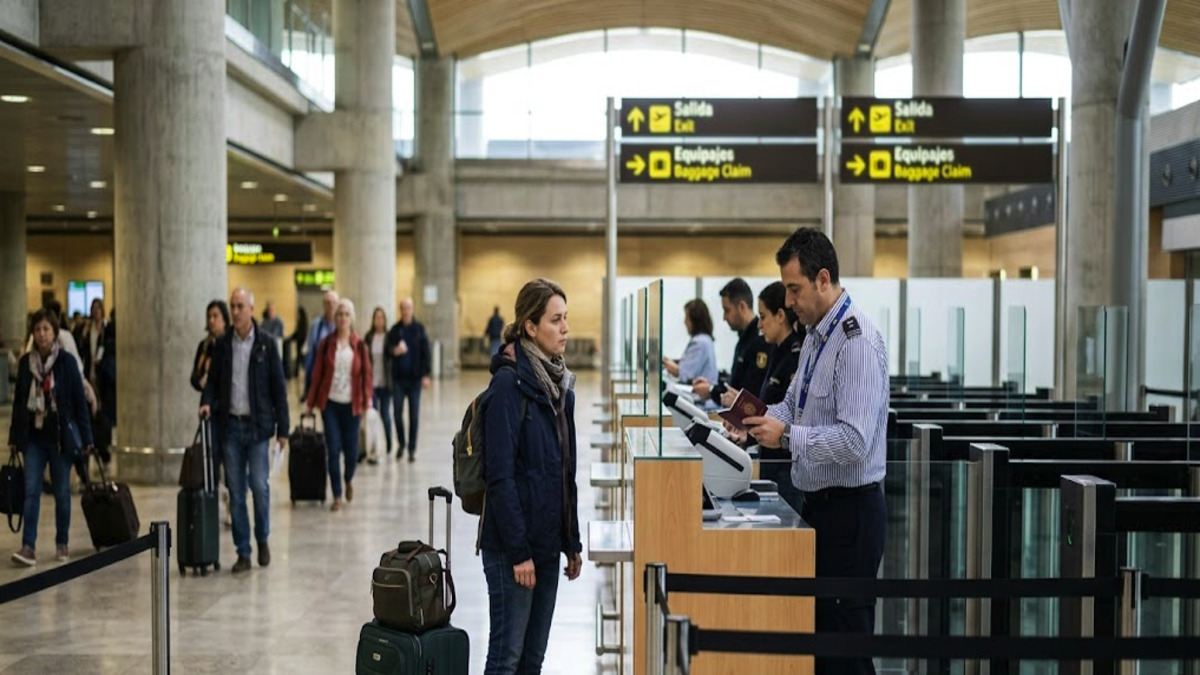
Spanish authorities have begun checking passengers arriving by air and sea after Italy introduced comparable measures affecting connections from Spain.
The Spanish action is temporary and does not stop flights or maritime services between the countries.
During the first day of the renewed checks, Spanish authorities examined roughly 200 passengers travelling on 12 flights. The inspections took place at airports in Madrid, Barcelona, Seville, Bilbao, Alicante and Valencia.
The figures show that the measure is focused on verification rather than preventing people from travelling.
Passengers can still arrive in Spain from Italy, but they may now have to present identity or travel documents before continuing their journey.
Madrid currently plans to keep the controls in place until 7 September unless the circumstances that prompted the decision change.
For the European travel system, however, the political significance is much greater than the number of passengers checked.
The dispute has brought temporary internal border controls back into a relationship that normally operates under Schengen rules.
The episode that triggered Rome’s concern
The disagreement developed after a sudden mass arrival of migrants in Ceuta.
The Spanish enclave experienced an exceptional movement of people from Morocco. Reuters reported that around 72,000 people reached Ceuta during the episode.
The scale of the arrival placed intense pressure on local authorities.
Spain subsequently returned or otherwise processed most of those who had entered the territory.
Spanish Interior Minister Fernando Grande-Marlaska later told European counterparts that around 70,000 of the approximately 72,000 people who had arrived had already left Ceuta.
The situation did not end there.
Children who remained in the enclave required specific protection and accommodation, adding a humanitarian and administrative dimension to the border crisis.
For Italy, the concern extended beyond the immediate situation in Ceuta.
Rome argued that the consequences of a major migration event in Spanish territory could potentially affect movement elsewhere in Europe.
That assessment became the basis for Italy’s temporary restrictions on arrivals from Spain.
Rome holds its ground
Italy introduced its controls before Spain announced its reciprocal measures.
The Italian government said its decision was linked to migration and security concerns.
Rome indicated that the measures would remain in place at least until 15 August. The restrictions focus particularly on travellers from outside the European Union, while EU citizens are treated differently.
Italian Foreign Minister Antonio Tajani expressed hope that the situation would return to normal, but Rome maintained its position while the dispute continued.
Spain objected to the Italian interpretation of the Ceuta crisis.
Madrid argued that the situation in the enclave did not provide a sufficient basis for treating travel from Spain as a direct migration threat to Italy.
The disagreement therefore moved from migration policy into the practical operation of European borders.
That shift is significant because Spain and Italy normally allow people to travel between them without routine internal border inspections.
Why Ceuta matters so much
Ceuta occupies a unique position on Europe’s map.
The Spanish city is located on the North African coast and has a land border with Morocco.
Its geographical position makes it one of the points where migration from Africa can become a direct issue for a European Union member state.
But Ceuta also has a special relationship with the Schengen system.
Spanish Interior Minister Fernando Grande-Marlaska said that the Schengen area itself had not been affected by the Ceuta episode because the enclave is outside that area.
That distinction is central to Madrid’s argument.
Spain considers the situation in Ceuta to be different from a migration movement taking place across an internal Schengen border.
Italy has nevertheless chosen to respond through checks on people travelling from Spain.
Spain’s reciprocal action has now created a temporary chain of controls between the two countries.
What travellers need to know
The new measures do not amount to a travel ban.
People can continue to fly or travel by sea between Spain and Italy.
The main change is the possibility of additional document checks.
Travellers should therefore make sure they carry the documents required for their particular status.
Spanish citizens and citizens of other EU or European Economic Area states generally travel with a valid national identity card or passport.
Third-country nationals may have additional requirements involving passports, residence documents or visas.
Spanish Interior Ministry guidance explains the documentation requirements for travel within the Schengen framework and the rules applicable to different categories of travellers.
The temporary controls can also affect travel times.
Passengers who have connecting flights or other onward transport may want to allow additional time at their arrival point.
The measures are not the same as a complete return to permanent border controls.
They are temporary checks introduced during a political and migration dispute.
Schengen faces another test
The return of border checks can easily create the impression that the Schengen system has been suspended.
That is not what has happened.
Spain and Italy remain part of the Schengen framework.
The system normally removes routine checks at internal borders while maintaining common rules for external border management.
The Spanish Interior Ministry explains that Schengen provides for the removal of controls at internal borders and sets documentation rules for movement between participating states.
Temporary internal checks can nevertheless be introduced under defined circumstances.
The current dispute demonstrates why that exception matters.
Governments retain tools to react when they consider that security, migration or public-order concerns justify additional controls.
The political question is whether such measures remain exceptional or become increasingly common whenever member states disagree over migration.
Ceuta still has unresolved humanitarian issues
The migration episode has left challenges that cannot be solved simply by controlling the border.
Among the most sensitive is the presence of unaccompanied minors.
Children arriving without parents or legal guardians require accommodation and protection under specific procedures.
Their presence has placed additional pressure on Ceuta and has contributed to a broader debate about how responsibility should be shared across Spain.
The issue has also become part of the political discussion surrounding the country’s migration system.
A sudden arrival may last hours or days, but the administrative consequences can continue for much longer.
That is why the Ceuta episode remains relevant even after most of those who entered the enclave have left.
Authorities are watching social media activity
The possibility of another large-scale attempt to reach Ceuta has also been discussed online.
Reports have identified social media posts calling for another crossing attempt.
However, an online appeal is not evidence that another mass movement will definitely occur.
Authorities have continued to monitor developments.
The distinction between an online call and a confirmed operational plan is particularly important when reporting on sensitive migration events.
Spain has not announced a confirmed second wave comparable to the earlier episode.
The situation therefore remains one of monitoring rather than confirmed repetition.
Madrid and Rome have different migration priorities
The dispute also reflects wider political differences between the governments led by Pedro Sánchez and Giorgia Meloni.
Meloni has consistently promoted tougher policies on irregular migration and stronger protection of Europe’s external borders.
Spain faces its own pressure because of its geographical position and its proximity to major migration routes from Africa.
Madrid has repeatedly highlighted cooperation with countries of origin and transit as part of its approach.
The two governments can therefore agree on the need to manage migration while disagreeing sharply over how specific situations should be handled.
The Ceuta crisis has exposed that difference.
Italy’s decision demonstrates that Rome is prepared to use temporary border measures when it considers migration risks significant.
Spain’s response shows that Madrid is prepared to answer with its own controls.
The European Union is caught between two priorities
The dispute highlights a difficult balance within European policy.
EU countries want strong control of their external borders.
At the same time, the internal market depends heavily on the ability of people to move between member states with minimal border friction.
The Ceuta episode has placed those two priorities in direct tension.
European officials have called for stronger cooperation with Morocco.
EU Migration Commissioner Magnus Brunner has argued that the bloc should use available tools to encourage greater Moroccan cooperation on migration management, returns and readmission.
European Commission President Ursula von der Leyen has also called for stronger EU support for border protection and cooperation with Morocco following the Ceuta episode.
The issue is therefore larger than the disagreement between two national governments.
It touches the European Union’s broader migration strategy.
The new checks are temporary, but the political problem remains
Spain’s current controls are scheduled to continue until 7 September unless circumstances change.
Italy’s measures are set to remain at least until 15 August.
Those dates provide natural points for both governments to reassess the situation.
If migration pressure around Ceuta remains under control, Madrid and Rome could have greater room to reduce the measures.
If concerns about new arrivals remain, the political dispute may continue.
For travellers, the practical message is simpler.
Travel between Spain and Italy remains possible, but additional checks should be expected while the temporary measures are active.
Carrying the correct documents and allowing extra time at the airport or port can reduce avoidable problems.
For Europe, the larger question is whether the episode becomes a short-lived disagreement or another example of internal border controls returning whenever migration pressures rise.
Frequently Asked Questions
Are flights between Spain and Italy still operating?
Yes. The measures introduce additional checks but do not stop normal air and sea connections.
Why did Spain introduce the controls?
Spain acted after Italy introduced temporary controls on arrivals from Spain during the dispute over migration and Ceuta.
How long are Spain’s measures expected to last?
The current Spanish measure is scheduled to continue until 7 September unless circumstances lead to an earlier change.
Has Spain left the Schengen area?
No. Spain remains part of Schengen. The current checks are temporary measures…….MORE