We also provide our news in Spanish and Arabic. For inquiries, please contact us via the website's email.


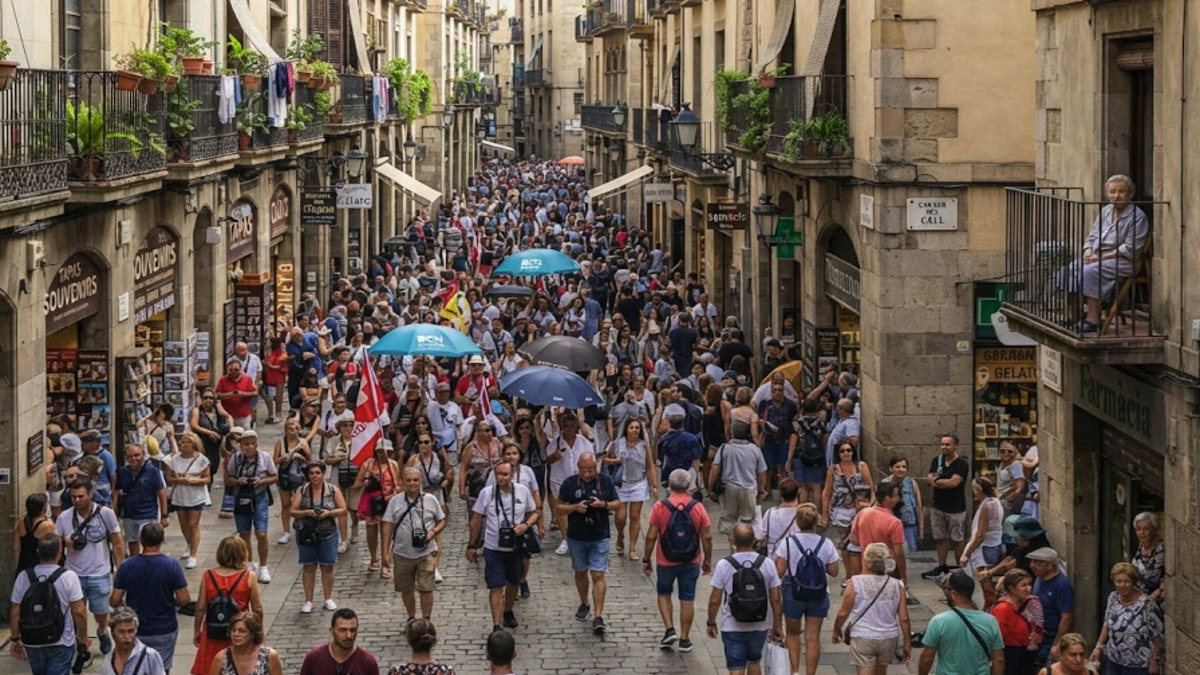
Barcelona – Spain: Overtourism in Spain has become one of the country’s biggest social debates as popular destinations face growing pressure from record visitor numbers, rising housing costs and concerns over the impact on local communities. Authorities and residents are now asking whether Spain can continue expanding tourism without affecting daily life for people who live in the most visited areas.

The debate has intensified in cities and islands where tourism activity has reached high levels. Barcelona, the Canary Islands and Mallorca are among the places where residents have raised concerns about housing availability, public services and changes in neighbourhood life.
But what measures is Spain considering to balance the economic importance of tourism with the needs of local communities?

Overtourism in Spain puts pressure on Barcelona and other destinations
Barcelona has become one of the main examples of the overtourism debate in Spain. Local authorities have announced measures aimed at reducing pressure on the city and changing the type of tourism it receives.
The city has discussed limiting tourism growth and focusing more on visitors linked to cultural and business activities rather than short stays that increase pressure on popular areas. Officials have also introduced higher tourist taxes, including measures affecting cruise passengers who spend limited time in the city.
Residents have linked the increase in visitors with problems such as higher housing prices, crowded transport systems and changes in traditional neighbourhoods. Protests have reflected growing frustration among some communities that feel tourism expansion has affected their ability to live in their own cities.
At the same time, tourism remains a major economic activity for Spain, creating jobs and supporting businesses. The challenge for authorities is finding a model that protects local interests while maintaining the economic benefits generated by visitors.
Overtourism in Spain spreads beyond major cities
The pressure linked to overtourism is not limited to Barcelona. Spanish islands and coastal destinations have also experienced growing opposition from residents who argue that visitor numbers have increased housing difficulties and placed additional demands on infrastructure.
In the Canary Islands, thousands of people joined demonstrations calling for changes to the tourism model and asking authorities to address concerns related to housing costs, traffic and public services.
Mallorca has also seen strong reactions from groups calling for changes in the management of tourism growth. Campaigners have focused on the effects of holiday rentals and the availability of housing for residents.
The Spanish government has promoted a strategy based on distributing visitors more evenly across the country, encouraging travel to less crowded inland regions and reducing dependence on traditional coastal destinations.
Spain searches for a more sustainable tourism balance
Spanish authorities are increasingly focusing on what they describe as a more sustainable tourism model. The approach includes spreading tourism activity throughout the year, promoting lesser-known destinations and improving management of highly visited areas.
The debate does not focus on ending tourism but on managing its effects. Many local officials and residents argue that the issue is not visitors themselves, but the concentration of large numbers of tourists in specific areas at the same time.
Spain now faces a difficult balance: protecting communities and housing access while preserving one of the country’s most important economic sectors.
FAQ
What is overtourism in Spain?
Overtourism refers to situations where large numbers of visitors create pressure on local communities, infrastructure and resources.
Why are some Spaniards protesting against tourism?
Some residents are concerned about housing costs, overcrowded areas and changes affecting local life.
Which Spanish destinations are affected by overtourism?
Barcelona, the Canary Islands and Mallorca are among the destinations where concerns have increased.
Is Spain trying to reduce tourism?
Authorities have focused on managing tourism growth rather than stopping tourism, including promoting less crowded destinations.
Overtourism in Spain has become a major discussion about the future of travel, housing and local quality of life. The country is seeking a balance between welcoming visitors and protecting the communities that host them.
…….MORE
Contact us: info@higrh.com