We also provide our news in Spanish and Arabic. For inquiries, please contact us via the website's email.


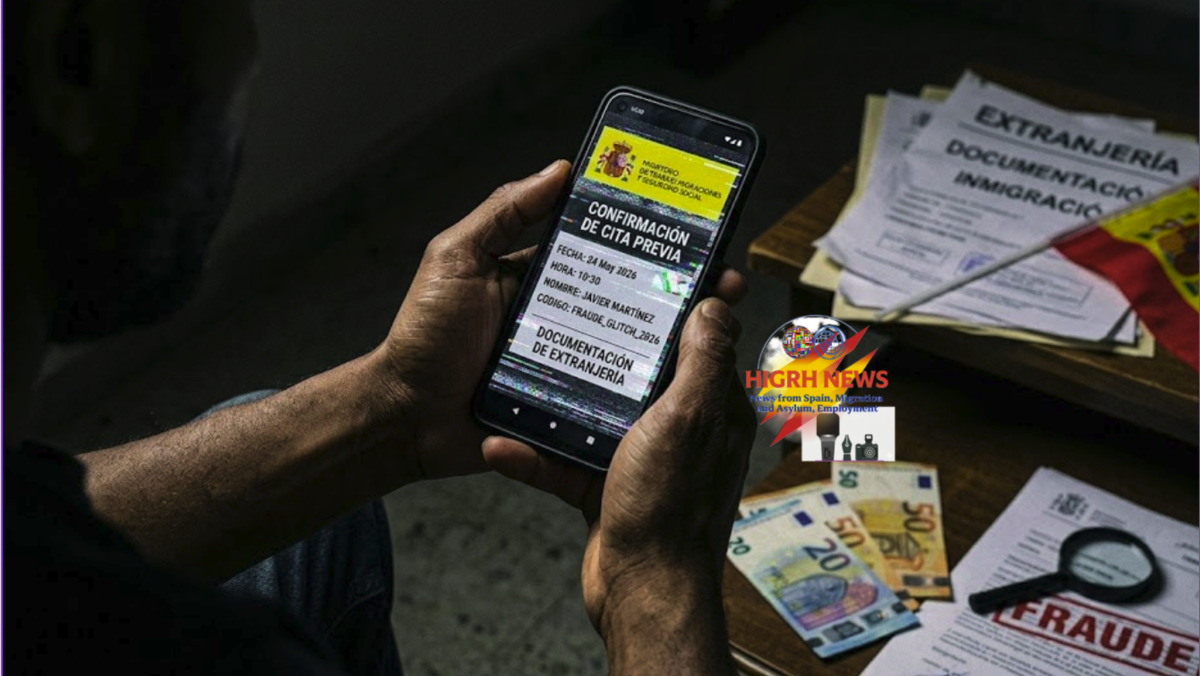
Madrid – HIGH NEWS: As the Spanish government prepares to launch its largest-ever extraordinary regularization process, a shadow of exploitation is spreading across the migrant community. What was intended as a pathway to legal residency has become a lucrative hunting ground for criminal networks. Today, we issue a critical warning for immigrants in Spain: the mandatory “cita previa” (appointment) system has been hijacked by a black market where desperation is being sold for hundreds of euros.

Immigration activists and labor unions have sounded the alarm over a massive surge in fraud linked to immigration procedures. These are not mere administrative errors; they are organized rings exploiting those who are most vulnerable. At HIGH NEWS, we emphasize that staying informed through official channels is the only way to navigate this complex legal transition safely and avoid falling victim to these predatory schemes.
H2: Warning for immigrants in Spain: The Scams Behind Regularization
The root of this crisis lies in the unprecedented pressure generated by the government’s announcement. While the regularization program is expected to benefit approximately 500,000 individuals, recent data suggests that the actual number of undocumented people in the country could be as high as 840,000. This massive gap between available administrative capacity and the real number of applicants has created a bottleneck that scammers are using to their advantage.

The result is a near-paralysis of the official booking portals. Under misleading promises such as “We guarantee your appointment… don’t waste your time staring at the screen,” these gangs use automated bots to block-book all available slots the moment they are released. This warning for immigrants in Spain is vital: these groups operate with impunity on social media and classified ad platforms, turning a free public service into an expensive, illegal commodity.
H3: Exorbitant Fees for Phantom Services
Official residency procedures do not require payments to third-party intermediaries beyond the standard government taxes. However, scammers are currently charging fees that are devastating for people already in precarious financial situations. Investigations have uncovered charges of 50 euros for basic consultations and up to 450 euros for promises to “expedite” files that have not even officially entered the system yet.
H2: Analysis of the Crisis: A System Overwhelmed by Demand
The problem isn’t just the fraud itself; it’s the structural weakness of the current administrative infrastructure. The Spanish immigration system is facing a collapse in several key provinces, where securing an appointment legally has become nearly impossible for the average citizen. This lack of clear official communication and the ambiguity regarding the exact timeline for the new law have created the perfect ecosystem for the black market to thrive.
The warning for immigrants in Spain must also serve as a call to action for authorities to reinforce immigration offices. As long as the system remains incapable of handling the volume of requests, illegal intermediaries will continue to flourish. This situation does more than just drain the finances of applicants; it creates a profound sense of distrust in the country’s institutions and legal pathways.
H3: How to Identify an Immigration Scammer
Legal experts and NGOs suggest several red flags to help applicants protect themselves. Be highly suspicious of any agency or individual that:
Guarantees 100% success in record time.
Requests payments via non-traceable methods or personal bank transfers.
Uses manipulated or unofficial-looking screenshots of the appointment website.
Uses high-pressure tactics, claiming that “slots will run out today.”
H2: Responses from Authorities and Unions
Various labor unions have formally denounced the existence of “click mafias” that use specialized software to hoard appointments. The warning for immigrants in Spain issued by immigration office employees highlights that this behavior is paralyzing the fundamental right of people to request legal residency. By monopolizing the digital portal, these criminals are effectively gatekeeping the law.
At HIGH NEWS, we believe it is crucial to understand that during this historic transition, appointments have become a currency. We urge our readers to report any attempt at illegal charging to the police. Collective vigilance is the first step toward breaking the cycle of abuse and ensuring that the regularization process remains fair and accessible to all who qualify.
Frequently Asked Questions (FAQ)
Why is there a new warning for immigrants in Spain?
Because criminal networks are exploiting the upcoming regularization process by hoarding and selling appointments that should be free.
How much are scammers charging for these appointments?
Fees have been reported ranging from 50 euros for “advice” to over 450 euros for “guaranteed” fast-track appointments.
Is it safe to buy an appointment from an intermediary?
No. It is illegal and risky. You risk losing your money, and you may be handing over sensitive personal data to criminals for identity theft.
What should I do if I cannot find an official appointment?
Persistence is key. Try logging in during the specific hours when offices release new slots, and seek assistance from certified lawyers or recognized NGOs that offer free guidance.
Conclusion The warning for immigrants in Spain should be taken with the utmost seriousness: residency is a legal right, not a product for sale. Do not let urgency cloud your judgment during this critical moment for your future. While the country prepares for this massive administrative shift, protecting yourself against fraud is the first step toward a successful and legal integration.
…….MORE
Contact us: info@higrh.com