

SPAIN – HIGRH NEWS: What to Check on Your Car Before a Road Trip in Spain.

Before setting off on a long road journey, it is worth spending a few minutes checking that the vehicle is ready for the trip. Tires, brakes, lights, fluid levels, windscreen wipers and vehicle documents are among the main points drivers should review.
A quick inspection can reveal problems before they become a breakdown on the road. So, what exactly should you check before starting a road trip in Spain?

What to check on your car before a road trip in Spain
Preparing a car for a long journey does not mean carrying out a full mechanical inspection at home. However, drivers can check several important parts of the vehicle before leaving.
The Directorate-General for Traffic, known as the DGT, recommends paying particular attention to tires, brakes, lighting and fluid levels. The condition of the windscreen, wipers and other visibility-related components also deserves attention.
These checks are especially useful before a long journey because a problem that seems minor during everyday driving can become more troublesome after several hours on the road.
Drivers should also take notice of anything unusual that has appeared recently. Strange noises, vibrations, starting difficulties or changes in braking performance are all reasons to consider having the vehicle inspected before travelling.
Some checks can be carried out by the driver, while more complex mechanical problems should be left to a qualified workshop.
Tires should be high on the checklist
Tires are one of the most important parts of the vehicle to inspect before a road trip. They are the only part of the car that remains in direct contact with the road, making their condition particularly important.
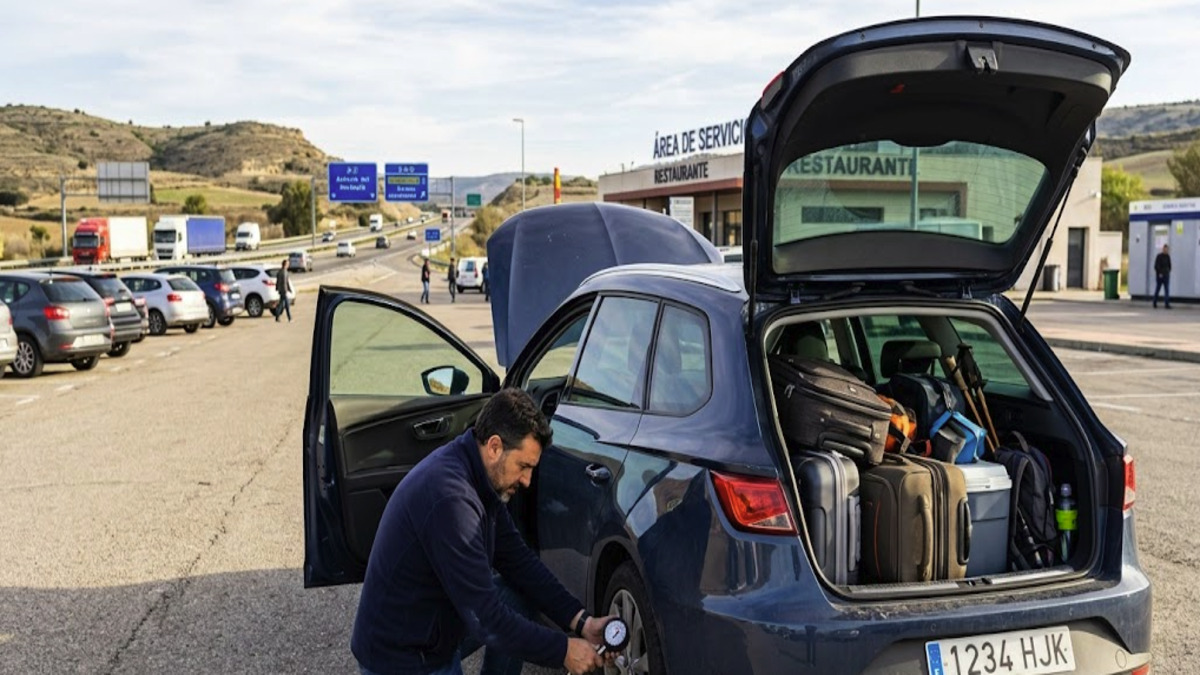
The DGT recommends checking tire pressure when the tires are cold and following the pressure figures provided by the vehicle manufacturer.
Drivers should also examine the tread and look for uneven wear, cuts, cracks, bulges or other visible damage.
The legal minimum tread depth in Spain is 1.6 millimetres. However, tread depth is not the only factor that matters. A tire can also become unsuitable because of damage, deterioration or incorrect pressure.
The vehicle’s load should also be taken into account. A car carrying several passengers and a large amount of luggage may require different tire pressures from those used under normal driving conditions.
If the vehicle has a spare tire, it should be checked as well. Cars equipped with a puncture repair kit should have the kit available and ready for use.
Brakes and fluid levels deserve particular attention
The braking system plays a central role in road safety. Before a long journey, drivers should pay attention to any change in the way the brake pedal feels or the way the car responds when slowing down.
If braking requires noticeably more distance than usual, or if the driver feels unusual vibrations or hears unfamiliar noises, the vehicle should be checked before setting off.
The DGT also recommends checking the brake fluid level. A low level can have different causes, including a possible leak, so simply adding more fluid may not solve the underlying problem.
For that reason, any significant change in braking performance deserves professional attention.
Checking the oil and coolant
Engine oil is another basic item to check before travelling. It is important for the proper operation and protection of the engine, and its level should be checked according to the manufacturer’s instructions.
The coolant also plays an important role because it helps regulate the engine’s temperature.
Before adding any fluid, drivers should first identify what the vehicle requires and follow the manufacturer’s specifications. Different systems and vehicles may require different products.
If the level of a fluid repeatedly falls, or if there are visible signs of a leak underneath the car, simply topping up the reservoir is not enough. The cause should be investigated.
A fluid leak can point to a mechanical problem that needs attention before the vehicle is used for a long journey.
Lights, windscreen and mirrors are essential for visibility
Good visibility is particularly important when driving at night or in conditions such as rain, fog or poor lighting.
Before leaving, drivers should check that the headlights, rear lights, indicators and brake lights are working correctly.
The DGT stresses the importance of vehicle lighting because it allows drivers to see the road while also helping other road users identify the vehicle.
Headlights and rear lights should be clean and free from damage that could affect their performance.
The same applies to mirrors and windows. Clean mirrors and glass provide the driver with a clearer view of the surrounding traffic.
The windscreen should also be checked before departure. A crack or significant impact may affect visibility and should be assessed before undertaking a long journey.
Do not overlook the windscreen wipers
Windscreen wipers are easy to forget during a routine vehicle check, but they become particularly important when rain begins to fall.
If the blades leave areas of glass uncleared, create streaks or fail to remove water properly, replacing them before the trip is advisable.
The windscreen washer reservoir should also contain enough fluid for the journey.
Road dirt, rain and spray from other vehicles can quickly reduce visibility. Having an effective washer system can therefore make a significant difference when conditions deteriorate.
The battery and dashboard warning lights
Battery problems often become obvious when the car refuses to start, but there may be warning signs beforehand.
If the engine has recently taken longer than usual to start, or the vehicle has experienced repeated starting difficulties, checking the battery before a long journey is sensible.
Drivers should also pay attention to warning lights on the dashboard.
A warning indicator that remains illuminated can signal a problem that requires attention. Drivers do not necessarily need to identify the cause themselves, but they should not simply ignore a persistent warning.
If there is uncertainty about what a warning light means, consulting the vehicle’s manual or having the car inspected can prevent an unnecessary problem during the journey.
What to check before loading the luggage
Preparing a car for a road trip is not only about the mechanical condition of the vehicle. The way luggage is placed inside the car also matters.
Suitcases, bags and other objects should be positioned securely so that they cannot move around while the vehicle is travelling.
Loose objects inside the passenger compartment can become a hazard if the driver has to brake suddenly.
Luggage should also be arranged so that it does not obstruct the driver’s view or interfere with the vehicle’s controls.
Drivers using a roof box, bicycle carrier or another external loading system should follow the manufacturer’s instructions and respect its weight limits.
The additional weight can also affect the way the vehicle behaves on the road. Tire pressure should therefore be adjusted according to the manufacturer’s recommendations for the vehicle’s load.
Before starting the journey, passengers should have their seat belts properly fastened and the driver should adjust the seat and mirrors.
What documents should you carry in the car in Spain?
Vehicle preparation also includes checking that the necessary documents are valid.
The DGT states that drivers must have a valid driving licence, vehicle registration document and vehicle inspection card, commonly associated with the ITV system in Spain. The documents can be carried in physical form, while certain documents are also available through the miDGT application within Spain.
The vehicle must also have the required compulsory insurance in force. The insurance policy and the receipt for the latest payment are not among the three documents that the DGT identifies as documents that must be physically carried in the vehicle.
Official DGT information on vehicle documentation
Equipment for dealing with a roadside problem
Drivers should also make sure they have the equipment needed to deal with a possible roadside incident.
If the vehicle has a spare wheel, it should be in usable condition and have the appropriate pressure. Cars equipped with a puncture repair kit should have all the necessary components available.
Drivers should also check the required emergency and visibility equipment before setting off.
Knowing where this equipment is stored is just as useful as having it in the vehicle. In an emergency, searching through luggage for essential equipment can make an already difficult situation more complicated.
A final inspection before starting the journey
After checking the main mechanical and safety components, a final walk around the vehicle can be useful.
Look for visible damage, make sure the doors and boot are properly closed and check that the number plates are clearly visible.
Inside the vehicle, the driver should adjust the seat, mirrors and steering position before moving off.
Any navigation system or other device needed during the journey should also be prepared before driving. Handling a phone or adjusting equipment while moving can distract the driver.
Planning the route in advance is another useful step. Checking traffic conditions and the expected weather can help drivers prepare for the journey and avoid unnecessary decisions once they are already on the road.
When should you take the car to a workshop?
Not every component can be properly assessed through a visual inspection.
Problems involving the brakes, steering, suspension, engine or electrical systems may require specialist equipment and mechanical knowledge.
If the car has developed a new noise, persistent vibration, starting problem, fluid leak or change in braking behaviour, it is better to have the cause checked before embarking on a long journey.
The DGT distinguishes between basic checks that drivers can perform themselves and mechanical work that requires professional attention.
A warning sign does not necessarily mean that the vehicle has a serious fault. Nevertheless, ignoring an unfamiliar symptom can allow a relatively small problem to develop further.
A professional inspection can identify the source of the issue and determine whether the vehicle is suitable for a long journey.
What to check on your car before a road trip in Spain: quick checklist
Before leaving home, drivers can use this simple checklist:
- Check the pressure of all tires.
- Inspect the tread and look for visible damage.
- Check the spare tire or puncture repair kit.
- Test the brakes and pay attention to unusual noises or vibrations.
- Check the brake fluid level.
- Check the engine oil.
- Check the coolant level.
- Make sure there is enough windscreen washer fluid.
- Test the headlights, indicators, brake lights and other exterior lights.
- Inspect the windscreen wipers.
- Clean the windscreen, windows, mirrors and lights.
- Pay attention to warning lights on the dashboard.
- Consider checking the battery if the car has recently had starting problems.
- Make sure the ITV is valid.
- Carry the required driving and vehicle documents.
- Confirm that the compulsory insurance is in force.
- Secure all luggage properly.
- Make sure everyone is wearing a seat belt.
- Adjust the driver’s seat and mirrors before setting off.
This checklist does not replace the regular maintenance schedule recommended by the vehicle manufacturer.
Its purpose is to help drivers identify obvious problems before beginning a long journey and to ensure that the car is prepared for the road.
A few minutes spent checking the vehicle can make the start of a road trip much easier. Tires, brakes, lights, fluids and visibility equipment all deserve attention before the journey begins.
If something does not look or feel right, the safest option is to find out why before putting many more miles on the vehicle.
Frequently Asked Questions
What should I check first before a road trip?
Start with the tires, brakes, lights and main fluid levels. These are among the most important areas to check before a long journey.
What is the minimum legal tire tread depth in Spain?
The legal minimum tread depth is 1.6 millimetres. Drivers should also check tire pressure, wear and visible damage.
What documents do I need to carry when driving in Spain?
The DGT identifies the driving licence, vehicle registration document and vehicle inspection card as the required vehicle-related documents to carry, all valid.
What should I do if my car develops a problem before the trip?
If you notice unusual noises, vibrations, braking problems, fluid leaks or starting difficulties, have the vehicle checked before beginning a long journey…….MORE