We also provide our news in Spanish and Arabic. For inquiries, please contact us via the website's email.


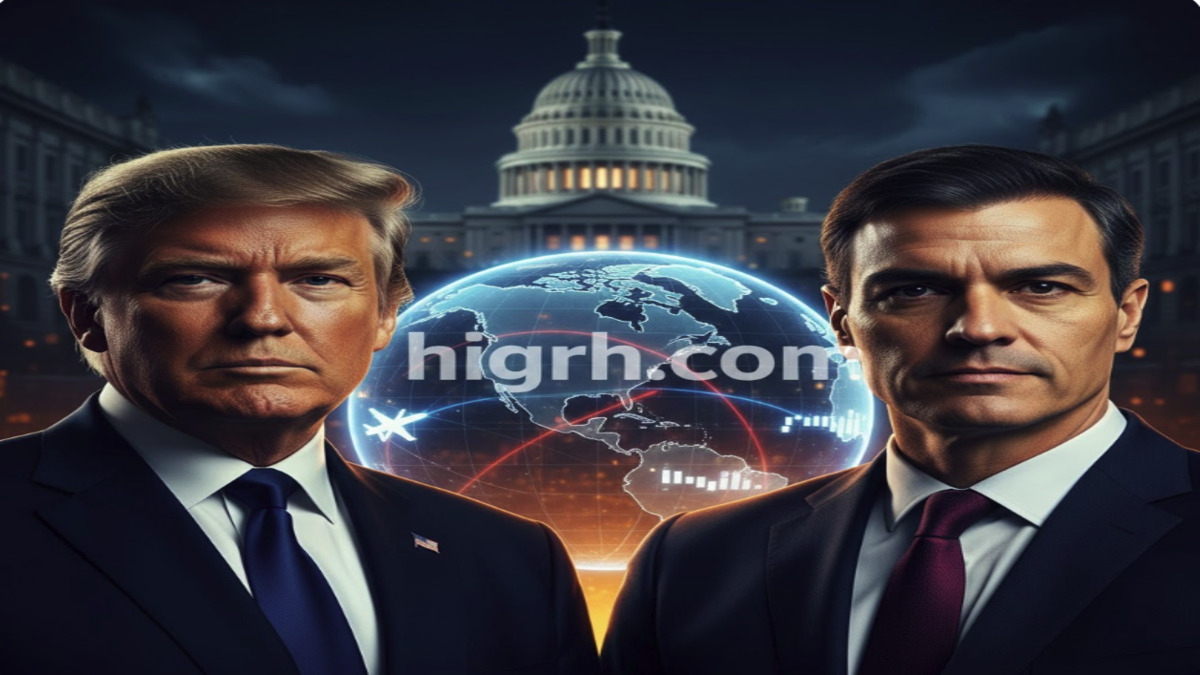
MADRID – HIGRH NEWS | Trump threatens Spain in a pivotal moment that could upend global power balances and reveal secrets once kept far from the public eye. Behind the diplomatic curtains, mysterious movements suggest an imminent clash between Washington and Madrid that might change the history of military alliances forever. Can a single decision end decades of economic cooperation and leave the world on the brink of an uncertain confrontation?
Tensions escalated sharply after the White House explicitly announced that Trump threatens Spain with sweeping and harsh trade sanctions. Consequently, economic circles in Madrid received the news with great shock given the close ties between the two nations. Additionally, the US President leveled stinging criticism at Spanish foreign policy, describing it as detrimental to American national security. Furthermore, the US Treasury Department has begun reviewing all joint financial agreements in preparation for punitive measures. Despite this, Madrid insists on its full commitment to all international and sovereign agreements that protect the dignity of Spanish citizens.
Historical Context: Years of Conflict and Tension with Iran
The current clash is rooted in long decades of continuous tension between Washington and Tehran, a conflict that has shaped American foreign policy. Additionally, the relationship has passed through defining moments since the Iranian Revolution, as the US has always sought to contain Iranian influence in the region. Consequently, military bases in Europe, especially in Spain, became vital strategic points for any potential US military action. Furthermore, Madrid has always tried to balance its international relations away from direct involvement in complex Middle East wars. Therefore, the current Spanish refusal is not born of the moment but is an extension of a policy aimed at sparing the country the consequences of others’ wars.
On the other hand, analysts believe that US threats to use Spanish bases to strike Iranian targets place the government in a legal and ethical dilemma. Additionally, the Spanish Constitution and bilateral agreements prevent the use of national territory for offensive operations without parliamentary approval. Consequently, the current US pressure is seen as an attempt to bypass national sovereignty and impose a unilateral military agenda. Furthermore, Madrid realizes that involvement in a conflict with Iran could expose its energy interests and foreign trade to immense risks. Therefore, the Spanish diplomatic grip remains committed to the principle of dialogue and de-escalation rather than military escalation that could spiral out of control.
The NATO Crisis and the Controversial Defense Spending
The issue of defense spending within the “NATO” alliance is the fuel that ignited the current fire of dispute between the two parties. Additionally, the US President believes that European countries, led by Spain, do not contribute sufficiently to the alliance’s budget. Consequently, he demanded raising the contribution percentage to historical levels to face increasing global security challenges. Furthermore, he threatened to withdraw US protection from countries that do not commit to paying their agreed-upon financial share. Despite this, Spain affirms that it contributes effectively through international missions and field participation in various conflict zones.
Moreover, Madrid believes that security is not measured only by financial figures, but by political stability and continuous logistical support. Consequently, officials in Madrid explained that current economic pressures make it difficult to achieve the required increase in a short time. Additionally, the Spanish government refuses to link trade relations to military spending files, considering it a form of unacceptable political blackmail. Furthermore, Spain seeks to coordinate with other European allies to create a balance that protects the sovereignty of each country within the alliance. Therefore, the NATO file remains one of the toughest tests facing bilateral relations at the moment, especially given the continued aggressive rhetoric from Washington.
PM Pedro Sánchez’s Stance and the National Reaction
Prime Minister Pedro Sánchez’s speech was strong, defending the democratic values and national sovereignty that characterize the Spanish Kingdom. Consequently, he emphasized in his address to Parliament that Spain will not be dragged into wars that do not serve its supreme national interests. Additionally, he sent a clear message that sovereignty is not for sale or purchase through trade threats, no matter how powerful. Furthermore, he called on the international community to respect the sovereign decisions of member states in international organizations and avoid unilateral actions. Despite this, he affirmed his desire to maintain strong ties of friendship with the American people, away from the fluctuations of politicians.
Furthermore, the government began developing economic contingency plans to face any decisions that might harm the Spanish export sector. Consequently, a ministerial committee was formed to monitor the repercussions of the US threat and provide necessary support to affected companies. Additionally, Madrid is working to strengthen its trade partnerships with Latin American and Asian countries to reduce dependence on the US market. Furthermore, high-level diplomatic delegations were sent to explain the Spanish position to the US Congress and international institutions. In the end, the scene of Trump threatens Spain serves as an alarm bell that requires national unity behind the political leadership to protect the country’s future.
FAQ
What is the main reason behind Trump’s threats to Spain?
The reason is Spain’s refusal to allow its military bases to be used for strikes against Iran, in addition to not increasing its defense spending in NATO to the required percentage.
How did Prime Minister Pedro Sánchez respond to these threats?
Sánchez affirmed Spain’s sovereignty and refusal to be dragged into wars, emphasizing that his country adheres to international law and defends its economic and political interests.
Will trade between the two countries be affected immediately?
The Spanish government has already started setting up contingency plans to diversify markets, but the actual implementation of a trade cutoff depends on complex US administrative decisions.
What is the role of Spanish military bases in this conflict?
Military bases are considered important strategic points for the United States, and their use requires the approval of the Spanish government, which rejects offensive operations without international legal cover.
…….MORE
Contact us: info@higrh.com