We also provide our news in Spanish and Arabic. For inquiries, please contact us via the website's email.



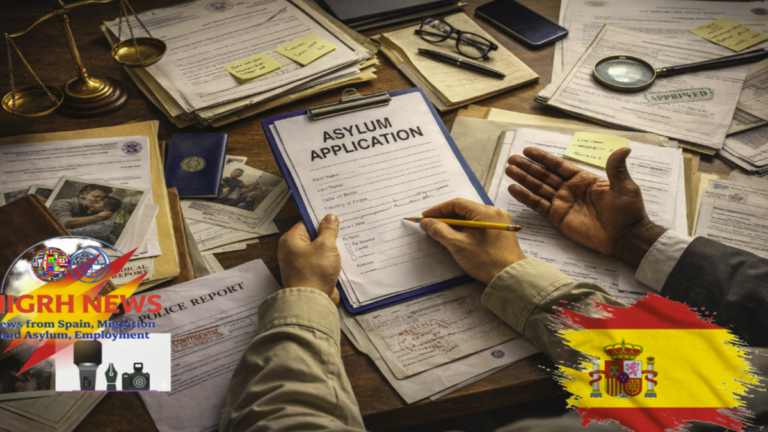
MADRID HIGRH NEWS | Spain Non-Lucrative Visa ..Behind the closed doors of busy consulates, tiny details often determine the fate of those dreaming of a life under the warm Mediterranean sun. Many believe the process is merely routine paperwork, yet the reality hides complex legal layers that require absolute precision before taking the first step. What are the golden secrets and checklists you must know to ensure approval and avoid sudden rejection at the last moment?
Understanding the Nature of the Spanish Non-Lucrative Visa
The Non-Lucrative Visa (NLV) is the ideal choice for those wishing to reside in Spain without engaging in local employment. Moreover, this visa specifically targets retirees or individuals with sufficient savings to support themselves independently. Consequently, the law strictly prohibits any professional or commercial activity within Spanish territory during the first year of residency. Therefore, applicants must provide conclusive proof of their financial capacity to satisfy the authorities.
Additionally, Spanish authorities impose a residency requirement of at least 183 days per year within the country. Accordingly, the applicant will become a tax resident in Spain, necessitating the payment of taxes on their global income legally. Thus, it is essential to consult a tax expert before proceeding with the application to understand future financial obligations. This step serves as the cornerstone for anyone planning long-term stability in various Spanish cities.
Financial Requirements and Proof of Sufficient Income
The financial condition currently forms the backbone of the Spain Non-Lucrative Visa application across consulates worldwide. Spain relies on the Public Multiple Effects Income Indicator (IPREM) to determine the minimum monthly amounts required for a decent living. Based on recent updates, the main applicant must prove a monthly income equivalent to 400% of this indicator. Furthermore, these amounts increase when adding family members to the joint residency application to ensure their welfare.
On the other hand, consulates prefer to see cash funds deposited in bank accounts that are fully and easily accessible. Real estate assets or long-term investments are not considered sufficient evidence of immediate and direct financial liquidity. Consequently, it is preferred to submit bank statements for the last six months to clearly demonstrate the applicant’s financial stability. Providing clear financial data reduces the likelihood of rejection due to a lack of required cash liquidity.
Official Document Checklist and Required Certificates
The journey begins by accurately filling out the National Spanish Visa application form, attaching recent passport-sized photos with a plain white background. Moreover, an original passport valid for at least one full year from the application date must be submitted. Accordingly, consulates require photocopies of all passport pages, including those containing previous stamps. Additionally, the criminal record certificate stands as a decisive condition for all applicants over the age of eighteen.
Accordingly, applicants are required to provide a medical certificate proving they are free from serious diseases that pose a risk to public health. This certificate, along with all other documents, must be translated into Spanish and apostilled to be officially recognized by the Spanish Ministry of Foreign Affairs. As a result, any deficiency in legal certifications may immediately delay the processing of the consular file. Furthermore, the prescribed consular fees must be paid, and the payment receipt must be included as an essential part of the paper application.
Health Insurance and Housing Conditions in Spain
Obtaining comprehensive Spanish health insurance is a condition that accepts no legal exceptions whatsoever. The insurance must be issued by a company licensed to operate exclusively within Spanish territory. In addition, the policy must cover all medical costs, including consultations, surgeries, and emergencies, with no co-payments. Furthermore, consulates do not accept standard international travel insurance policies as a substitute for this urgent and necessary requirement.
On the other hand, it is preferable to provide a rental contract or a property deed as evidence of adequate housing for the applicant. Consequently, this proof helps strengthen the applicant’s file and demonstrates their seriousness regarding regular legal stability within the country. Accordingly, organizing the file and arranging the papers facilitates the consular officer’s work and reduces long waiting periods. Honesty in submitting these documents is the only guarantee for your legal stability and building your new future under the Spanish sun.
Frequently Asked Questions (FAQ)
Can I work remotely with this visa?
Spanish law prohibits working in any form during the first year, including remote work for foreign companies, to avoid unauthorized professional activity.
What are the financial amounts required for a family?
You must provide 400% of the IPREM for the main applicant, plus an additional 100% of the indicator for each accompanying family member.
Do I need a sworn translator for all papers?
Yes, consulates require all documents not issued in Spanish to be translated by a sworn translator officially certified by the Spanish Ministry of Foreign Affairs.
What is an Apostille and why do I need it?
An Apostille is an international certification that proves the legitimacy of official documents like criminal records and birth certificates; without it, Spanish authorities will not recognize foreign documents.
…….MORE
Contact us: info@higrh.com