
Spain’s Transport Minister Óscar Puente Resigns After Deadly Urda Train Crash
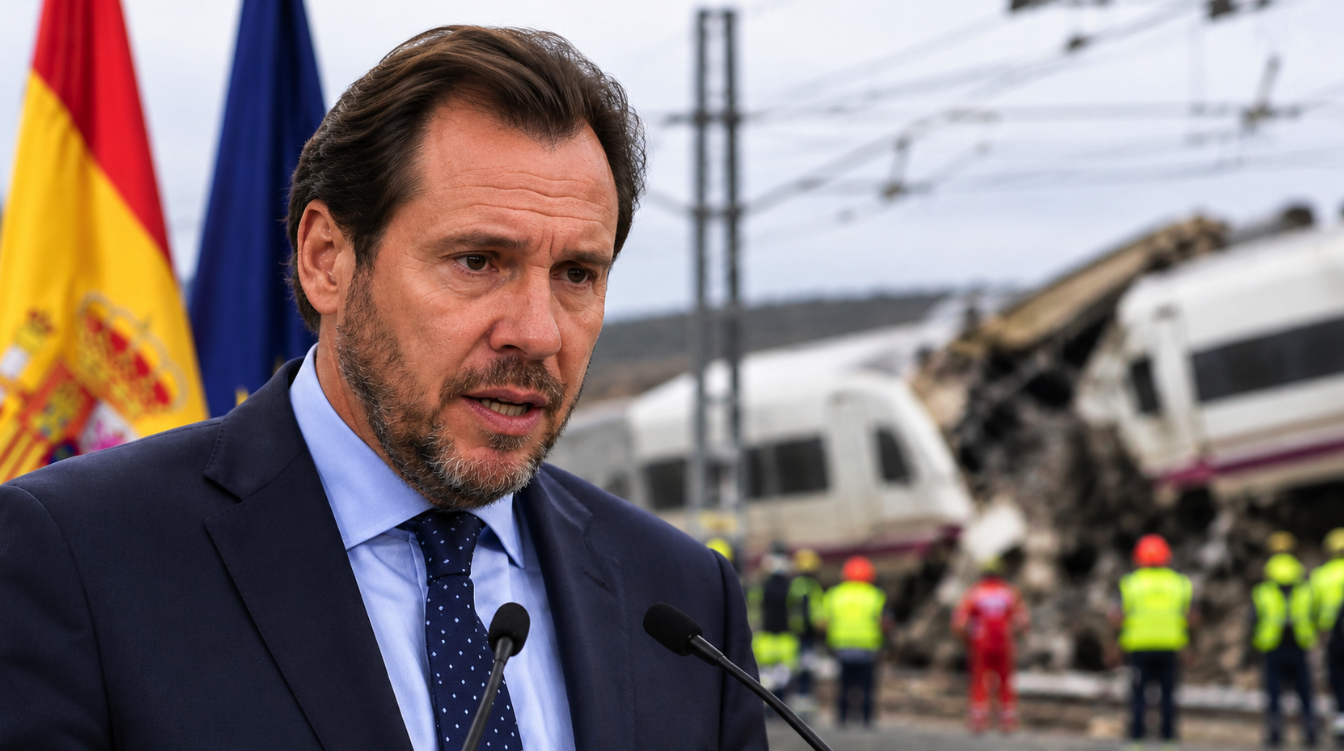
Spain’s Transport Minister, Óscar Puente, has resigned following the deadly high-speed train collision near Urda, in the province of Toledo, which claimed 69 lives on 28 October.

Puente announced his decision on Tuesday, 3 November, at the end of a lengthy appearance before the Spanish Congress. He also confirmed that he would withdraw from the Socialist Party’s candidate lists for the early general election scheduled for 29 November.
“A transport minister in a country like Spain cannot continue in office with two accidents of this severity in less than a year,” Puente told lawmakers, explaining his decision to step down.

What happened in the Urda train crash?
The collision occurred on 28 October on the Madrid–Seville high-speed railway line, near the town of Urda in central Spain.
A train operated by Spain’s state-owned rail company Renfe collided with the rear of a stationary train operated by private company Iryo. The impact derailed carriages and triggered a major emergency response.
The disaster left 69 people dead and many others injured, making it one of Spain’s deadliest railway accidents in recent decades.
Investigators are examining a sequence of events involving a failure in the railway signalling system. According to explanations given by Puente, several trains were automatically stopped after the system failed, but a Renfe train was subsequently authorised to continue despite the stationary Iryo train ahead.
The precise circumstances and responsibilities surrounding the collision remain subject to investigation.
Why has Óscar Puente resigned?
Puente had initially rejected calls to resign, saying his priority was to explain what happened, support the emergency response and help restore public confidence in Spain’s railway network.
However, political pressure intensified following the disaster. Opposition parties and railway unions questioned the government’s handling of railway safety and demanded accountability.
The resignation also comes after another deadly railway accident in January, in Adamuz, Córdoba, which killed 46 people.
Puente said he had made the decision to leave office shortly after learning about the Urda crash, but remained in his position while emergency measures, preliminary investigations and initial support for victims were being organised.
Prime Minister Pedro Sánchez thanked Puente for his work and praised his decision to take political responsibility.
Government announces new railway safety measures
Before announcing his resignation, Puente outlined a package of measures intended to improve railway safety and support those affected by the collision.
The proposed measures include:
- Reducing train services on the Madrid–Seville line while safety reviews are carried out.
- Introducing a 40 km/h speed limit in situations where drivers must proceed by visually checking the track ahead after a signalling failure.
- Increasing staffing levels and improving working conditions in railway control centres.
- Accelerating the introduction of the European Rail Traffic Management System (ERTMS).
- Doubling compulsory passenger insurance payouts and speeding up compensation for victims.
- Developing technology to monitor communications between train drivers and railway controllers and help identify potential safety problems.
The government has also announced plans to create a real-time digital model of the railway network.
Carlos Cuerpo to take over the Transport Ministry portfolio temporarily
Following Puente’s resignation, Prime Minister Pedro Sánchez announced on Wednesday that Deputy Prime Minister and Economy Minister Carlos Cuerpo would temporarily assume responsibility for the Transport Ministry.
The change comes at a difficult moment for Spain’s railway network, with the Urda disaster renewing questions about infrastructure maintenance, signalling systems and operational safety.
A major test for Spain’s railway system
The Urda collision has intensified public scrutiny of Spain’s high-speed rail network and raised difficult questions about how safety procedures are applied when technical systems fail.
Although Puente’s resignation marks a significant political development, the investigation into the accident remains crucial. Establishing exactly what happened, identifying any failures and ensuring that lessons are implemented will be essential to restoring passengers’ confidence.
For the families of the 69 people who lost their lives, the priority remains answers, accountability and support.
Sources and Further Reading