We also provide our news in Spanish and Arabic. For inquiries, please contact us via the website's email.



MADRID – HIGRH NEWS: Spain heatwave conditions have reached an unprecedented level, with the country recording 61 heatwave days so far this year while the summer posted the highest average temperature since national records began, but what does this extraordinary run of heat mean for Spain?

Spain’s State Meteorological Agency (Aemet) has confirmed that the country has experienced an exceptional number of days under heatwave conditions this year.
The total has reached 61 days, surpassing the previous record of 41 days recorded in 2022.

The latest figures come alongside another significant milestone. The summer registered an average temperature of 24.5°C, making it the hottest summer in Spain’s records, which date back to 1961.
The average was 0.3°C higher than the previous summer and 2.4°C above the long-term average.
The figures underline the scale of the heat experienced across the country and show how extreme temperatures have extended beyond the traditional peak of July and August.
Aemet has also pointed to a broader pattern in which the country’s hottest summers increasingly occur in the 21st century.
Spain surpasses the previous record for extreme-heat days
Spain has already experienced 61 days classified as heatwave conditions, according to Aemet.
That figure represents a substantial increase over the previous record of 41 days, set during the scorching summer of 2022.
The difference amounts to 20 additional days, making the latest figure particularly notable in the country’s meteorological record.
Aemet says the ten hottest summers recorded in Spain have all occurred during the 21st century. Seven of the eight warmest summers have also occurred since 2015.
The heat has not remained confined to the traditional summer months.
Large parts of Spain experienced temperatures more typical of July as early as the end of May. The country then faced another period of intense heat in September, after the meteorological summer had officially ended.
That episode, provisionally recorded between 2 and 7 September, lasted six days and affected 16 provinces.
Aemet noted that only four previous Septembers — 1987, 1988, 2006 and 2016 — had experienced heatwaves of such intensity.
The latest sequence therefore highlights how periods of exceptionally high temperatures can now extend across a much broader part of the calendar.
The impact is not limited to maximum temperatures. Prolonged heat can place additional pressure on electricity demand, water consumption, public services and people who are particularly vulnerable to high temperatures.
It can also create more favourable conditions for the development and spread of wildfires.
The summer average breaks Spain’s temperature record
The average summer temperature of 24.5°C established another national record.
Aemet’s figures show that the average was 0.3°C higher than the previous summer and stood 2.4°C above the long-term average.
The result makes the latest summer the warmest in the historical series beginning in 1961.
The significance of the figure becomes clearer when placed alongside the agency’s ranking of the warmest summers.
All ten of Spain’s hottest summers have occurred during the 21st century, while seven of the eight warmest have taken place since 2015.
The figures indicate that exceptionally warm summers are increasingly concentrated in recent decades.
The timing of heat episodes has also become an important part of the country’s weather picture.
Temperatures typical of the height of summer appeared across large areas of Spain towards the end of May. Another heatwave then arrived in September, extending extreme heat beyond the meteorological summer.
The September episode affected 16 provinces and lasted six days, according to Aemet’s provisional assessment.
Such conditions can have a direct effect on daily life. People may need to modify their routines, increase their use of cooling systems and take additional precautions during the hottest periods of the day.
Urban areas can face particular challenges because buildings, roads and other infrastructure can retain heat.
Tourist destinations also experience increased pressure during the summer months. Large seasonal populations can raise demand for water, electricity and other services at the same time that temperatures reach extreme levels.
Readers can consult Spain’s official meteorological information and climate records through the State Meteorological Agency (Aemet).
Reservoirs remain in relatively strong condition despite the heat
The record temperatures have not been accompanied by a nationwide reservoir crisis.
Heavy winter rainfall helped Spanish reservoirs maintain relatively strong water levels through the summer.
The average level stood at 62.58% of total capacity after the summer season.
That figure remained favourable despite the additional pressure created by tourism and high temperatures.
Several basins that frequently experience water stress also remained above half of their capacity.
These included the Júcar, Segura, Andalusian Mediterranean and Catalan basins.
The situation provides an important contrast within the country’s summer weather story.
Spain experienced its hottest summer on record and accumulated a record number of heatwave days, yet the water reserves benefited from the heavy rainfall that preceded the summer.
Reservoir levels, however, do not capture every effect associated with extreme heat.
High temperatures can increase water demand from households, agriculture and tourism. They can also raise evaporation and place additional stress on vegetation and ecosystems.
The favourable reservoir figures therefore provide some relief but do not eliminate the wider challenges created by prolonged extreme temperatures.
The contrast also demonstrates why different parts of Spain’s climate and environmental situation can move in different directions at the same time.
While rainfall during one season can strengthen water reserves, subsequent heat can still increase pressure on communities and natural areas.
For Spanish authorities, maintaining adequate water supplies remains important even during years when reservoirs begin the summer in relatively good condition.
Wildfires expose continuing pressure on Spain’s forests
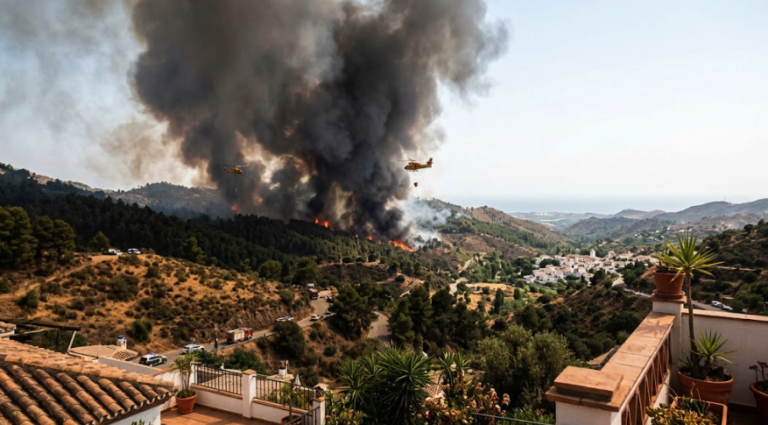
The extreme heat also coincided with major wildfires in Spain and elsewhere in Europe.
The fires once again raised questions about forest management, prevention and the availability of personnel capable of responding to emergencies.
Madrid, Aragón and Castilla y León were among the regions affected by significant fire activity.
High temperatures can make vegetation more vulnerable and create difficult conditions for firefighters once a blaze begins.
The experience has renewed attention on prevention measures, including the management of vegetation and forests before the arrival of the most dangerous periods of the year.
The availability of sufficient personnel has also become part of the debate.
Fire prevention and firefighting require trained workers who can operate safely and effectively during prolonged emergencies. Working conditions and staffing levels therefore remain important considerations when governments assess their ability to respond to increasingly difficult fire seasons.
The relationship between heat and wildfire risk also demonstrates that favourable reservoir conditions do not necessarily mean that Spain faces a low level of environmental pressure.
Water stored in reservoirs serves a different purpose from moisture contained in forests, grasslands and other natural landscapes.
A prolonged period of high temperatures can dry vegetation and increase the difficulty of controlling fires even when major reservoirs remain well supplied.
The latest summer therefore produced a complex environmental picture: record temperatures, prolonged heatwaves, relatively strong reservoir levels and serious wildfire pressure all occurred within the same period.
Extreme heat is stretching beyond the traditional summer calendar
One of Aemet’s observations is particularly significant: the meteorological summer appears to be getting longer.
The pattern can be seen in the timing of this year’s major heat episodes.
Spain experienced July-like temperatures across large areas at the end of May, before the official start of meteorological summer. Then, after summer had ended, another six-day heatwave affected 16 provinces in early September.
The traditional concentration of extreme heat in July and August is therefore no longer the only pattern visible in Spain’s recent weather records.
The number of heatwave days provides another measure of this change.
With 61 days recorded so far, Spain has already exceeded its previous national record by 20 days.
The accumulation of heat episodes matters because prolonged exposure can have different consequences from a short, isolated period of high temperatures.
Cities may face sustained demand for air conditioning and cooling. Households can experience higher energy consumption, while outdoor workers and people without adequate access to cooling can face additional challenges.
The tourism sector also operates under particular pressure during extreme weather because Spain receives large numbers of visitors during the summer period.
The combination of high temperatures and large temporary populations can increase demand for water, electricity, transport and health services.
The September heatwave adds another dimension to the issue.
An extreme heat episode at the beginning of the meteorological autumn can affect people and infrastructure after the period traditionally associated with the country’s most intense summer heat has ended.
Aemet’s historical comparisons show that such September conditions have occurred before, but only a small number of previous Septembers have recorded comparable heatwaves.
Spain’s latest heat records raise wider questions
The latest meteorological figures bring together several exceptional indicators.
Spain has recorded 61 heatwave days, compared with the previous record of 41. The summer’s average temperature reached 24.5°C, making it the hottest in records dating back to 1961.
The average was 2.4°C above the long-term reference and 0.3°C above the previous summer.
At the same time, the country entered the summer with strong reservoir levels following heavy winter rainfall. The average reservoir level stood at 62.58% of capacity after the summer season.
The favourable water situation did not prevent major wildfires, however.
Madrid, Aragón and Castilla y León experienced significant fire activity, renewing concerns about forest prevention, management and staffing.
These figures show why Spain’s experience cannot be described through a single weather indicator.
Water availability, temperature, wildfire risk and seasonal demand can evolve differently depending on regional conditions and the timing of rainfall and heat.
For policymakers, the challenge is therefore broader than responding to individual heatwaves.
Spain must also consider how infrastructure, cities, forests, water resources and emergency services cope with longer periods of extreme temperatures.
The latest record provides another important point of comparison for future summers.
The previous maximum of 41 heatwave days was already considered exceptional. Reaching 61 represents a substantial increase in the number of days affected by extreme heat.
The temperature record adds further weight to the figures.
A summer average of 24.5°C is not simply the result of one unusually hot afternoon or a short-lived heatwave. It reflects the temperature conditions across the entire meteorological summer.
The combination of a record seasonal average and an unprecedented number of heatwave days makes this one of the most notable periods in Spain’s modern meteorological record.
Frequently Asked Questions
How many heatwave days has Spain recorded?
Spain has recorded 61 heatwave days, compared with the previous record of 41.
What was Spain’s average summer temperature?
The average summer temperature reached 24.5°C.
How full were Spain’s reservoirs after summer?
Reservoirs stood at an average of 62.58% of total capacity.
Which regions faced significant wildfire pressure?
Madrid, Aragón and Castilla y León were among the regions affected…….MORE
Contact us: info@higrh.com