We also provide our news in Spanish and Arabic. For inquiries, please contact us via the website's email.


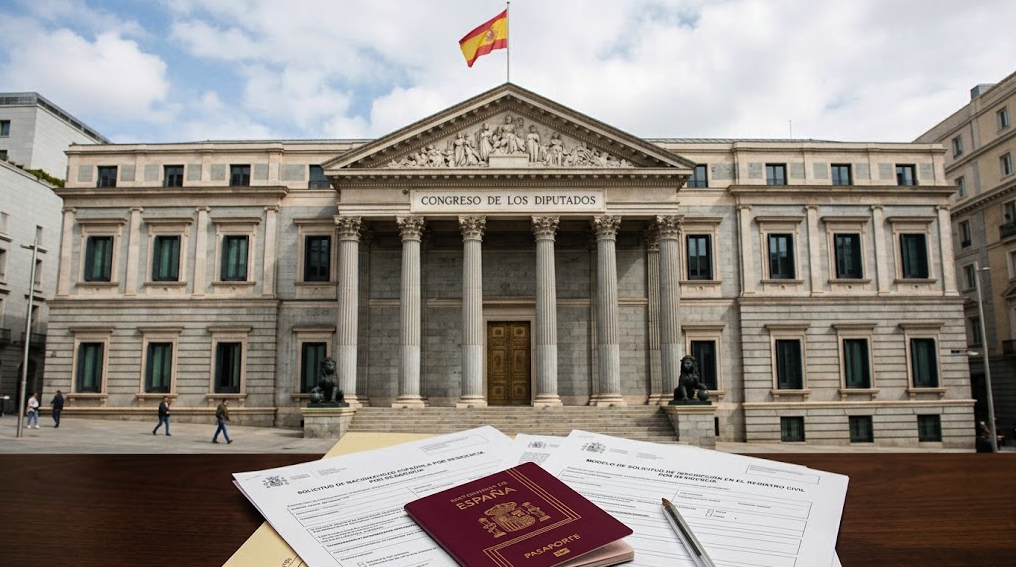
MADRID – HIGRH NEWS: changes to Spanish nationality law are once again at the center of parliamentary attention, particularly because of a proposal concerning Sahrawi citizens born under Spanish administration. The initiative has moved forward in the parliamentary process and is awaiting further consideration by the Congress of Deputies, while the rules governing nationality applications under the Democratic Memory Law remain subject to their existing deadlines. What exactly could change, who could benefit and which measures are still only proposals?

The proposal on nationality for Sahrawis enters a decisive stage
The main development concerns a bill entitled the Proposal for the Granting of Spanish Nationality to Sahrawis Born Under Spanish Administration.
The Congress of Deputies published the Justice Committee’s report on the proposal in August. The document contains the text submitted by the committee for consideration by the Plenary, together with amendments that parliamentary groups may defend during the debate.

The initiative was presented by the Plurinational Parliamentary Group SUMAR and is being processed through the Justice Committee.
Its progress is significant because the proposal has moved beyond the initial stages of parliamentary discussion. The Justice Committee examined the text, approved its report and sent it forward for consideration by the Plenary.
The Congress also announced in September that the Plenary was scheduled to consider the committee’s report during the following parliamentary week.
However, one distinction is essential: the proposal is not yet a law in force.
The parliamentary process must be completed before the measures can acquire legal effect. If approved, the resulting law would also have to be officially published in Spain’s Official State Gazette before its provisions could enter into force.
For that reason, people who could potentially benefit from the proposal should not interpret its parliamentary progress as an immediate opening of a new nationality application procedure.
Who could benefit from the proposal?
The text approved by the Justice Committee establishes a specific framework for people of Sahrawi origin who were born in Western Sahara while the territory was under Spanish administration and before September 29, 1977.
For these applicants, the proposal would create a specific route to Spanish nationality through carta de naturaleza, or nationality by discretionary grant based on exceptional circumstances.
The proposed route would not require the applicant to have legal residence in Spain.
The bill also sets out different forms of evidence that applicants could use to demonstrate their birth and circumstances.
These documents could include a former Spanish identity document, even if it is no longer valid, certain records connected with the census for the referendum on Western Sahara, properly legalized or apostilled birth certificates, and documents issued by the Spanish administration in Western Sahara.
Other forms of evidence are also contemplated.
They include school certificates, certain pension records, Spanish driving licences, hospital or medical documentation and other documents issued by Spanish administrative authorities that could establish the applicant’s birth in the territory during the relevant period.
Where foreign documents are involved, the proposal provides for legalization or apostille requirements where applicable, as well as Spanish translations when necessary.
Changes to Spanish nationality law could introduce a two-year residence route
One of the proposal’s most important provisions concerns Article 22.1 of the Spanish Civil Code.
The text would expressly include Sahrawis among the groups eligible to apply for Spanish nationality after two years of legal residence.
The general ten-year residence requirement would remain in place, as would the five-year period applicable to people who have obtained refugee status.
The existing two-year period for nationals by origin of Ibero-American countries, Andorra, the Philippines, Equatorial Guinea and Portugal would also remain unchanged. The same reduced period currently applies to Sephardic applicants under the relevant legal framework.
The proposal would add Sahrawis to this group.
Under the proposed definition, the provision would cover people born in Western Sahara before September 29, 1977, under the conditions established by the text.
This point is particularly important because it would not represent a general reduction in the residence period for all foreign nationals living in Spain.
Instead, the proposed amendment would apply to a specific category of applicants and would only become effective if the bill completes the legislative process and enters into force.
A foreign resident who does not belong to one of the groups covered by the Civil Code therefore could not use this proposal as a basis for claiming that the general residence requirement has been reduced.
Two different routes to Spanish nationality
The proposal contains two mechanisms that should not be confused.
The first is the specific nationality route through carta de naturaleza for Sahrawis born under Spanish administration before the date established in the proposal.
The second involves an amendment to the Civil Code that would allow qualifying Sahrawis to benefit from the two-year residence period when applying for nationality through residence.
These are legally different procedures.
The carta de naturaleza route is separate from nationality by residence and would have its own documentary requirements.
The residence route, on the other hand, requires legal residence in Spain and compliance with the other conditions established by Spanish nationality law.
The proposal also establishes a three-year period for submitting applications under the special carta de naturaleza procedure. That period would begin once the future law enters into force.
The text also allows the competent ministry to extend that period by an additional year.
These deadlines have not started because they depend on the entry into force of the future legislation.
Spanish nationality law proposal also addresses descendants
Another important provision concerns the children of people who obtain Spanish nationality through the special procedure contemplated by the bill.
The proposal gives first-degree descendants by consanguinity a five-year period to opt for Spanish nationality.
That period would begin from the registration of the parent’s acquisition of Spanish nationality in the Civil Registry.
The provision would therefore establish a direct link between the parent’s successful nationality application and the subsequent right of eligible descendants to exercise the option provided by the legislation.
The proposal also contains rules concerning the registration of newly acquired nationalities.
For beneficiaries living in Spain, the competent Civil Registry would be determined according to their place of residence.
For beneficiaries living abroad, the proposal assigns registration to the Central Civil Registry.
The bill also calls for the development of a specific electronic procedure to facilitate applications.
According to the proposal, this digital system would have to be operational within six months of the publication of the future law in Spain’s Official State Gazette.
What happens to applications already being processed?
The proposal includes transitional provisions covering certain applications that may have been submitted before its entry into force.
Applicants who meet the conditions established by the future legislation and who have already applied for nationality through one of the relevant procedures, but who have not yet received a final decision, could request that their cases continue under the new framework.
The proposal requires an express request addressed to the Directorate-General for Legal Security and Public Faith within Spain’s Ministry of Justice.
This provision could allow certain pending cases to benefit from the new framework if the proposal ultimately becomes law.
The text also establishes rules for administrative decisions.
The competent authority would request reports from the relevant bodies and would have one year from receipt of the application to issue a decision.
If no express decision were issued within that period, the proposal states that the application would be considered rejected through administrative silence.
Applicants would also have the possibility of filing the corresponding administrative appeal against a negative decision within the applicable deadline.
Democratic Memory Law: no new application period
A separate issue concerns nationality applications under Spain’s Democratic Memory Law.
The situation here is different.
The deadline for submitting new nationality applications under the Eighth Additional Provision of Law 20/2022 ended on October 22, 2025.
Spanish consular offices have reiterated that new applicants cannot begin this procedure after the established deadline.
The parliamentary proposal concerning Sahrawi nationality does not reopen the application period under the Democratic Memory Law.
People who submitted their requests correctly within the deadline and received the corresponding confirmation containing a Secure Verification Code, known as a CSV, can continue their procedures according to the instructions of the relevant Spanish consular office.
Consular authorities have explained that applicants who entered the process within the deadline may subsequently receive the credentials required to select an appointment and submit their documentation.
This creates an important distinction.
People who entered the Democratic Memory Law procedure within the established period can continue with their cases. Those who never submitted the required request within the deadline cannot claim a new opportunity simply because consulates continue processing applications already submitted.
Are these already new Spanish nationality rules?
No.
This is one of the most important points for potential applicants.
The proposal concerning Sahrawis has advanced considerably through the Congress of Deputies. The Justice Committee has approved its report and the Plenary is expected to consider the proposal.
But parliamentary progress does not mean that the provisions are already legally enforceable.
The proposal remains subject to the completion of the legislative procedure.
The text also provides that, once the future law is published in the Official State Gazette, it would enter into force four months after publication.
Applicants should therefore wait for the final approval, official publication and entry into force before treating the proposed rights as available.
A measure aimed at a specific group
The initiative would represent a targeted change within Spain’s nationality system.
It would not generally reduce the residence periods applicable to all foreign nationals, nor would it remove the standard requirements attached to nationality procedures.
Its main scope concerns Sahrawis born in Western Sahara under Spanish administration before September 29, 1977, together with certain descendants covered by the proposal.
The bill would establish a specific nationality route through carta de naturaleza while also proposing to add qualifying Sahrawis to the group eligible for the two-year residence period.
The next decisive step is therefore the parliamentary debate and vote.
Until the legislative process is completed, describing the proposed measures as rights that applicants can already exercise could create confusion among people who may be affected.
What should potential applicants know?
People who believe they could fall within the scope of the proposed legislation should keep and organize documents that may help establish their birth and connection with the territory.
The evidence contemplated by the proposal includes birth certificates, documents issued by the Spanish administration, school records, certain pension documents, Spanish driving licences and medical documentation.
However, having these documents today does not mean that a new application procedure is already open under the proposed law.
The key distinction is between a legislative proposal, parliamentary approval, official publication and entry into force.
Those stages must be completed before the final conditions for applications can be determined.
The official parliamentary record remains the principal source for following the progress of the proposal and checking any amendments that may arise during the legislative debate.
Official source: Congress of Deputies — Proposal concerning Spanish nationality for Sahrawis born under Spanish administration
Frequently Asked Questions about Changes to Spanish Nationality Law
Is the new regulation already in force?
No. It remains a legislative proposal and must complete the parliamentary process before becoming applicable law.
Could Sahrawis obtain Spanish nationality after two years of residence?
The proposal would include qualifying Sahrawis among the groups eligible for nationality after two years of legal residence. The change depends on final approval and entry into force.
Can new applicants still apply under the Democratic Memory Law?
No. The deadline for new applications under the relevant provision of the Democratic Memory Law ended on October 22, 2025.
What happens to people who submitted their request on time?
Applicants who correctly entered the process within the deadline and received the relevant confirmation can continue their applications according to the instructions of the competent Spanish consular office…….MORE
Contact us: info@higrh.com