We also provide our news in Spanish and Arabic. For inquiries, please contact us via the website's email.


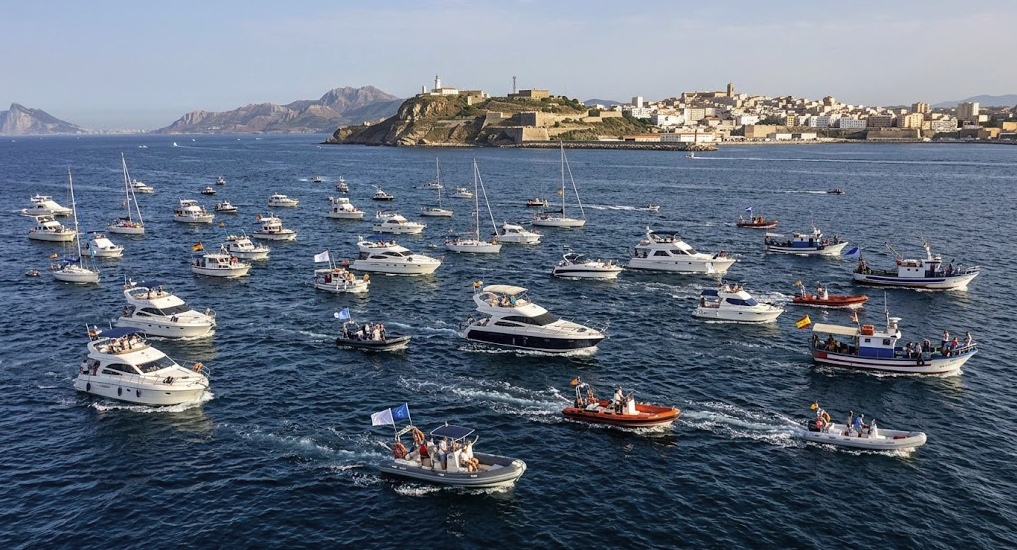
CEUTA – HIGRH NEWS: Solidarity Armada to Ceuta brings around 50 boats and approximately 120 people together in a show of support for the Spanish autonomous city after a period of intense migration pressure, but what does the maritime initiative mean for Ceuta as tensions continue?

Around 50 vessels from Spain’s Costa del Sol and other ports sailed for Ceuta on Saturday as part of an initiative organised to show solidarity with the city following the migration crisis that developed from the end of July.
The initiative, known as the Fleet of Solidarity with Ceuta, brings together about 120 participants under the slogan “We are all Ceuta, Spain responds as one”.

Organisers have arranged up to 60 free berths at the city’s harbour for participating boats. The vessels are not travelling as one convoy. Instead, each skipper is making the journey independently from their home port before meeting in Ceuta.
The initiative follows the mass arrival of migrants from Morocco on 30 and 31 July, when tens of thousands of people crossed irregularly into the Spanish autonomous city.
The arrival created intense migration pressure and was followed by several days of protests involving local residents. Against that backdrop, the flotilla has chosen a different form of public mobilisation, centred on support for Ceuta and a message of unity.
Solidarity Armada to Ceuta sets course from Spanish ports
The boats taking part in the Solidarity Armada to Ceuta began their journeys from different locations along the Spanish coast.
Rather than forming a single fleet before crossing the Strait of Gibraltar, each vessel leaves its own port and travels independently towards Ceuta.
That arrangement means the boats will converge in the autonomous city rather than sail together for the entire journey.
The organisers have prepared a programme for participants after their arrival. It includes a guided tour of Ceuta and a dinner at the Yacht Club.
The programme then moves back onto the water on Sunday, when the participating vessels are expected to sail through the waters surrounding the autonomous city.
Later, boats arriving from mainland Spain and vessels based in Ceuta are expected to gather in the southern bay.
According to the programme, that meeting will be used to send a message of unity between Spaniards on both sides of the Strait of Gibraltar.
The organisers have reserved up to 60 free berths in the city’s harbour, while participation stands at around 50 boats. The difference between the number of available spaces and participating vessels provides room for the expected fleet without requiring every berth to be occupied.
The initiative has therefore combined a practical harbour arrangement with a programme designed around public visibility and collective activities.
Its timing is significant because Ceuta has spent recent weeks dealing with the consequences of the migration surge at the end of July.
The flotilla does not operate as a border-control operation. Its announced programme focuses on the arrival of civilian boats, activities in the city and a joint gathering at sea.
For the participants, the journey provides a way to demonstrate support for Ceuta while connecting people travelling from Spanish mainland ports with residents and boat owners based in the autonomous city.
The maritime setting also gives the initiative a distinctive character at a time when much of the public debate surrounding Ceuta has focused on migration, accommodation facilities and street protests.
The migration crisis behind the Solidarity Armada to Ceuta
The immediate background to the Solidarity Armada to Ceuta is the mass arrival of migrants from Morocco at the end of July.
On 30 and 31 July, tens of thousands of people crossed irregularly from Morocco into Ceuta, according to the report on which the initiative has been based.
The episode represented one of the most significant periods of migration pressure described at the border in recent years.
The influx placed additional attention on the city’s existing reception facilities and on the Temporary Stay Centre for Immigrants, known as the CETI.
The situation also generated growing concern among sections of the local population and contributed to a series of demonstrations.
The protests focused on the presence of thousands of migrants who had entered the city after the July arrivals.
Friday’s latest rally brought hundreds of residents to Trampolín beach. Demonstrators called for migrants to be returned to Morocco and demanded the removal of a camp established near the CETI.
The centre remains overcrowded, according to the information available.
The protests have been organised mainly through social media groups, giving local residents a channel through which to coordinate demonstrations and communicate calls for mobilisation.
The flotilla emerges within this same atmosphere but with a different stated purpose.
Rather than organising a demonstration around demands concerning migration policy or the migrant population, the Fleet of Solidarity with Ceuta has presented itself as an expression of support for the city.
Its slogan, “We are all Ceuta, Spain responds as one”, places unity at the centre of the initiative.
The organisers expect approximately 120 people to participate, alongside the roughly 50 boats travelling from Spanish ports.
The programme also brings together boats from mainland Spain and vessels based in Ceuta. Their planned gathering in the southern bay is intended to provide a visible expression of that connection.
Why the boats are travelling separately
The participating vessels are not sailing from a single departure point.
Each skipper leaves from their home port and crosses the Strait of Gibraltar independently before heading to Ceuta.
This means the flotilla is better understood as a coordinated meeting of separate journeys rather than one continuous maritime convoy.
Once the boats arrive, participants will follow the common programme organised for the weekend.
The harbour is central to that plan because up to 60 free berths have been arranged for participating vessels.
From there, the programme shifts between activities on land and at sea.
The guided tour and Yacht Club dinner are planned for the first part of the visit, while Sunday is dedicated in part to navigation around the autonomous city.
The final gathering in the southern bay is expected to bring together the boats from the mainland and those already based in Ceuta.
Ceuta enters a weekend without new demonstrations
The arrival of the Solidarity Armada to Ceuta comes during a weekend when no new demonstrations have been announced in the city.
That follows several days of protests connected to the presence of migrants who arrived during the mass crossing at the end of July.
The latest reported rally took place on Friday at Trampolín beach, where hundreds of residents gathered.
The demonstrators called for the migrants’ return to Morocco and for the clearance of the camp located beside the CETI.
The situation has remained tense enough for local sources to warn that further protests could occur at any time, even though no new mobilisation has been announced for the weekend covered by the flotilla’s programme.
A further demonstration is scheduled for 2 September.
The event is being organised jointly by the Provincial Federation of Neighbours’ Associations, known as FPAV, and the Foro Ceuta Siglo XXI association.
The scheduled demonstration means that public mobilisation around the situation in Ceuta is expected to continue beyond the weekend.
For now, however, the arrival of the boats provides a different type of public activity.
The flotilla’s organisers have placed the emphasis on solidarity, unity and the connection between Ceuta and people travelling from mainland Spain.
That distinction is important in a city where recent demonstrations have centred on demands related to migration and the presence of migrants.
The weekend programme therefore creates two contrasting forms of public mobilisation within the same broader crisis.
One involves protests and demands directed at the migration situation. The other uses boats and a shared programme to demonstrate support for Ceuta.
Neither changes the underlying circumstances surrounding the migration influx or the overcrowding reported at the CETI.
Instead, the flotilla adds another element to the public response to the events that began at the end of July.
A maritime message of unity across the Strait
One of the central moments of the initiative will come when boats from mainland Spain meet vessels based in Ceuta in the southern bay.
The organisers describe this gathering as an opportunity to send a message of unity between Spaniards on both sides of the Strait.
The phrase forms part of the wider message attached to the initiative and its official slogan.
The approximately 50 boats are expected to create a visible gathering in the waters around the city, while the people taking part will also have the opportunity to visit Ceuta and attend the activities included in the programme.
The Strait of Gibraltar is therefore not simply the route used to reach the city. It also forms the geographical setting for the initiative’s central message.
Participants from Spanish mainland ports cross the water separately before joining those already in Ceuta.
The programme’s Sunday navigation will take place around the autonomous city before the boats gather in the southern bay.
The initiative is consequently built around movement towards Ceuta, time spent in the city and a final collective maritime display.
The approximately 120 participants give the event a human dimension beyond the number of boats involved.
For organisers, the purpose is to demonstrate that people from Spanish ports are willing to travel to Ceuta and publicly express their support for the city.
The initiative arrives after a period in which images and reports from Ceuta have focused heavily on migrant arrivals and subsequent tensions.
The flotilla offers a different visual narrative: dozens of civilian boats converging on the city under a banner of solidarity.
The programme does not state that the fleet will carry out any operational role in migration management.
Its announced activities are limited to the visit, social events, navigation and the planned gathering in the southern bay.
That makes the message of the initiative primarily one of public support.
Migration pressure continues to shape Ceuta’s public debate
The July arrivals continue to influence events in Ceuta several weeks later.
The mass crossing on 30 and 31 July brought tens of thousands of people into the autonomous city and created a situation that affected the city’s reception capacity.
The CETI has remained overcrowded, while a camp established nearby has become a focus of local criticism.
Residents who took part in recent demonstrations demanded the return of migrants to Morocco and the removal of the camp.
The protests have added a social dimension to a migration crisis that already placed pressure on the city’s reception facilities.
At the same time, the absence of a new demonstration during the flotilla weekend creates a temporary pause in the cycle of announced street protests.
That pause does not mean the issue has disappeared.
Local sources cited in the report say demonstrations could take place at any time, while another event has already been scheduled for 2 September.
The Solidarity Armada to Ceuta therefore arrives during a period of continued uncertainty around the city’s migration situation.
Its organisers have chosen solidarity and unity as the central themes of their response.
The participation of boats from both mainland Spain and Ceuta reinforces that message.
The weekend programme also provides several opportunities for participants to meet, from the guided tour and dinner to the Sunday navigation and final gathering in the southern bay.
The event is expected to bring approximately 50 boats and 120 people into a common programme, supported by up to 60 free harbour berths.
Those figures provide the clearest picture of the scale of the initiative.
The vessels themselves are not travelling as a single convoy. Instead, they will reach Ceuta independently from their respective ports.
Once there, they will form part of a shared programme designed to demonstrate support for the autonomous city.
What happens after the flotilla reaches Ceuta?
The weekend is not expected to mark the end of public mobilisation surrounding the situation.
The next demonstration already listed in the programme is scheduled for 2 September, organised by FPAV and Foro Ceuta Siglo XXI.
For the immediate weekend, however, no further demonstrations are planned according to the information available.
The flotilla will continue with its scheduled activities.
Participants are expected to visit the city, attend a dinner at the Yacht Club and take part in Sunday’s maritime programme.
The boats will then gather in the southern bay with vessels based in Ceuta.
The organisers intend that final gathering to reinforce their message of unity between Spaniards on opposite sides of the Strait.
The event comes at a moment when Ceuta remains under the spotlight because of the migration crisis that began with the mass arrivals at the end of July.
The flotilla does not resolve the questions surrounding the migrants, the overcrowded CETI or the protests that followed.
Instead, it represents a separate form of civic mobilisation focused on demonstrating support for the city.
Around 50 boats, approximately 120 participants and up to 60 free berths form the basic framework of the initiative.
The boats come from the Costa del Sol and other Spanish ports, while some participating vessels are based in Ceuta.
They will not make the crossing as one convoy. Each skipper will travel independently before joining the programme in the autonomous city.
The weekend will culminate with the boats gathering in the southern bay.
For Ceuta, the arrival of the flotilla adds a new dimension to an already intense period. The city continues to deal with the aftermath of the July migration influx, recent protests and concerns surrounding its reception capacity.
For the organisers, the message is straightforward: solidarity with Ceuta and unity between Spaniards on both sides of the Strait.
The coming days will show how the initiative unfolds as the city continues to navigate the consequences of the migration crisis.
Source: Autonomous City of Ceuta — Official Government Website
Frequently Asked Questions
How many boats are taking part in the Solidarity Armada to Ceuta?
Around 50 vessels from the Costa del Sol and other Spanish ports are expected to participate.
How many people are involved?
The initiative brings together approximately 120 participants.
Will the boats sail to Ceuta as one convoy?
No. Each skipper will leave from their home port and cross the Strait of Gibraltar independently.
Are more demonstrations planned in Ceuta?
No new demonstrations are planned for the flotilla weekend, but another demonstration is scheduled for 2 September…….MORE
Contact us: info@higrh.com