
CITY – HIGRH NEWS: Migrant smuggling from Ceuta has led to the arrest of five people in two separate investigations by Spain’s National Police into alleged operations moving migrants by boat to mainland Spain. Investigators say some passengers were charged up to €9,000 for the crossing, while another journey involved seven people travelling for hours in a small boat with limited safety equipment, but how did the alleged networks operate?

Five arrests in two police investigations
Spain’s National Police has arrested five people as part of two separate investigations into alleged migrant-smuggling operations linking Ceuta with mainland Spain.
The first investigation resulted in four arrests. Two suspects were detained in Ceuta, while two others were arrested in La Línea de la Concepción, in Cádiz province.

Police accuse the four suspects of offences linked to membership of a criminal organisation and facilitating irregular immigration.
The second investigation concerns a sea crossing carried out during the early hours of 14 August.
Seven migrants allegedly travelled from Ceuta towards the Spanish mainland aboard a small boat.
Police arrested a man suspected of organising that journey. He was subsequently remanded in custody while the investigation continued.
The two cases emerged after a major influx of migrants into Ceuta at the end of July.
According to the information released by police, some of the people who had entered the Spanish enclave irregularly later sought a way to reach mainland Spain.
Investigators believe the alleged networks took advantage of that situation by offering clandestine boat journeys for substantial sums of money.
In one investigation, migrants were allegedly offered passage from Ceuta to mainland Spain for around €9,000 per person.
The investigation also points to several different roles within the alleged operation, including contacting migrants, providing temporary accommodation, arranging transport and supplying boat pilots.
Police uncover alleged €9,000 crossings
The first investigation began after officers discovered a high-speed boat stranded on a rocky area near Benzú, in Ceuta.
Investigators examined the vessel and found damage and other signs that appeared consistent with recent high-speed use.
Police suspected that the boat could have been intended for a migrant-smuggling operation, although it became stranded before it could collect passengers.
The discovery prompted investigators to look more closely at the people allegedly connected to the boat.
According to police, intermediaries contacted migrants who had entered Ceuta irregularly during the recent influx.
The migrants were allegedly offered a journey to mainland Spain for approximately €9,000 each.
While waiting for a crossing, some of those involved could reportedly stay temporarily in private homes, garages and other locations.
Members of the alleged organisation then used vehicles to move them discreetly towards coastal meeting points.
Investigators believe the group selected routes intended to reduce the chances of being detected by police.
The alleged operation involved a boat travelling from mainland Spain to Ceuta to collect the passengers before making the return journey across the Strait of Gibraltar.
Once the boat reached the Andalusian coast, other members of the alleged network were reportedly waiting to receive the migrants and move them away from the landing area.
Police also identified people who allegedly worked as boat pilots.
According to investigators, the network sought pilots with experience handling fast boats and carrying out manoeuvres designed to avoid police checks.
The first operation resulted in four arrests in Ceuta and La Línea de la Concepción, as well as the seizure of the high-speed boat found near Benzú.
A night crossing ended with a police investigation
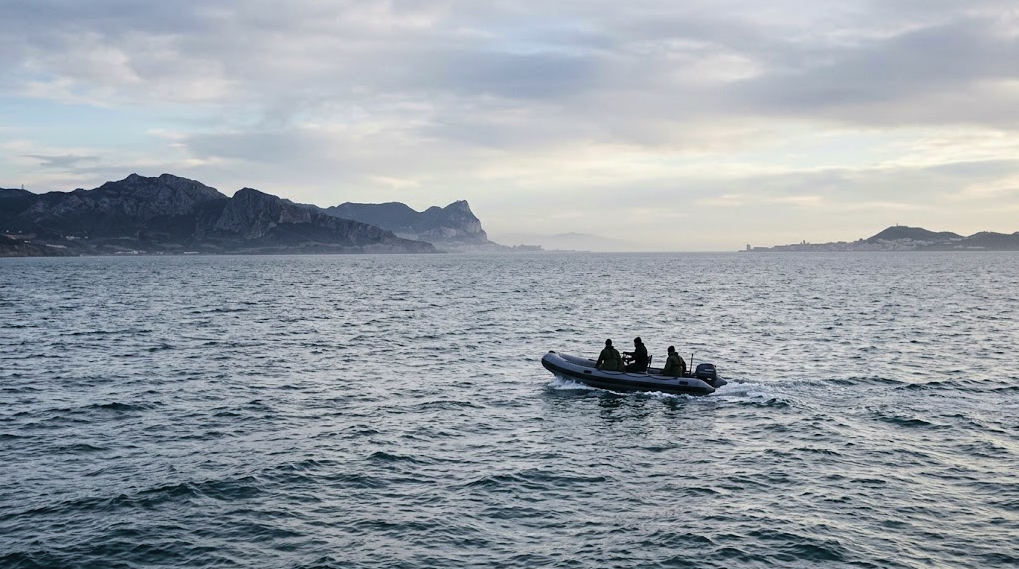
The second investigation began after a sea journey carried out during the early hours of 14 August, when seven people were allegedly travelling from Ceuta towards the Spanish coast.
The vessel used for the journey was small and, according to investigators, had significant shortcomings in terms of safety equipment.
Officers located the seven occupants in the El Burgo beach area of La Línea de la Concepción after several hours at sea.
The group had travelled approximately 40 kilometres across open water and had spent around five hours at sea when police intercepted them at about 4am.
Investigators say each passenger had allegedly paid €8,000 for the journey.
If all seven passengers paid that amount, the total value of the crossing would have been approximately €56,000.
Police described the circumstances of the journey as particularly dangerous.
The boat did not have the basic safety equipment normally required for a crossing of this nature.
There were reportedly no life jackets for the passengers, while rescue and signalling equipment was also inadequate.
Police also said that some of those aboard had limited or no ability to swim.
At one point during the journey, the boat was reportedly left drifting in the Strait of Gibraltar.
Dense fog during the night made the crossing even more difficult.
Visibility was severely reduced, complicating navigation and potentially making it harder for other vessels to spot the boat if an emergency had occurred.
Investigators consider the combination of the boat’s characteristics, the lack of safety equipment, the weather conditions and the length of the journey to have created a serious risk for those on board.
The man arrested in connection with the second operation was remanded in custody as the investigation continued.
One crossing could have generated €56,000
The details of the second investigation provide an indication of the amount of money allegedly involved in the journey.
Each of the seven passengers reportedly paid €8,000.
That would put the total amount paid at approximately €56,000.
The figure represents the total calculated from the alleged price per passenger and does not necessarily correspond to the organisers’ final profit.
The first investigation involved an even higher reported price, with migrants allegedly being asked for around €9,000 each.
Police believe the organisation offered the journeys to people who were in an irregular situation in Ceuta.
The alleged operation required several participants to complete the arrangements.
Intermediaries allegedly contacted potential passengers, while others provided places where they could stay temporarily.
Vehicles were then reportedly used to transport them towards departure points.
Boat pilots handled the maritime crossings, while other members of the alleged network waited on the mainland to receive the passengers.
This division of responsibilities forms part of the police investigation.
In the first operation, officers seized the high-speed boat discovered near Benzú.
In the second case, police intervened after the boat carrying seven people reached the La Línea de la Concepción area.
Investigators are continuing to examine the alleged networks and the specific role attributed to each suspect.
Police examine the risks faced by passengers
The investigation is not focused solely on the financial side of the alleged operations.
Police are also examining the conditions in which the journeys took place.
The second crossing involved several factors that investigators believe increased the danger faced by the passengers.
The boat was small and lacked essential safety equipment.
Passengers reportedly had no life jackets, while rescue and signalling equipment was inadequate.
The crossing also took place during the night and in conditions affected by fog.
The seven passengers remained at sea for around five hours before police intercepted them.
They had travelled approximately 40 kilometres.
Authorities are also examining circumstances that could increase the seriousness of the alleged offence, including financial gain, the vulnerability of the migrants and the risks posed to their lives, health and physical safety.
The man arrested over the 14 August crossing is being investigated for an alleged offence against the rights of foreign nationals.
His detention in custody forms part of the ongoing judicial process and does not itself establish criminal responsibility.
In the first investigation, the four suspects face allegations relating to membership of a criminal organisation and facilitating irregular immigration.
Ceuta faces continued pressure after migrant influx
The police investigations came after a major influx of migrants into Ceuta during the final days of July.
The information cited in the case puts the number of people who entered the city during the episode at around 72,000.
Some reportedly crossed by swimming around the border area, while others entered on foot.
The arrival of such large numbers placed significant pressure on accommodation and reception facilities in Ceuta.
Although many subsequently returned to Morocco, thousands remained in the Spanish territory.
Some people reportedly slept on beaches or in public areas as pressure increased on available accommodation.
The Spanish government established temporary facilities in an effort to ease the pressure on the reception system.
Against this backdrop, reaching mainland Spain became an issue for some of those who remained in Ceuta.
Police believe the alleged smuggling networks exploited that situation by offering clandestine journeys across the Strait of Gibraltar.
The maritime route between Ceuta and the Andalusian coast can present significant risks, particularly when crossings take place at night and involve small vessels.
The journey on 14 August highlighted some of those dangers.
Seven people spent hours at sea in a small boat without life jackets and with inadequate emergency equipment.
Fog added another complication to a crossing that already presented substantial risks.
Police coordinate operations against alleged smuggling networks
The two investigations involved National Police units operating along the Andalusian coast, together with central police services.
The officers worked in coordination with prosecutors and authorities responsible for tackling migrant smuggling.
Investigators are attempting to reconstruct how the alleged organisations operated and establish the role played by each suspect.
In the first case, the discovery of the boat near Benzú helped officers trace an operation that had apparently not yet reached the stage of collecting passengers.
The second investigation followed a journey that had already transported seven people towards the Spanish mainland.
Investigators are examining the movements, communications, vessels and alleged involvement of the different suspects.
They are also assessing the financial arrangements and the conditions in which the migrants travelled.
The high-speed boat seized during the first operation is among the material evidence recovered by police.
Meanwhile, the suspect arrested in connection with the second crossing remains in custody while proceedings continue.
The four people arrested during the first operation are also facing the judicial process over the allegations made against them.
The investigation will ultimately determine the extent of each person’s responsibility and whether other individuals were involved.
For now, police continue to investigate both operations.
The cases illustrate two alleged methods used to move migrants from Ceuta to mainland Spain: one operation involving intermediaries, temporary accommodation, vehicles and boats, and another involving a night-time crossing in which seven people travelled across the Strait in a small vessel.
The investigations remain ongoing as authorities work to establish the full circumstances and any potential criminal responsibility.
Official source: Spain’s National Police. Spanish National Police
Frequently asked questions about migrant smuggling from Ceuta
How many people were arrested?
Five people were arrested in two separate National Police investigations.
How much were migrants allegedly charged?
One operation allegedly charged up to €9,000 per person. In the second case, each of the seven passengers reportedly paid €8,000.
How many people were on the second boat?
Seven migrants were reportedly aboard the vessel during the crossing.
Where were they intercepted?
The seven people were located around 4am in the El Burgo beach area of La Línea de la Concepción…….MORE