We also provide our news in Spanish and Arabic. For inquiries, please contact us via the website's email.


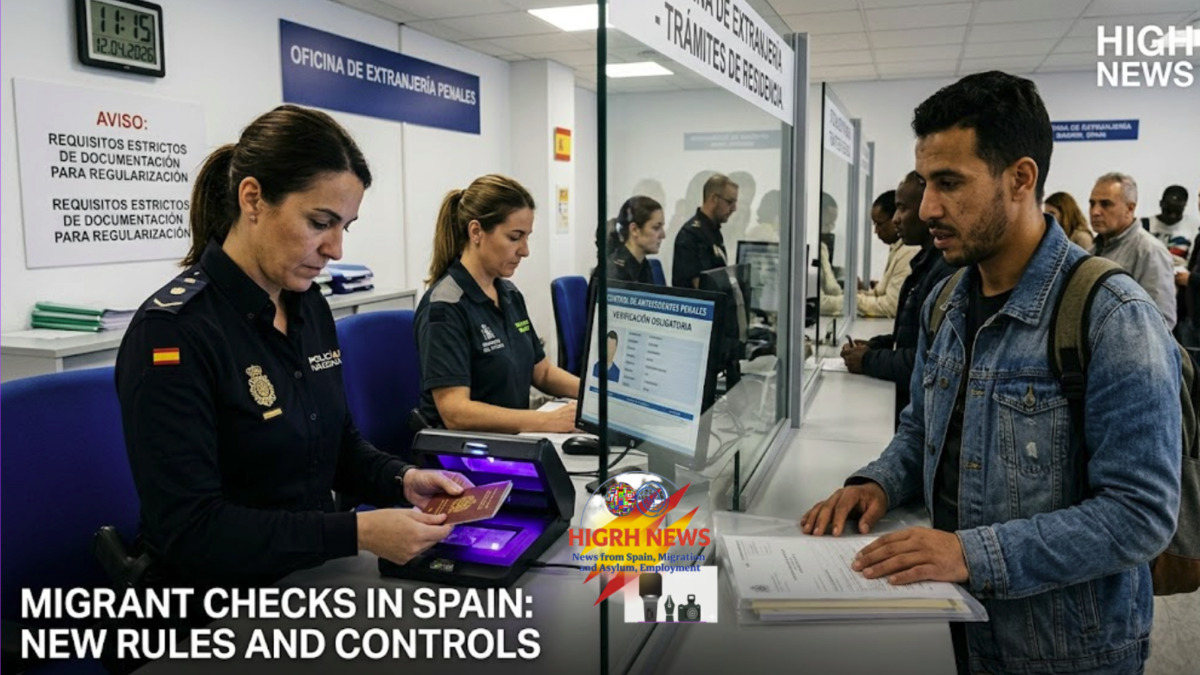
MADRID – HIGH NEWS : Can national security be balanced with the mass regularization of thousands of people seeking a future? This is the question echoing through the halls of power today as the country debates a drastic change of course. The migrant checks in Spain are heading towards unprecedented rigor following the latest warnings from the Council of State. The proposal seeks to shield the regularization process, but the path seems fraught with bureaucratic hurdles and political tensions.

A Narrower Filter for Regularization
The Council of State has raised its voice to demand much tighter control over the issuance of new residence permits. The core of the controversy lies in criminal record verification. Currently, the project allows the process to move forward based on a migrant’s personal statement, something the Council considers an unacceptable risk to public safety.
The recommendation is clear: the migrant checks in Spain must require official criminal record certificates as a mandatory step. If this document is not provided, the process must be suspended immediately. It is a stance that the Ministry of the Interior fully supports, arguing that trust cannot replace official verification in a process of this magnitude.

From an analytical point of view, this measure adds a layer of technical complexity that could slow down applications. However, transparency seems to be the absolute priority for the authorities at this moment, even over the administrative agility that was initially sought.
Exceptions Under the Council’s Microscope
One of the most controversial points of the initial draft allowed exceptions for not presenting a criminal record certificate, such as having lived in the country for five years. However, the Council of State has described these measures as ineffective. For an undocumented person, proving five years of “legal” residence is a technical contradiction that is almost impossible to fulfill.
Furthermore, the Interior Ministry has strongly opposed the use of expired passports or outdated documents to confirm the period of stay. The migrant checks in Spain will only accept current and valid documentation. This decision, while logical from a control perspective, will make access to regularization difficult for hundreds of people whose consulates take months to renew basic documents.
HIGH NEWS has been able to confirm that the Government is already working on adjusting these technical details. The intention is to prevent the process from becoming an open door to abuses, ensuring that every applicant passes through a real and verifiable filter before obtaining legal status.
The International Protection Dilemma
The Council of State’s report places special emphasis on asylum seekers or stateless persons. It is estimated that of the 500,000 people who could benefit from this process, some 300,000 are applicants for international protection. The problem arises when trying to mix both categories, as they have entirely different legal foundations.
Many fear that by opting for mass regularization, migrants will lose the security guarantees offered by asylum status. It is a delicate balance: is it worth giving up international protection for an ordinary residence permit? Human rights organizations have already shown concern about the possible loss of individual rights in favor of a collective solution.
Frequently Asked Questions (FAQ)
What documents will be mandatory for the regularization process?
It will be essential to present an official criminal record certificate and have valid identity documents, as expired passports will be rejected.
How does this change affect those who have already applied for asylum?
The Council recommends separating asylum processes from ordinary regularization to prevent applicants from losing their specific legal guarantees.
What role will Post Offices and Tragsa play?
Tragsa will be limited to technical support without decision-making capacity, while the use of Post Offices (Correos) raises doubts about possible delays due to a lack of specialized staff.
What is the next step for the approval of these rules?
The Government is integrating the technical recommendations into the final text to present it at the next Council of Ministers meeting, without passing through debate in Congress.
The migrant checks in Spain are not just an administrative procedure; they are a reflection of current migration policy seeking order in the face of migratory pressure. According to the analyzed data, the adjustment of these regulations will mark a before and after in the labor market and in the management of coexistence. Although the process is moving forward without parliamentary debate, the social and technical surveillance of these changes is more intense than ever.
…….MORE
Contact us: info@higrh.com