We also provide our news in Spanish and Arabic. For inquiries, please contact us via the website's email.


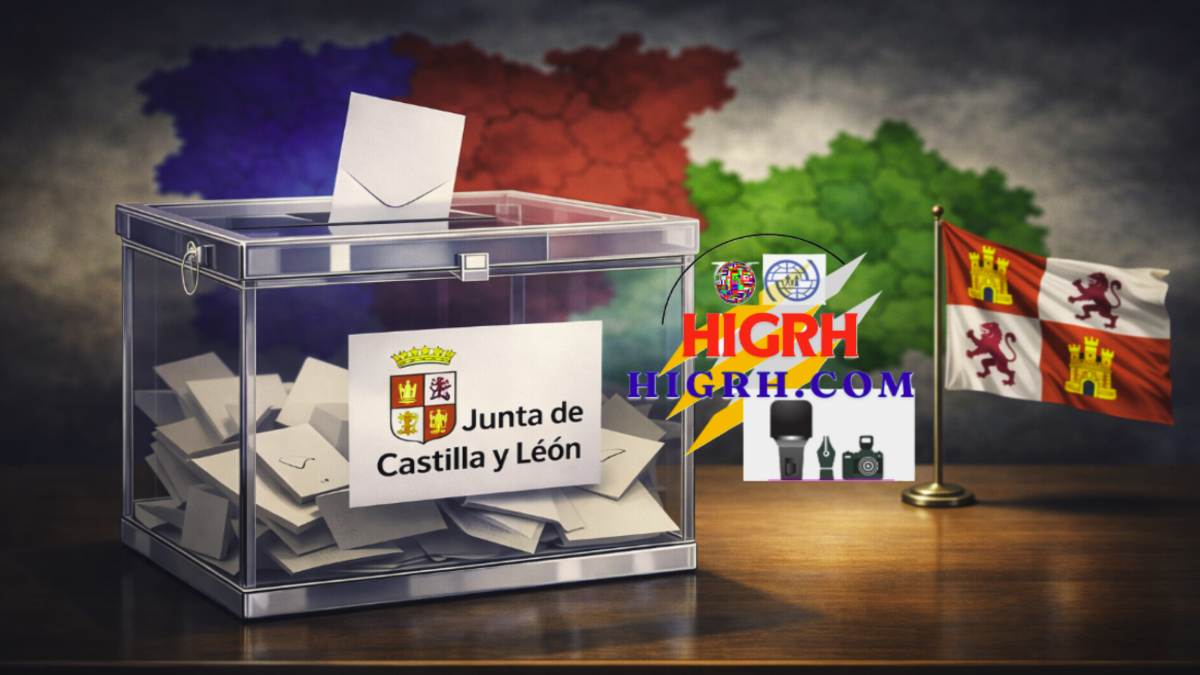
Castilla y León HIGH NEWS : provides an exhaustive breakdown of the electoral data. The Castilla y León Elections were more than a local vote; they served as a litmus test for national trends. The right-wing bloc (PP and Vox) captured 54.4% of the total vote, nearly five points higher than in 2022. This surge, combined with the total disappearance of Ciudadanos and Podemos from the legislature, marks a transition toward a more streamlined, albeit ideologically rigid, regional government.

Castilla y León Elections have delivered a political landscape that, while appearing stable on the surface, reveals deep tectonic shifts in Spanish regional politics. The latest polls have confirmed a significant consolidation of the conservative bloc and a strategic return to the traditional two-party system. With a reinforced People’s Party (PP) and a resilient Socialist Party (PSOE) defying grim forecasts, the regional parliament is becoming less diverse but more polarized. This report analyzes how the alliance between PP and Vox has become the only viable path for governance, and how the “Empty Spain” regionalist movement has faced a sudden stagnation.
The People’s Party: A Satisfactory Victory in a Consolidated Stronghold
Unlike the bittersweet victories seen in other Spanish regions like Extremadura or Aragón, the PP’s performance in these Castilla y León Elections is a resounding success for Alfonso Fernández Mañueco. The party did not just win; it significantly improved its standing, gaining nearly 56,000 additional votes and reaching 35.5% of the total. This growth translated into 33 seats, two more than in 2022, effectively cannibalizing the remains of the centrist Ciudadanos in Valladolid and gaining ground in Burgos.

The PP’s dominance is particularly evident in urban centers, winning in 11 of the 20 most populated municipalities and leading in seven of the nine provincial capitals. The “reconquest” of cities like Valladolid and Zamora underscores a shift in urban sentiment. Furthermore, demographic analysis shows that the PP remains the preferred choice for voters over 65, a crucial factor in one of Europe’s most aged regions.
PSOE: Defying the Odds and Capturing the Youth Vote
Despite pessimistic polling, the PSOE managed to halt its decline in these Castilla y León Elections. Led by Luis Tudanca and bolstered by the “Carlos Martínez effect” in Soria, the Socialists added 14,000 votes to their tally, securing 30 seats. While they lost one seat in Burgos to the PP, they compensated with gains in Valladolid, Segovia, and a spectacular surge in Soria.
In Soria, the PSOE grew by 18 points in the capital, making it one of only two provinces (alongside León) where they outpaced the PP. Interestingly, the data suggests that the PSOE is successfully competing for the youngest voters (18-24 years old), positioning itself as the primary barrier against the rise of the far-right.
Vox: Reaching an Electoral Ceiling?
Vox achieved 18.9% of the vote, its best-ever result in a Spanish regional election (excluding Ceuta). For the first time, the party secured representation in all nine provinces by winning a seat in Soria. However, the 14 seats obtained fell short of expectations; early polls had predicted them crossing the 20% threshold.
The urban-rural divide remains Vox’s biggest challenge. While the party continues to grow in rural areas and municipalities with fewer than 10,000 inhabitants, it has stagnated or even declined in major cities like Salamanca, Segovia, and León. This suggests that the party may have reached its electoral peak in urban Castilla y León, potentially due to the wear and tear of its previous role in the regional coalition government.
The Decline of Regionalism and a Simplified Parliament
One of the most striking outcomes of the Castilla y León Elections is the abrupt stalling of regionalist platforms. Soria ¡Ya!, the sensation of 2022, saw its support plummet, losing more than half of its votes and two of its three seats. This collapse directly benefited the PSOE, which successfully framed itself as the “useful vote” for the province.
Meanwhile, the Leonese People’s Union (UPL) managed to hold its three seats, and “Por Ávila” retained its lone representative despite a 20% drop in votes. This trend indicates that in times of national uncertainty, voters are returning to established brands. PP and PSOE together now represent 66.2% of the total vote, a significant jump from the record low of 61.4% seen four years ago.
Governance and Future Implications
The 2026 legislature will be noticeably less diverse. With the exit of centrist and far-left parties (Ciudadanos and Podemos), and the failure of IU-Sumar to enter the parliament, the political dialogue will be concentrated among three national giants: PP, PSOE, and Vox.
The results dictate that a PP-Vox agreement is the only viable path for a stable government. However, Alfonso Fernández Mañueco enters negotiations from a position of much greater strength. The political map of Castilla y León has been redrawn, signaling a return to a more traditional, yet right-leaning, power structure that will likely influence the national political discourse for years to come.
Frequently Asked Questions (FAQ)
Who won the Castilla y León Elections?
The People’s Party (PP) was the clear winner, increasing its vote count by 56,000 and securing 33 seats, although it still requires a coalition to govern.
Why did Soria ¡Ya! lose so much support?
The regionalist party suffered from a shift toward “useful voting,” with many of its former supporters returning to the PSOE to ensure a stronger opposition to the right-wing bloc.
What happened to Ciudadanos and Podemos?
Both parties failed to secure enough votes to maintain their parliamentary presence, leading to their exit from the regional legislature.
Is a coalition between PP and Vox inevitable?
Mathematically, yes. It is the only combination that reaches the absolute majority of 41 seats needed to form a government in Castilla y León.
…….MORE
Contact us: info@higrh.com