We also provide our news in Spanish and Arabic. For inquiries, please contact us via the website's email.


Madrid- HIGH NEWS:The pensions in Spain currently mask a reality that very few dare to analyze with such provocative detail. A tiny mining village in Asturias is defying all modern economic logic while other regions struggle to survive with dignity. How can geography so drastically dictate the real value of your hard-earned future rest in the coming years?

The New Landscape of Public Benefits
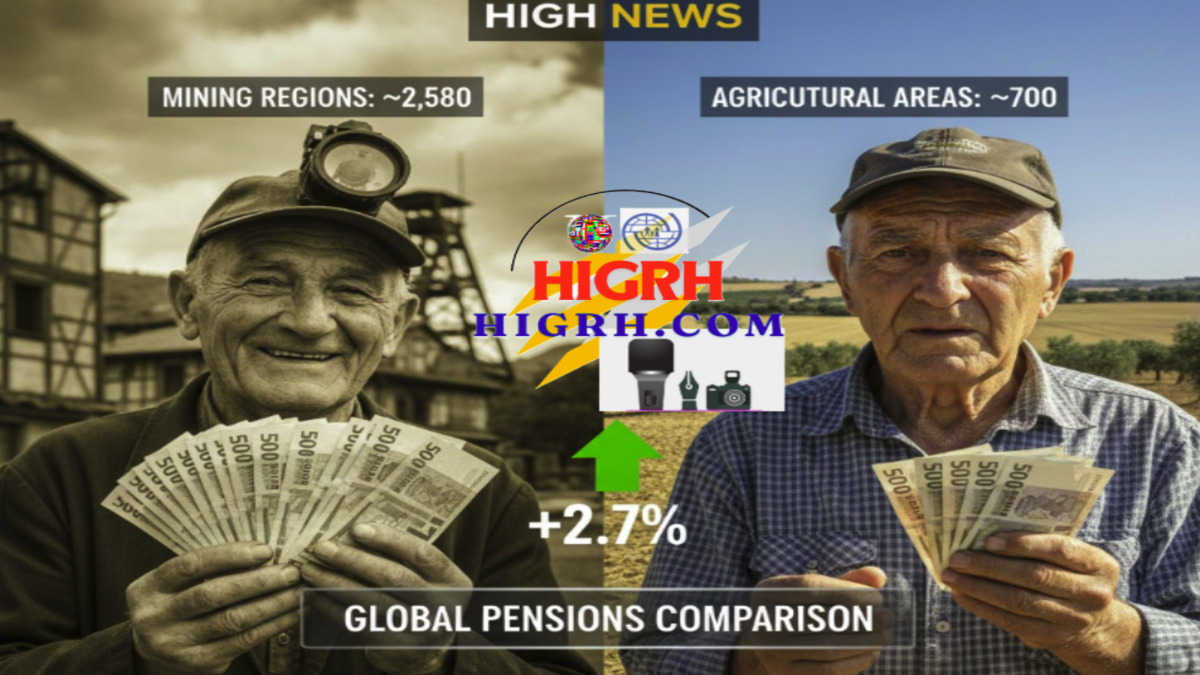
The system of pensions in Spain is now facing a moment of profound transformation following the latest decree. The Congress of Deputies has ratified a 2.7% increase for all contributory benefits during this current period. This hike is not just a cold number; it defines the daily purchasing power of millions. Thanks to this measure, the average retirement pension in the national system has reached €1,563.56. However, this figure is merely an average that hides massive disparities between different municipalities.
Under this new legal framework, towns with industrial and mining histories have seen their incomes soar significantly. In the town of Degaña, located in Asturias, the average retirement benefit now exceeds a stunning €2,580 per month. This reality contrasts sharply with the precarious situation in villages like Cosa or Olula de Castro. In these areas of Teruel and Almería, pensions barely cross the €700 threshold. Consequently, a gap of over €1,800 exists between the extremes of Spain’s diverse geography.

Analyzing Revaluation and Cost of Living
The government has also included improvements for non-contributory and social assistance pensions in its strategy. These specific benefits are seeing a much more aggressive increase of 11.35% during this fiscal year. This effort seeks to protect the most vulnerable individuals who did not contribute enough to the system. Furthermore, the calculation for the general increase is always based on the Consumer Price Index (CPI). This formula ensures that retirees do not lose their buying power against accumulated market inflation.
Nearly two-thirds of the 10.45 million current benefits belong exclusively to the active retirement category. The rest of the system is divided between permanent disability, widowhood, orphanage, and family favors. It is essential to understand that the contributory system directly rewards the effort made during one’s active working life. Therefore, regions with historically high wages now offer the most robust retirement payrolls on the map. Social Security manages this massive capital flow to maintain national social cohesion.
Mining vs. Agriculture: Two Different Realities
The pensions in Spain reflect the economic past of each region with surgical and surprising precision. Mining municipalities in Asturias, León, and Teruel indisputably lead the wage tables at all times. Areas like Villablino or Mieres show benefits that far exceed the current average income of their active workers. In these cases, retirement provides a thousand euros more than the average gross income per person. This phenomenon is due to the high contribution bases that existed in the mining sector.
On the opposite side, we find regions dependent on livestock or the traditional agricultural sector. In provinces like Lugo, Ourense, or Cáceres, pensions are usually below €1,350 on average. Seasonal work and low rural wages translate decades later into very limited and restricted retirement benefits. Although revaluation helps, the structural gap remains the biggest challenge for policy designers. Territorial equity is currently a pending subject within the complex social welfare system.
International Comparison: Where Does Spain Stand?
When comparing pensions in Spain with countries like Sweden, France, and Canada, we find fundamental differences. Sweden uses a flexible system linking pensions to general economic performance, giving retirees long-term stability. In France, the system remains very generous, where retirees leave with a high average income compared to their working years. Meanwhile, in Canada, the system relies on a mix of a basic government pension and mandatory private savings. Spain stays in a middle ground, surpassing France in some social protections but trailing Canada in income source diversity.
FAQ
How much did pensions in Spain increase this year?
Contributory benefits rose by 2.7% based on inflation, while non-contributory pensions increased by 11.35%.
Which area in Spain has the highest retirement pay?
The Basque Country leads the provinces, but specific mining towns in Asturias exceed €2,500 per month.
What is the difference between contributory and non-contributory pensions?
Contributory depends on years and amounts paid into Social Security, while non-contributory is for those lacking resources.
How does the international comparison affect the Spanish system?
Comparing pensions in Spain with countries like Sweden and France helps in developing more sustainable and flexible models for the future.
…….MORE
Contact us: info@higrh.com